


Can I Publish a Research Paper Without Affiliation? UK 2026 Guide
March 30, 2026
Deductive vs Inductive Research: Differences, Examples & Which One to Use (2026 Guide)
April 6, 2026

Updated: April 2026 · UK Academic Publishing Guide · Reviewed by UK Academic Editor
Publishing a research paper in the UK can feel overwhelming, especially for students and independent researchers. Many have excellent research, yet struggle to turn it into a journal-ready article. The academic publishing process is competitive, structured, and often unclear, which can make even strong studies difficult to get accepted.
Unlike dissertations, which showcase knowledge and understanding, academic journals demand concise arguments, original contributions, and strict adherence to editorial standards. Even high-quality research may be rejected if it doesn’t meet these professional expectations.
This guide provides a practical roadmap on how to write and publish a research paper in the UK. We cover choosing a research topic, preparing your manuscript, selecting the right journal, navigating peer review, and common pitfalls to avoid. It is tailored for Master’s and PhD students, as well as independent researchers seeking a clear path to publication.
By following this guide, you will gain actionable strategies to improve your chances of acceptance and confidently submit your research to reputable academic journals, even without formal university affiliation.


Table of Contents
- Introduction: Why Writing and Publishing a Research Paper Matters
- Step 1: Choosing a Research Topic
- Step 2: Conducting a Literature Review
- Step 3: Planning Your Research and Methodology
- Step 4: Writing Your Research Paper
- Step 5: Editing and Proofreading
- Step 6: Choosing the Right Journal
- Step 7: Submitting Your Paper and Understanding Peer Review
- Step 8: Responding to Feedback and Revising
- Step 9: Final Acceptance and Publication
- Tips for Boosting Your Research Paper Visibility
- Common Mistakes to Avoid
- Conclusion and Further Resources
Step 1: Choosing a Research Topic
Selecting the right research topic is the first and most important step in writing a successful research paper. A focused and original topic not only guides your study but also increases the chances of acceptance in UK academic journals.
Identify Your Area of Interest: Start with subjects you are passionate about or have prior knowledge in. Your interest will keep you motivated throughout the research process.
Review Existing Literature: Examine recent UK journals and publications to identify gaps, unanswered questions, or areas that need further exploration. This ensures your research contributes something new to your field.
Narrow Your Topic: Avoid broad topics. Focus on a specific, manageable question or problem that you can address effectively within your paper.
Consider Feasibility: Check that you have access to the necessary resources, data, and time required to complete your study successfully.
Formulate Research Questions: Develop clear, concise, and researchable questions or hypotheses that will guide your study and give it direction.
Seek Feedback: Discuss your topic with peers, mentors, or experts in your field. Feedback helps refine your topic and ensures it is both original and practical.
Key point: A well-chosen research topic is specific, feasible, and contributes new knowledge. It sets the foundation for a successful research paper.
Step 2: Conducting a Literature Review
A literature review is essential for understanding the current state of research in your field. In the UK, journals expect papers to be grounded in relevant, high-quality sources. This step helps you identify gaps, avoid duplication, and position your study effectively.
Search Relevant Sources: Use academic databases such as JSTOR, Google Scholar, and UK university libraries to find recent journal articles, books, and reviews relevant to your topic.
Evaluate and Select Literature: Focus on peer-reviewed articles and authoritative sources. Assess the methodology, findings, and relevance of each study to your research questions.
Identify Gaps and Trends: Highlight areas where research is limited or conflicting. This demonstrates the originality of your study and its potential contribution to knowledge.
Organise the Review: Structure your literature review logically — by themes, chronology, or methodology — to provide a coherent background for your study.
Document References Properly: Use the referencing style required by your target journal (e.g., APA, Harvard, or MLA) to maintain academic credibility.
Key point: A thorough literature review positions your research, identifies gaps, and strengthens your argument, making your paper more compelling to UK journals.
Step 3: Planning Your Research and Methodology
A well-structured methodology ensures your research is credible and reproducible. Planning your approach carefully is essential for UK journal standards and strengthens your paper’s contribution to knowledge.
Define Your Research Design: Decide whether your study will be qualitative, quantitative, or mixed-methods. The design should align with your research questions and objectives.
Select Appropriate Methods: Choose data collection techniques such as surveys, experiments, interviews, or secondary data analysis. Ensure methods are feasible and suitable for your topic.
Determine Sample and Population: Clearly define your study population, sampling method, and sample size. This provides transparency and validity for your results.
Plan Data Analysis: Specify the tools and techniques you will use to analyse your data, such as statistical software or thematic analysis, depending on your research type.
Ethical Considerations: Obtain necessary permissions, informed consent, and follow ethical guidelines expected by UK journals and institutional boards.
Key point: Careful planning of research design, methods, and ethical compliance ensures your study is rigorous, credible, and journal-ready.



Step 4: Writing Your Research Paper
Begin by drafting your paper according to the structure expected by UK journals. Focus on clarity, logical flow, and presenting your argument effectively.
Introduction: Clearly state your research question, objectives, and significance.
Methods: Describe your methodology in detail, ensuring reproducibility.
Results and Discussion: Present findings concisely and interpret them in relation to existing literature.
Conclusion: Summarise your contribution, limitations, and future research directions.
Key point: Clear, structured writing tailored to your research questions improves readability and acceptance chances in UK journals.
Step 5: Editing and Proofreading
Revise your manuscript for clarity, grammar, and style. UK journals prioritise concise, precise writing.
Self-Editing: Check flow, clarity, and logical organisation of arguments.
Peer Feedback: Ask colleagues or supervisors to review your paper.
Professional Proofreading: Consider services or software to catch errors and ensure formatting is journal-compliant.
Key point: Thorough editing and proofreading enhance professionalism, clarity, and credibility.
Step 6: Choosing the Right Journal
Select a journal that matches your research focus, quality, and audience. Consider impact factor, scope, and submission guidelines.
Journal Fit: Ensure your study aligns with the journal’s aims and readership.
Open Access vs. Subscription: Decide based on visibility, funding, and audience reach.
Key point: Choosing the right journal maximises acceptance chances and ensures your research reaches the intended audience.
Step 7: Submitting Your Paper and Understanding Peer Review
Follow journal submission guidelines carefully and be prepared for peer review, which is standard in UK academic publishing.
Submission Checklist: Confirm formatting, references, figures, and ethics compliance.
Peer Review Process: Reviewers assess originality, methodology, and contribution to knowledge. Expect feedback and possible revisions.
Key point: Understanding peer review helps you address critiques effectively and strengthens your manuscript.
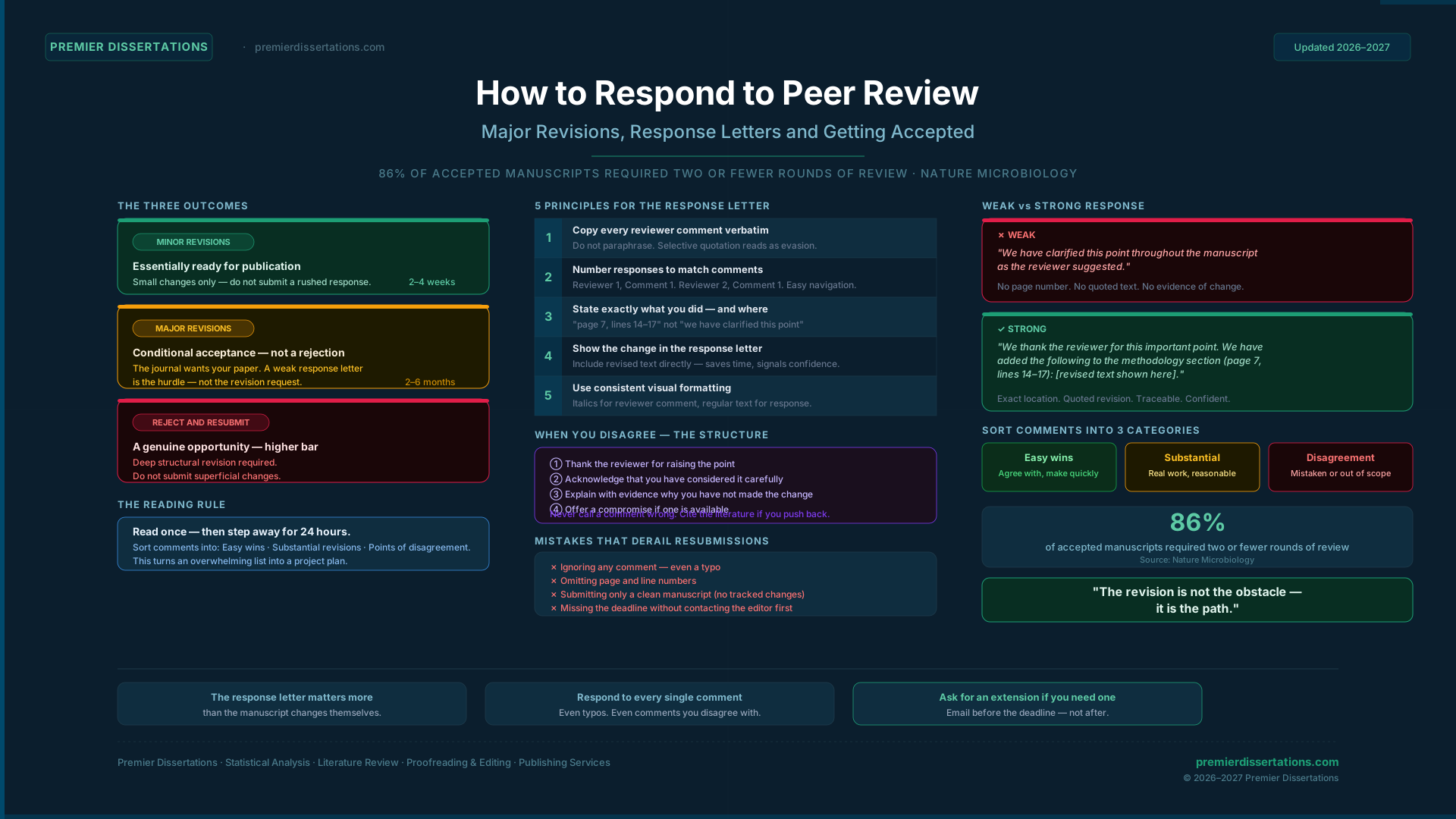
Step 8: Responding to Feedback and Revising
Carefully address reviewer comments, make necessary revisions, and provide a detailed response letter to editors.
Revise Thoroughly: Improve clarity, methodology, and discussion based on feedback.
Respond Respectfully: Acknowledge suggestions and explain how changes were implemented.
Key point: Effective revisions increase acceptance probability and improve the quality of your paper.
Step 9: Final Acceptance and Publication
Once accepted, complete author agreements, check proofs, and ensure all journal requirements are met before publication.
Key point: Final attention to detail ensures smooth publication and proper recognition of your work.
Tips for Boosting Your Research Paper Visibility
After publication, promote your research to increase citations and readership.
Use Academic Networks: Share on ResearchGate, LinkedIn, and relevant academic forums.
Social Media: Promote summaries and insights via Twitter/X and professional groups.
Open Access: Consider publishing in open-access journals for wider reach.
Key point: Active promotion increases visibility, citations, and impact of your research.
Common Mistakes to Avoid
Avoid errors that reduce the likelihood of publication or impact.
Poor Topic Choice: Topics that are too broad or trivial.
Weak Methodology: Inadequate research design or unclear methods.
Poor Writing: Unclear, unstructured, or error-filled manuscripts.
Ignoring Journal Guidelines: Not following formatting, referencing, or submission rules.
Key point: Awareness and avoidance of common mistakes improves publication success.
Conclusion and Further Resources
Publishing a research paper in the UK is achievable by carefully following the steps outlined in this guide. From selecting a topic to promoting your work post-publication, each stage is essential for success.
💬 Need more help? Explore our guide on how to choose a dissertation topic.
Key point: A systematic, well-planned approach ensures your research paper meets UK journal standards and reaches its intended audience effectively.
Frequently Asked Questions (FAQs)
Get 3+ Free Dissertation Topics within 24 hours.