

What is Annotated Bibliography? Tips and Examples
October 4, 2022
Free Turnitin Checker: Real Detection, Not a Guess
October 5, 2022
Last Updated: September 2026 · Academic Year 2026-2027
A similarity checker compares your text against a database of published work, academic papers, and web content to identify matching passages. For students, it is a practical tool that helps ensure proper citation and originality. But many students misunderstand what the result actually means.
This guide explains how similarity checkers work, the difference between similarity and plagiarism, and how to use our free similarity checker to review your dissertation before submission. You do not need to sign up, and we never store your document in any database.
How Our Similarity Checker Works
Our free similarity checker scans your document against billions of online sources, academic databases, and previously submitted papers. Within seconds, you will receive a clear report showing:
✅ Your overall similarity percentage
✅ Every matching section highlighted
✅ Source links for each match
✅ No sign-up required
✅ Your document is never stored
Similarity vs Plagiarism: What Is the Difference?
This is the most common confusion among students, and it matters because the distinction affects how you interpret your report.
📊 Similarity
A technical measurement of matching text. This includes properly cited quotations, common phrases, bibliography entries, and even institutional cover sheets. It is a statistical fact, not a judgment.
⚖️ Plagiarism
An ethical and academic judgment about using someone else's work without proper attribution. Plagiarism is about intent and credit, not just word matching.
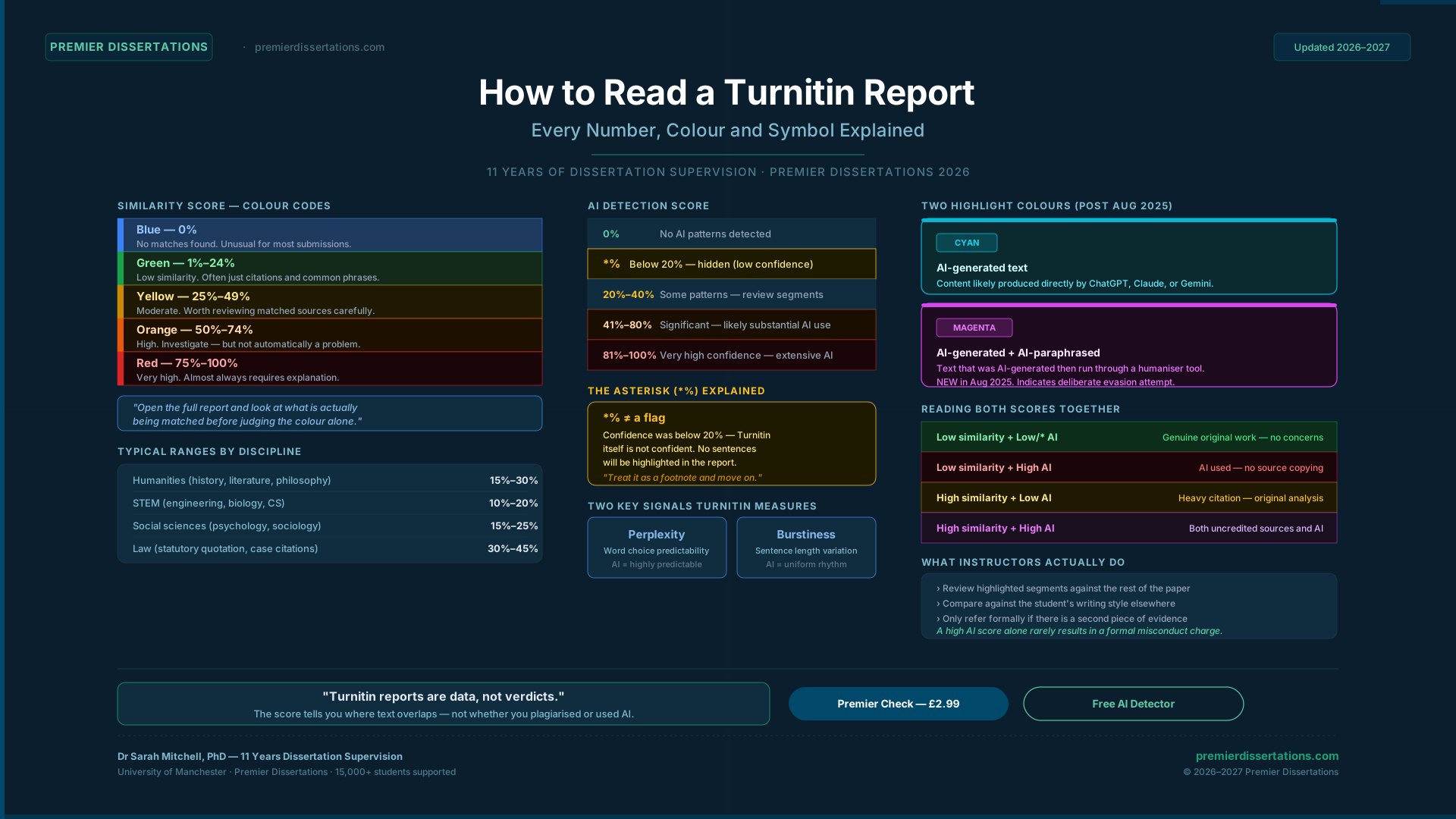
Consider this: A dissertation with a long, properly formatted bibliography and a standard cover sheet can show a 35% similarity score. That does not mean 35% of it is plagiarised. The bibliography alone often accounts for the majority of matches. Conversely, a paper that has been translated or written by someone else could show a very low similarity score but still be a case of academic misconduct.
A high similarity score is not the same as plagiarism. A low similarity score does not guarantee originality. The score is a prompt to review your work, not a final verdict. If you are concerned about your similarity score, Premier Check (£2.99) provides a full similarity report alongside AI detection, giving you the complete picture your university will see.
Benefits of Using a Similarity Checker
- Identify unintentional matches. Catch missed citations or overly similar phrasing before submission.
- Understand your report. See exactly what your university will see, so there are no surprises.
- Save time. Fix issues early, rather than waiting for feedback after submission.
- Build confidence. Submit with peace of mind, knowing you have reviewed your work thoroughly.
Who Should Use This Tool?
- Undergraduate students. Check essays and coursework before submission.
- Masters and PhD students. Review dissertations and theses for potential overlaps.
- International students. Ensure paraphrasing is correctly attributed and avoid unintentional similarities.
- Researchers. Check manuscripts and grant applications for proper attribution.
- Anyone concerned about their similarity score. Knowing is better than guessing.
Types of Similarity Checkers Available
Not all similarity checkers are the same. Here is a quick comparison of what is available:
Risks of Relying Too Heavily on Similarity Checkers
A similarity score is a useful indicator, but it is not a complete picture. Here are common pitfalls to avoid:
- False confidence. A low similarity score does not guarantee your work is properly cited. It might simply mean your sources are not in the database.
- Overcorrection. Students sometimes remove proper citations to lower a score, which actually creates a plagiarism risk.
- Ignoring context. A high score from a bibliography or cover sheet is normal. A high score in the body of your work needs attention.
How to Avoid Plagiarism with a Similarity Checker
A similarity checker is a tool, not a solution. Use it as part of a broader approach to academic integrity:
- Write in your own words. Paraphrase properly. Do not just change a few words.
- Cite everything. Every quote, every idea from a source, every piece of data must be attributed.
- Check your work. Run the similarity checker before submission and review the matches carefully.
- Understand your report. Know what the score means and where the matches are located.
- Fix issues early. Do not wait until the last minute to review your similarity.
Frequently Asked Questions
Does a high similarity score mean I plagiarised? +
What is the difference between similarity and plagiarism? +
Is a similarity score the same as an AI score? +
Do I need to sign up to use the similarity checker? +
What is a good similarity score for a dissertation? +
One More Thing
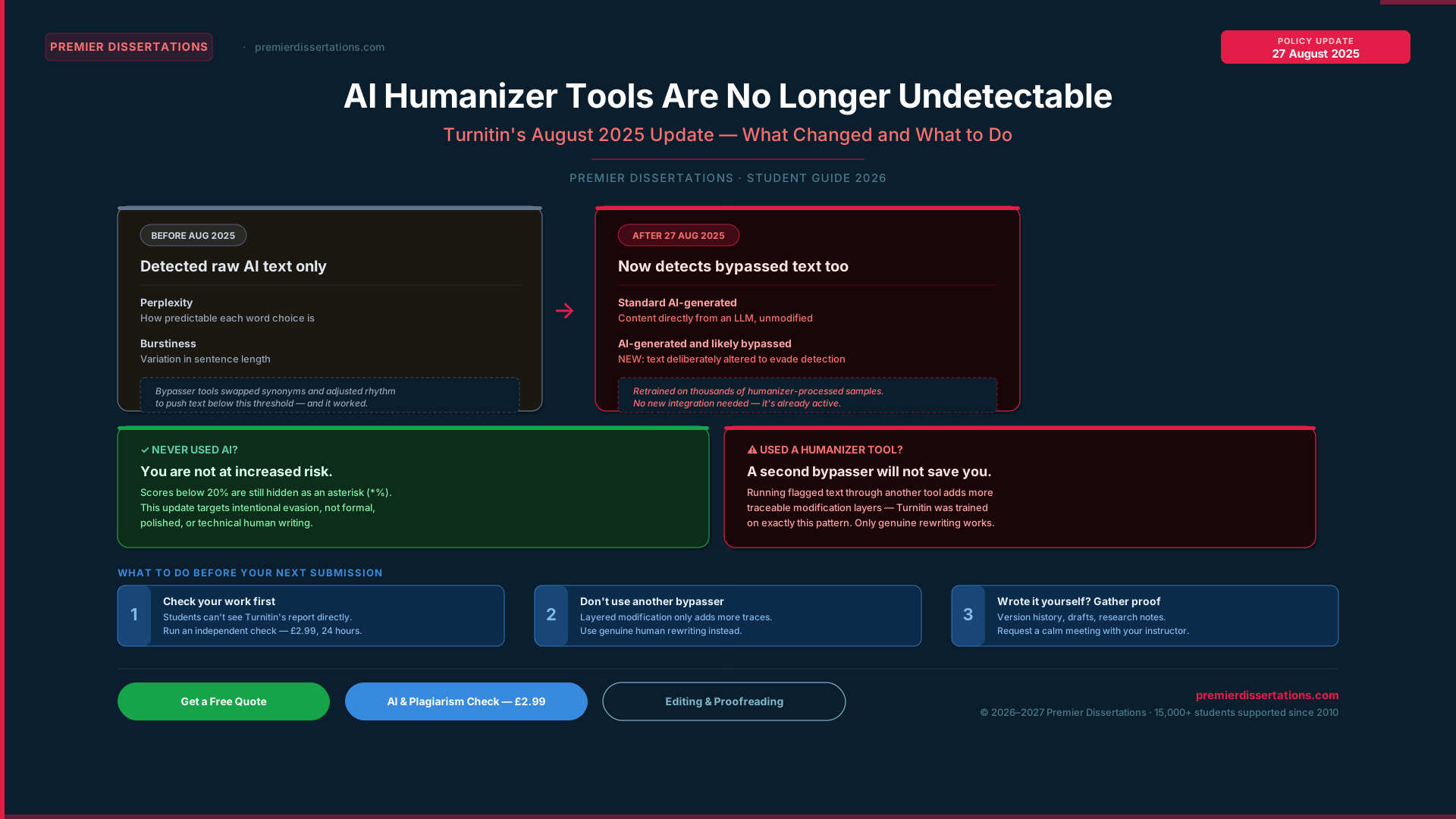
A similarity checker tells you where your text matches existing sources. But it does not tell you why it matches. It also does not tell you if your writing is flagged for AI.
That is why we built Premier Check (£2.99). It is a full Turnitin-style report that combines:
- AI detection score. Sentence-by-sentence analysis of AI-generated patterns.
- Similarity score. Matching text against billions of sources.
- Section-by-section breakdown. See exactly where the flags are.
- No repository upload. Your document is never stored or shared.
- PDF report. Exactly what your university sees.
We Can Help
If your similarity or AI score comes back higher than you would like, our UK academic editors can review the affected sections and rewrite them properly by hand. We do not run another automated pass. Every check includes a full report, similarity score, AI detection score, and a section-by-section breakdown. This is the same information your university sees.
We aim to reduce your scores to a level your university will accept. We do not guarantee a specific percentage, because detection algorithms are beyond our control. But our editors have a proven track record of significantly reducing flags. Every rewrite is backed by our quality-assured or money-back guarantee.
Our UK academic editors can also provide full dissertation proofreading and editing. Or you can start with a free dissertation review if you are not sure what level of help you need.
Close to a deadline and need this sorted fast? Message our team on WhatsApp and we will tell you honestly what is possible before you pay for anything.
⭐ Rated Excellent by UK Students · Reviewed by UK Academic Editors · Established 2010
Request a Free Plagiarism Removal Review
Upload your flagged document or describe your concerns, and a UK academic editor will review your work and explain how we can reduce your similarity score. (Typically responds within an hour.)
💬 Need urgent help? Chat on WhatsApp (replies in seconds).
UK-reviewed · 100% confidential · Ethical academic editing only · No ghostwriting
🕒 Average response time: under 60 minutes · Feedback tailored to your study level (Undergraduate, Masters, PhD)
What Our Students Say
"Premier Dissertations helped me get my Turnitin score down to a level I was comfortable submitting. The editor did not just swap words. They clearly read my research and rewrote the flagged sections properly. I submitted with confidence."
Ali H. — MBA Student ✓ WhatsApp Verified
"They provided a full dissertation package, including a Turnitin report. The plagiarism score was 3%, and all references were properly cited. I could submit with full confidence knowing nothing was flagged."
Tom S. — Verified Student ✓ WhatsApp Verified
📋 Read 57+ verified reviews on Trustindex →
Summary
A similarity checker is a valuable tool, but it is not a complete solution. Understanding the difference between similarity and plagiarism, and knowing where your score comes from, is essential to interpreting your report correctly.
Do not guess. The only way to know where you stand is to see the same report your university will see. Before they see it.
Check your similarity score before your university does.
📄 Get Premier Check £2.99 →Delivered in minutes · Never stored in any database · Reviewed by UK editors
Related reading: Plagiarism Checker · Free AI Content Detector · AI Plagiarism Checker · How Plagiarism Checkers Work · Paraphrasing vs Plagiarism
Reviewed by Katherine Alexander, PhD, UK Academic Editor at Premier Dissertations · Updated September 2026 · Trusted by 15,000+ UK and international students/researchers