


How to Publish a Research Paper in UK
March 18, 2026
Can I Publish a Research Paper Without Affiliation? UK 2026 Guide
March 30, 2026
Updated: March 2026 · UK Academic Publishing Guide · Reviewed by UK Academic Editor
Publishing a journal article is often considered the most challenging step in academic work. Many students in the UK complete well-structured dissertations but find themselves unsure how to transform that research into a publishable paper. The process can feel unclear, highly competitive, and, at times, discouraging.
The difficulty usually comes from one key issue: academic publishing follows a completely different standard than dissertation writing. While dissertations focus on demonstrating understanding, journals expect concise arguments, a clear contribution to knowledge, and strict adherence to editorial and formatting requirements. Without aligning your work to these expectations, even strong research can face immediate rejection.
This guide explains how to publish a journal article in the UK step by step, covering journal selection, manuscript preparation, peer review, and the most common reasons papers get rejected. It is designed for Master’s and PhD students who want a clear and realistic path from completed research to successful publication.
By the end, you will not only understand the process but also the practical decisions that significantly improve your chances of acceptance in academic journals.


Explore This Page
- What Does It Mean to Publish a Journal Article?
- What Level of Research Is Good Enough?
- Types of Research Students Can Publish
- Where to Publish a Journal Article
- How to Choose the Right Journal
- Step-by-Step Process to Publish a Journal Article
- Do You Need a Supervisor or Co-Author?
- Understanding Peer Review
- Common Reasons Papers Get Rejected
- How to Increase Your Chances of Getting Published
- Academic Integrity and Ethical Publishing
- Final Submission Checklist
What Does It Mean to Publish a Journal Article?
Publishing a journal article means turning your research into a paper that meets the academic, editorial, and ethical standards of a recognised journal. It is not simply a matter of uploading written work online or shortening a dissertation chapter. A journal article must present a focused argument, show a clear contribution to knowledge, and follow the structure, referencing style, and submission requirements set by the target journal.
For many students in the UK, the biggest surprise is that publication is a separate academic process, not an automatic next step after completing a dissertation. A dissertation is usually written to demonstrate learning, critical understanding, and research ability within a degree programme. A journal article, by contrast, is written for editors, peer reviewers, and readers in a specific academic field. That difference changes everything, including the length, tone, structure, evidence selection, and level of originality expected.
In practical terms, publishing involves making several careful decisions. You need to identify whether your research is strong enough, decide which part of your project is most publishable, choose a suitable journal, and reshape the manuscript to match that outlet. In many cases, the most publishable section of a dissertation is not the whole document but a narrower piece with a sharper argument. Students who need help understanding how strong academic work is usually structured can also review our dissertation examples to see how research is developed into a clear academic piece.
It is also important to understand that publication does not always mean immediate acceptance by a prestigious journal. Many strong papers go through revision rounds, editorial screening, and peer review before a decision is made. Some are rejected and improved before being submitted elsewhere. This is normal. The goal is not perfection on the first attempt, but a realistic, well-positioned paper that matches the journal’s aims and speaks clearly to its audience.
Key point: Publishing a journal article is not about submitting more words. It is about presenting the right part of your research in the right format, for the right journal, with a clear academic contribution.
What Level of Research Is Good Enough for Journal Publication?
One of the most common questions students ask is whether their research is “good enough” to be published. This uncertainty often stops strong candidates from even attempting submission. The reality is more practical than most assume. A publishable journal article does not require groundbreaking discovery, but it does require clear contribution, academic discipline, and alignment with journal expectations.
At Master’s level, research is usually expected to demonstrate critical thinking, structured argument, and engagement with existing literature. A well-written paper that offers a focused insight, identifies a gap, or applies theory to a specific context can be suitable for publication. At PhD level, expectations are higher. Journals typically look for stronger originality, methodological depth, and a clearer contribution to knowledge within a defined academic field.
The key point is that publishability is not about length or complexity, but about relevance and clarity. Many students make the mistake of trying to publish their entire dissertation. In reality, journals prefer shorter, more focused papers built around one argument, one finding, or one section of the research. A narrowly defined and well-developed idea is far more likely to succeed than a broad and unfocused submission.
Another important factor is how your work fits within existing research. Editors are not only assessing quality. They are asking whether your paper contributes something useful to ongoing academic discussion. This is why strong literature positioning matters. If you are unsure how to frame your research effectively, reviewing structured academic work such as dissertation examples and understanding argument development through our literature review guide can help clarify expectations.
It is also worth recognising that rejection is part of the process. Even high-quality papers are often revised or resubmitted before acceptance. What matters is not perfection on the first attempt, but whether your research is positioned correctly and written in a way that meets journal standards.
Key point: Your research is “good enough” for publication when it makes a clear, focused contribution and is presented in a way that matches the expectations of a specific journal.
Types of Research Students Can Publish
A common misconception is that only large-scale or highly technical studies can be published in academic journals. In reality, students can publish different types of research, provided the work is clearly structured, academically sound, and aligned with the scope of the chosen journal. Understanding which type of research fits your work is an important step in improving your chances of acceptance.
The most common type is a literature-based article. This involves analysing and synthesising existing research to present a clear argument, identify gaps, or offer a new perspective. Many Master’s students successfully publish literature-driven papers because they demonstrate critical thinking without requiring complex data collection. If you are unsure how to structure this type of work, reviewing our literature review guide can help you understand how strong arguments are built from existing studies.
Another common option is an empirical research article. This is based on primary data collected through surveys, interviews, experiments, or observations. Empirical papers are more demanding because they require clear methodology, data analysis, and justified conclusions. However, a well-executed small-scale study can still be publishable if it answers a focused research question and is presented clearly.
Students may also publish case study research, particularly in fields such as business, healthcare, education, and law. A case study focuses on a specific organisation, event, or scenario and analyses it in depth. These papers are valuable when they provide practical insight or apply theory to real-world situations in a meaningful way.
In some disciplines, systematic reviews or structured review papers are also suitable for publication. These go beyond a standard literature review by following a defined process to identify, evaluate, and synthesise research. This type of paper is particularly relevant in health sciences and social research, where evidence-based conclusions are important.
The key is not choosing the most complex type of research, but selecting the one that best fits your data, your subject, and your level of study. Students who are still developing their research ideas may find it useful to explore a range of dissertation topics and review well-structured dissertation examples to understand how different types of research are developed into publishable work.
Key point: There is no single “best” type of research for publication. The strongest papers are those that match the journal’s focus, stay within a clear scope, and present a well-developed argument using appropriate evidence.



Where to Publish a Journal Article
Choosing where to publish is one of the most important decisions in the entire process. Academic journals vary widely in scope, quality, and expectations. Some focus on student research, while others are highly competitive and designed for experienced researchers. The goal is not to target the most prestigious journal immediately, but to select one that aligns with your topic, level of study, and type of research.
Students should begin by identifying journals within their subject area and reviewing recent publications. This helps you understand the style, structure, and level of argument expected. Open-access journals, student-focused journals, and emerging academic platforms can often provide realistic entry points, particularly for Master’s students.
How to Choose the Right Journal
Selecting the right journal is not about reputation alone. It is about fit. A strong paper can still be rejected if it does not match the journal’s scope, audience, or expectations. Students should evaluate whether their topic aligns with the journal’s focus, whether similar papers have been published, and whether the methodology and argument meet the expected standard.
It is also important to check submission guidelines carefully. Formatting, referencing style, and word limits are strictly enforced. Journals may reject submissions at the initial stage if these requirements are not followed. Understanding these details in advance improves both efficiency and acceptance chances.
Step-by-Step Process to Publish a Journal Article
Publishing follows a structured process. While details vary across journals, the core steps remain consistent:
- Prepare a focused manuscript based on your research
- Format the paper according to journal guidelines
- Select a suitable journal and submit your article
- Undergo editorial screening and peer review
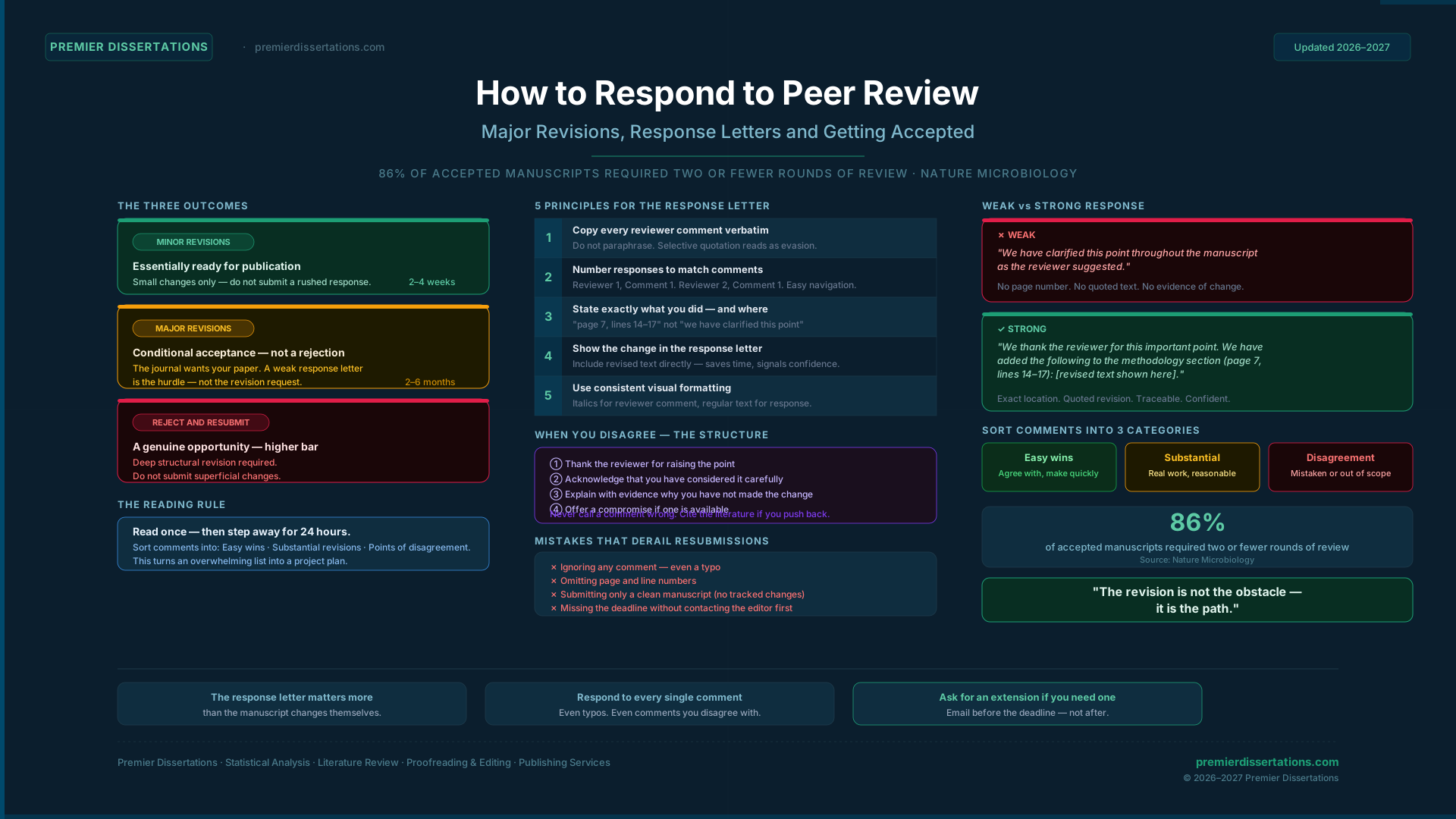
- Respond to reviewer feedback and revise the paper
- Receive acceptance, rejection, or request for resubmission
Each stage requires attention to detail. Many rejections occur not because the research is weak, but because the process is not followed correctly.
Do You Need a Supervisor or Co-Author?
Working with a supervisor or co-author is not always required, but it can significantly improve your chances of publication. Experienced academics understand journal expectations, reviewer behaviour, and common pitfalls. Their guidance can help refine your argument, improve clarity, and strengthen your overall submission.
For Master’s students, collaboration is often beneficial but optional. For PhD students, co-authorship is more common, particularly when publishing from funded or supervised research projects.
Understanding Peer Review
Peer review is the process where experts in your field evaluate your paper before publication. They assess the quality of your argument, the validity of your methodology, and the relevance of your findings. This process ensures that published research meets academic standards.
Feedback can be detailed and critical. This is normal. Most papers go through at least one round of revision. Understanding that critique is part of the process helps students respond more effectively and improve their work.
Common Reasons Papers Get Rejected
- Mismatch between paper and journal scope
- Weak or unclear research question
- Poor structure and lack of clarity
- Failure to follow submission guidelines
- Insufficient contribution to existing research
Understanding these issues in advance can significantly reduce the chances of rejection.
How to Increase Your Chances of Getting Published
Improving your chances of publication is not about shortcuts. It is about precision. Focus on writing clearly, following journal guidelines, and presenting a strong, well-structured argument. Position your research within existing literature and ensure your contribution is clearly defined.
Students can also benefit from reviewing structured academic work such as dissertation examples and using expert support through dissertation help when refining their manuscript.
Academic Integrity and Ethical Publishing
Academic publishing requires strict adherence to ethical standards. This includes proper citation, avoiding plagiarism, and ensuring that all data is accurate and honestly reported. Journals may use plagiarism detection tools, and ethical violations can lead to rejection or long-term academic consequences.
Before submission, it is advisable to verify originality using tools such as our plagiarism checker and ensure your content meets academic standards.
Final Submission Checklist
- Clear research question and focused argument
- Correct structure and formatting
- Accurate referencing and citations
- Alignment with journal scope
- Proofreading and clarity of writing
- Compliance with ethical standards
Final insight: Successful publication is not based on one factor alone. It is the result of clear thinking, correct positioning, and careful execution at every stage of the process.
Frequently Asked Questions (FAQs)
Get 3+ Free Dissertation Topics within 24 hours.