


Assignment Plan Sample | How to Structure and Plan Your Academic Tasks Effectively
August 8, 2025
British Airways Analysis: A Strategic Deep Dive into Strengths, Weaknesses, Opportunities, and Threats (SWOT)
August 12, 2025
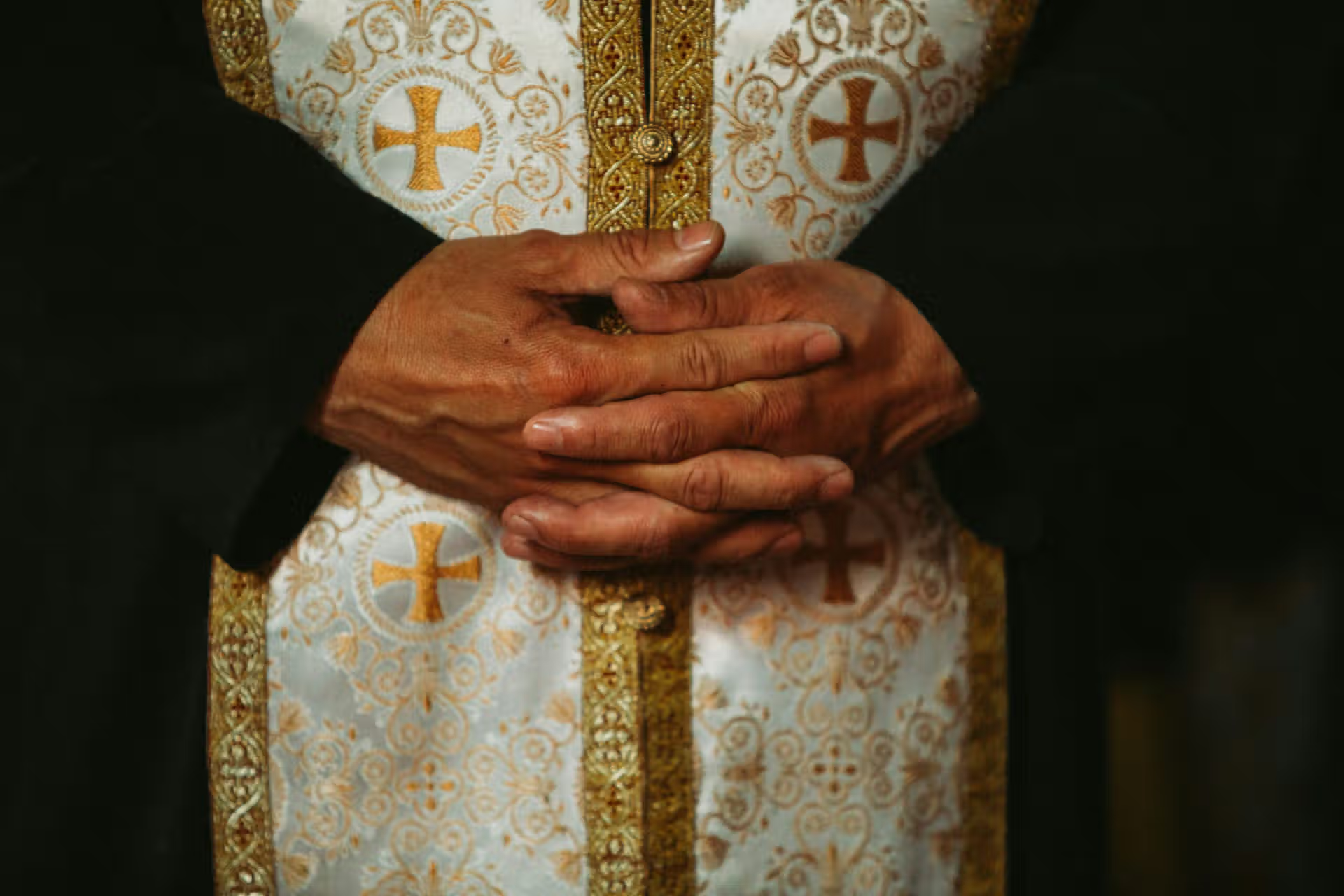
Beowulf is much more than an ancient epic. It is a vivid portrait of a society at the crossroads of two belief systems, making it a prime subject for those exploring literature dissertation topics that bridge history, culture, and ideology. Composed during the early medieval period, the poem bridges the transition from pagan customs to rising Christian ideology. Through a blend of heroic feats, symbolic battles, and spiritual undertones, Beowulf offers a window into the religious transformation of Anglo-Saxon England.


Pagan Heritage in Beowulf
The poem's foundation rests on pagan ideals. Characters honor warrior codes, rely on fate (wyrd), and partake in elaborate funeral rituals. The pursuit of glory in battle, loyalty to one's leader, and vengeance for fallen kin reflect a world where strength and honor were paramount.
Examples of pagan elements include:
- Fate (Wyrd): A recurring belief that one's destiny is unchangeableBlood Vengeance: A duty-bound act of retribution for slain family members
- Heroic Burials: Including treasures, weapons, and ritual flames
These traditions paint a society grounded in ancestral values and mythological worldviews.
Christian Undertones and Biblical Allusions
Despite its pagan setting, Beowulf contains unmistakable Christian references, which are most likely infused by monks who preserved the text. God is acknowledged as the ultimate judge and protector, and Grendel is described as a descendant of Cain, invoking biblical sin and divine punishment.
Key Christian elements include:
- Monotheism: Mention of a single, omnipotent Creator or God
- Moral Instruction: Emphasis on humility, mercy, and divine justice
- Biblical Symbolism: Grendel and his lineage echo Cain’s mark as a cursed soul
These layers suggest a moral interpretation guided by Christian ethics, subtly woven into the narrative.
Beowulf as a Christ-Like Figure
Some scholars see Beowulf as a symbolic Christ figure. His self-sacrificial fight with the dragon, knowing it may cost him his life, echoes the Christian ideal of dying for the greater good. His battles are not just for glory, they are, in fact, to protect others from evil.
Similarities to Christ include:
- Sacrificial Leadership: Facing death alone to save his people
- Champion of Good vs. Evil: Fighting monsters that symbolize chaos and darkness
- Legacy Beyond Death: His memory endures as a beacon of strength and virtue
Yet, unlike Christ, Beowulf's heroism is steeped in strength and pride, blending both traditions in one model character.
Symbolism of Good vs. Evil
The conflict in Beowulf transcends physical combat. The monsters, i.e. Grendel, Grendel’s mother, and the dragon, each represent more than threats. They serve as metaphors for internal and external struggles.
- Grendel: Chaos, isolation, divine punishment
- Grendel’s Mother: Revenge, primal rage
- Dragon: Greed, mortality, end of an era
Christian readers may interpret these enemies as embodiments of sin, while a pagan audience might view them as trials of human spirit and fate.
A Transitional Text: Pagan Past Meets Christian Future
Beowulf is not firmly one or the other; it is a literary reflection of a changing world. The tension between pagan fatalism and Christian salvation creates a layered narrative where both worldviews coexist. The poem does not resolve the conflict, it captures it in fact.
This duality is evident in:
- Characters praying to pagan gods, but also referencing God's will
- Funeral rites that mirror Norse traditions, yet hint at Christian resurrection
- Heroic pride offset by humble moral reflection
In this way, Beowulf becomes a valuable artifact of cultural and spiritual transformation.
Conclusion
Beowulf stands as a literary crossroads where swords meet scripture and fate meets faith. It offers more than legendary storytelling; it chronicles a civilization in flux. By understanding the interplay of pagan and Christian elements, readers gain insight into the spiritual fabric of early medieval Europe.
This is the title



Get 3+ Free Dissertation Topics within 24 hours.