


Public Administration Dissertation Topics 2026-27: 92 Researcher-Crafted Ideas for UK Students
December 16, 2025
Development Studies Dissertation Topics for 2026-27
December 18, 2025
Storytelling
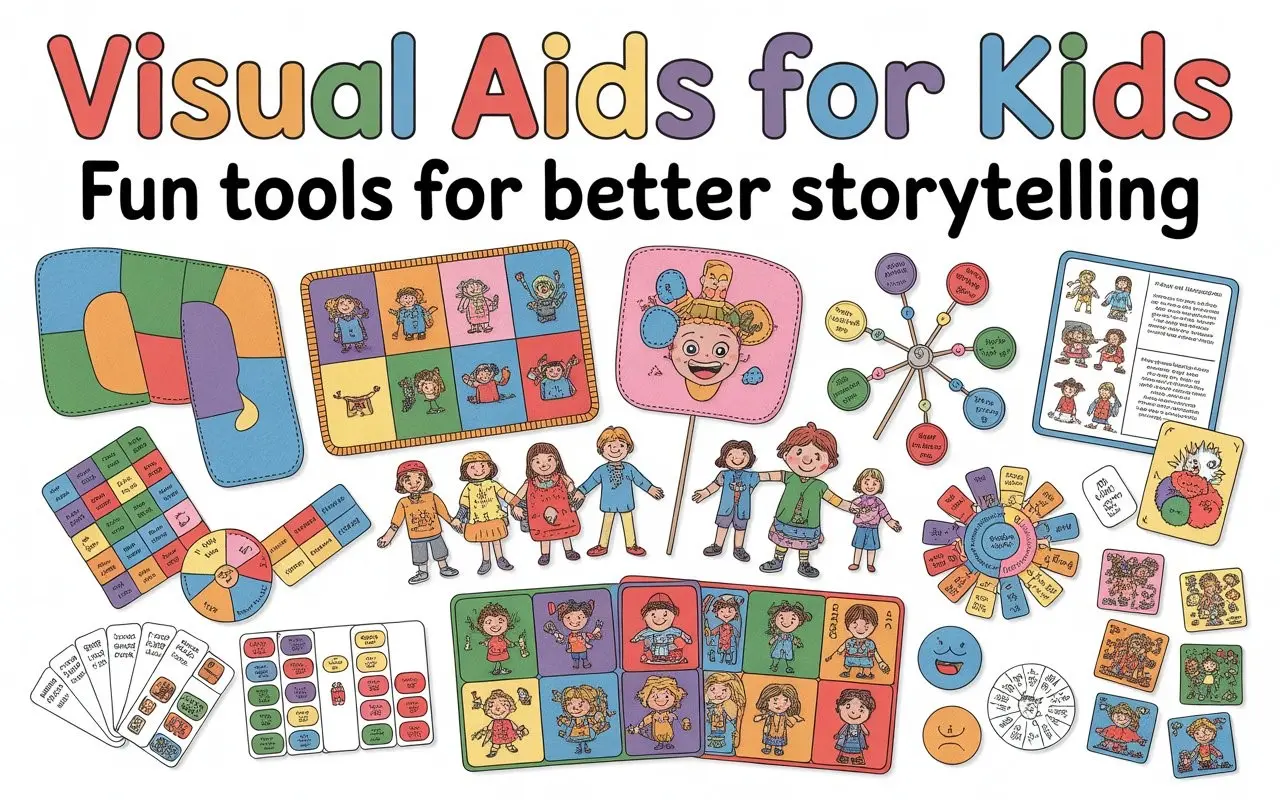
Storytelling is one of the most crucial communication skills a person can have. If you are good at storytelling, you can communicate complex ideas with ease, build rapport with others, and inspire others with your words.
In other words, it is a necessary skill for success. That’s why it is imperative that we teach our children this skill and set them up for success in the future.
Today, we are going to discuss how visual aids can help kids become better at storytelling. Of course, this guide is aimed at younger kids ranging from kindergarten to primary, so read with that in mind.
Why Visuals Matter in Storytelling
Visuals are important to us as a species. They allow us to perceive the world and navigate it without hurting others or ourselves. So, it makes sense that humans are wired to take in and understand a lot of information quickly from their eyes.
We can use this to our advantage by using visual aids for teaching. For storytelling specifically, visuals provide the following benefits.
- They are easier to comprehend than words for kids.
- They provide a memorable reference point that kids can use to follow a story in their mind.
- They help provide clarity to foggy mental imagery and help improve children’s imagination.
That’s why visual aids are great. Without them, children are often unable to follow the thread of the plot when listening to or creating stories of their own.
How To Use Visual Aids
There are many types of visual aids you can create. However, they must be chosen thoughtfully. The most effective visual aids match the learner’s age, interests, and the complexity of the content.
Younger children are able to perform better when they have bold and clear images to work with. Older children enjoy it when they get to make decisions.
Keeping that in mind, here are some examples of visual aids you can use.
-
Picture Cards for Introducing Story Elements
Picture cards help bring story components to life. Characters, locations, and objects become familiar before the storytelling begins. As the narrative unfolds, picture cards serve as recall cues.
Picture cards are great visual aids for storytelling. You can put simple pictures of scenery, set pieces, and other objects that children have to imagine when following or creating a story.
During class, teachers can hold up or pass the picture cards to the students so they can have a visual reference of important locations and events. This helps younger children connect events and ideas and describe them later from memory.
Later, when you make the students write their own stories, they will draw inspiration from the picture cards to conjure mental images for their own stories and make them feel more weighty, realistic, empathetic, and interesting.
-
Storyboards for Plot and Sequencing
Stories are structured; they have a clear beginning, middle, and end. Others describe the same structure as “exposition, climax, resolution.” To teach children storytelling, you need to teach them this basic structure.
A great visual aid for this is a storyboard. Storyboards let you break parts of your story into clear sections. They help children visually understand how this structure flows and how they can use it to craft stories of their own.
This structure is the primary reason why storytelling is so effective for communication. So, by using storyboards, you can teach children the foundational skills required for more advanced reading and writing.
-
Illustrations for Emotional and Descriptive Understanding
Illustrations are bigger and more detailed compared to picture cards. Picture cards only show singular objects, while illustrations show entire scenes.
Illustrations can help communicate the emotions, tone, and atmosphere that are required for a scene. The colors and details present also ensnare children’s attention and let them interpret visual cues on their own.
This helps them develop thinking and reasoning skills that are vital for effective storytelling.
-
Adding a Wheel Spinner for Interactive Engagement
We mentioned that older kids like to make their own decisions, and that's great for storytelling. However, you can expect children to be good at making decisions so they need some guidance.
To do that, you can use a wheelspinner as a visual aid. This is beneficial because it provides children with a starting point, rather than leaving them without direction, which can make them feel at a loss.
Here’s how a wheelspinner can help kids with storytelling.
- Put images of characters and locations on different wheels. Let the kids spin the wheel to select which new character or location appears in the story next.
- Put plot devices on a wheel. Let the kids spin the wheel to decide how their story progresses further. This kind of “make your own story” exercise is excellent for developing storytelling skills.
- Character traits. You can put these on a wheel to let kids decide what character traits they want in their story characters.
- This interactive approach strengthens flexible thinking, encourages verbal expression, and keeps children invested in the story’s progression. It also gives them ideas for when they have to write their own stories.
Encouraging Children to Create Their Own Visuals
After you introduce all of these visual aids to your students and help them explore a few stories, you can start making them practice their own story writing.
Give them exercises to come up with their own picture cards, illustrations, storyboards, and plot beats. This will help reinforce comprehension and build confidence in expressing their thoughts.
With some consistent effort, you will find that visual aids are no longer required and that your students can express themselves in clear and creative ways.
Conclusion
So, there you have it, some examples of visual aids that can help children improve their storytelling skills with ease. Storytelling is a great communication skill that can help in both written and verbal media. Developing it in children is tantamount to setting them up for success. So, don’t slack and use visual aids to your advantage and teach this skill to your kids.
⭐ Trusted by UK students · Since 2010 · Reviewed by UK Academic Editors
Request Free Review
Get a quick check of your appendices (labels, cross-references, anonymisation, layout).
Turnitin-safe · GDPR compliant · Ethical academic editing only. Need a fast reply? Chat on WhatsApp