


ANA Position Statement: Meaning, Impact, and How to Use It in Nursing Essays and Dissertations
July 8, 2025
A Smart Approach to Quick Comprehension of Study Material
July 9, 2025

Apple Inc., founded in 1977 and headquartered in Cupertino, California, has grown into one of the world’s most influential technology companies.
Known for its innovation and design excellence, Apple’s core offerings include the iPhone, Mac, iPad, and services such as iCloud and the increasingly growing App Store.
This case analysis of Apple Inc explores strategic challenges in human resources, global operations, ethical conduct, and innovation management that shape the company's continued development and resilience.


HR Challenges at Apple Inc
Apple’s human resource management strategy emphasizes innovation-driven recruitment, high performance standards, and global diversity. However, maintaining a consistent employee experience across continents presents major challenges.
Global Talent Acquisition
With a footprint spanning North America, Asia, and Europe, Apple competes for top-tier talent in saturated tech markets.However, in China, where Apple relies on contract manufacturers such as Foxconn, issues like labor conditions and worker well-being have attracted scrutiny for various reasons.
Employee Retention and Culture
High turnover in certain roles, especially in retail and support functions, poses operational risks. Apple addresses this by promoting a culture of ownership, offering equity incentives, and investing in long-term training programs.
Case Insight: In 2021, Apple launched its “Retail Flex” program to retain retail staff post-COVID, offering remote roles and better scheduling flexibility throughout the world.
Change Management at Apple Inc
To stay competitive, Apple continuously adapts its organizational structure and product strategies by applying strategic change management principles, ensuring smooth transitions across departments.
Innovation and Leadership Alignment
Since Tim Cook succeeded Steve Jobs, Apple has focused on operational efficiency, while maintaining its innovation legacy. Cross-functional teams and product integration have become key to managing change.
Managing Internal Transformation
Mergers, sustainability initiatives, and new product launches (e.g., iPhone 17 series and potentially new M5 chip Macs and iPads) require strong leadership and communication across departments.
Example: The shift toward Apple Silicon (M5 chips) marked a significant internal change, requiring retraining and new workflows across the Mac division.
Ethics, Culture, and Legal Compliance
Apple positions itself as an ethical tech leader, but faces challenges in applying uniform standards globally.
Supply Chain Ethics
Labor practices in factories have drawn criticism, prompting Apple to audit suppliers and enforce its Supplier Code of Conduct.
Intellectual Property and Data Privacy (2025)
Apple invests heavily in IP protection and has stood firm on user privacy (e.g., App Tracking Transparency), differentiating itself in today’s data-driven market.
Cultural Sensitivity
Operating in 100+ countries requires Apple to tailor communication, leadership styles, and product features to align with local expectations and laws.
Global Influence and Regulatory Pressures
Apple’s global status brings prestige and intense scrutiny. It must navigate a complex landscape of international labor laws, environmental expectations, and digital policy.
Regulatory Pressures
Apple has faced:
- EU lawsuits over App Store antitrust concerns
- S. Congressional probes on market dominance
- Environmental impact audits from watchdog groups
Talent Utilization and Localization
Apple’s strategy includes hiring local leadership, investing in regional research and development (R&D) hubs, and adapting marketing strategies per geography.
Strategic Approaches to Overcoming Challenges
Apple deploys multiple strategies to stay ahead, which includes:
Innovation and R&D
Apple invests over $30 billion in R&D and emerging technologies on topics closely related to innovation management research topics.
Empowering People
Apple encourages innovation internally through hackathons, product team autonomy, and clear performance incentives.
Brand and Customer Loyalty
Its emphasis on product quality and design keeps customer retention high—an indirect but powerful HR and strategic advantage.
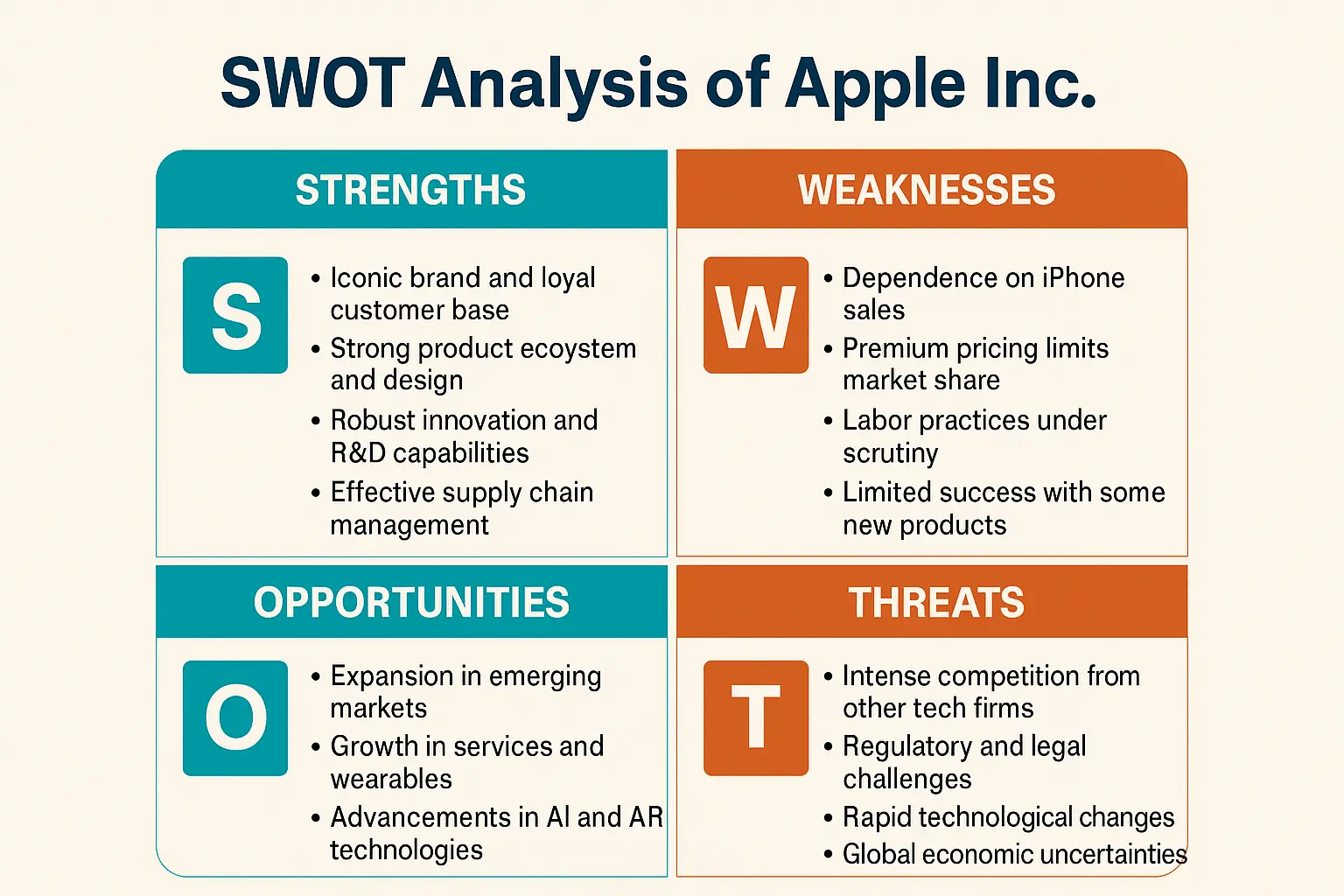
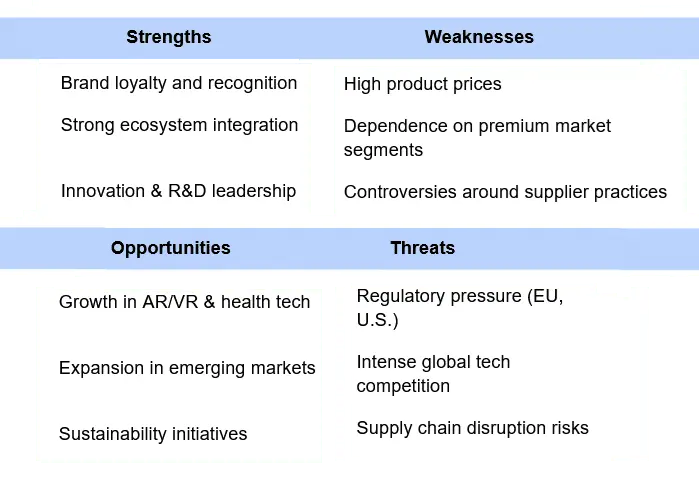
Apple SWOT Analysis Chart
This chart aligns with themes often explored in business dissertation topics, such as competitive strength and emerging market opportunities.
Concluding Pointers
This Apple Inc case analysis illustrates how a combination of strategic HR management, ethical leadership, and global responsiveness has fueled Apple’s success. To remain dominant, Apple must continue to:
- Align innovation with ethical values
- Strengthen HR adaptability worldwide
- Integrate change with transparency and agility
Apple’s future will rely on the effective integration of people, process, and product in a fast-evolving global tech environment
This is the title



Get 3+ Free Dissertation Topics within 24 hours.