

How to Publish Your First Research Paper (2026 Guide for Students & Early Researchers)
May 20, 2026
Best Value Insurance for International Students in the U.S.
May 21, 2026
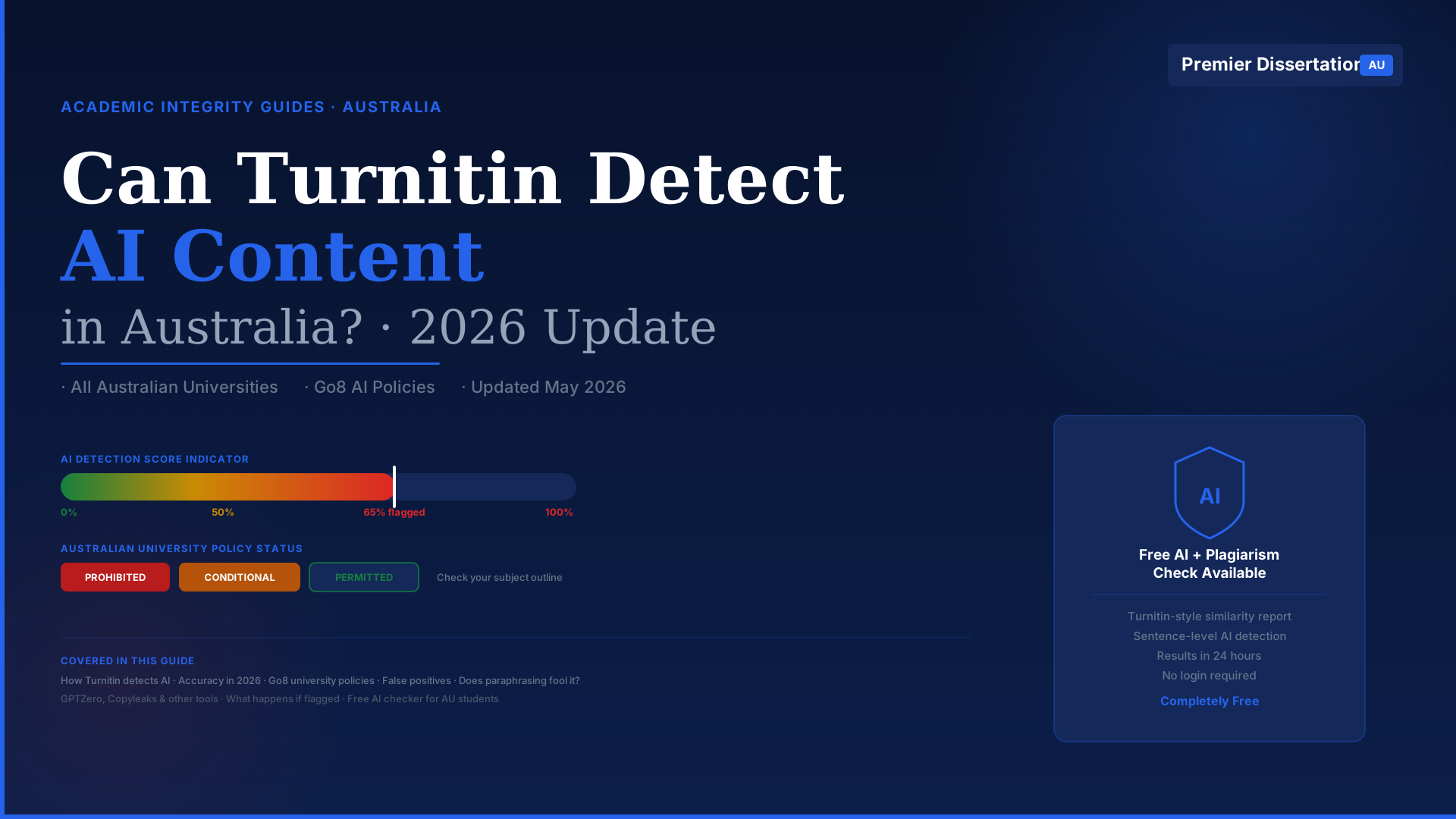
Academic Integrity Guides Australia
In this guide
Since Turnitin launched its AI writing detection feature in 2023, the question "Can Turnitin detect AI?" has become one of the most searched questions by students at Australian universities. By 2026, the answer is more nuanced — and more consequential — than ever.
Yes, Turnitin can detect AI-generated content. But it is not infallible, it does produce false positives, and Australian universities are still navigating how to apply AI detection results fairly in academic integrity proceedings. This guide explains exactly how the technology works, what Australian universities are doing about it, and what you need to know before you submit any assessment.
Check your assignment or thesis before your lecturer does. Premier Dissertations AU offers a free Turnitin similarity report and AI detection check for Australian students — results returned within 24 hours.
Run your free check →How Turnitin Detects AI Writing
Turnitin's AI detection works differently from its plagiarism detection. Rather than comparing your text against a database of existing documents, AI detection analyses the statistical patterns in your writing — specifically, how predictable each word choice is given the words that came before it.
Large language models like ChatGPT, Gemini, and Claude generate text by selecting the most statistically probable next word at each step. This produces writing that is grammatically smooth and logically coherent — but also measurably more predictable than human writing. Turnitin's detector looks for these predictability patterns, known as low perplexity (the text is exactly what a language model would generate) and low burstiness (the writing lacks the natural variation in sentence length and complexity that human writers produce).
When Turnitin analyses a submitted document, it produces a percentage score — from 0% to 100% — representing the proportion of text it believes was AI-generated. A score of 20% means Turnitin believes approximately one fifth of the submitted text shows AI-generation patterns.
How Accurate Is Turnitin AI Detection in 2026?
Turnitin has reported that its AI detector has a false positive rate of less than 1% at the 20% AI score threshold — meaning fewer than 1 in 100 fully human-written documents would be incorrectly flagged as AI-generated when the threshold is set at 20%. At lower thresholds, false positives increase.
However, real-world accuracy is more complicated. Several factors affect detection reliability:
| Factor | Effect on Detection Accuracy |
|---|---|
| Document length | Shorter texts (<300 words) produce less reliable results; longer documents are more accurately assessed |
| Writing style | Highly formal or technical writing can resemble AI output and increase false positive risk |
| Non-English languages | Accuracy is lower for non-English languages; Turnitin has acknowledged this limitation |
| Heavy editing of AI output | Significantly edited AI text may score lower, but patterns can still be detectable |
| AI model used | Turnitin is trained on GPT-3.5 and GPT-4 patterns; newer or less common models may be harder to detect |
The bottom line: Turnitin AI detection is significantly better in 2026 than it was in 2023, and it is improving continuously. Students who submit AI-generated work — or heavily AI-assisted work — face a real and increasing risk of detection.
Australian University AI Policies in 2026
Australian universities have moved quickly to develop AI use policies since 2023, and by 2026 virtually every major institution has a published framework. However, policies vary significantly — and the approach taken by Go8 universities is generally more stringent than that of newer institutions.
The broad landscape of AI policy at Australian universities in 2026 falls into three categories:
The critical rule: always check your specific subject outline and assessment task sheet, not just your university's general AI policy. A university may permit AI use broadly while individual assessors prohibit it for their tasks. When in doubt, ask your lecturer directly — in writing.
| University | General AI Policy Approach (2026) |
|---|---|
| University of Melbourne | Subject-by-subject determination; AI use must be declared; prohibited in most research assessments |
| UNSW Sydney | Tiered framework; GenAI prohibited unless explicitly permitted in task; Turnitin AI reports used |
| University of Sydney | Unit-level decisions; academic integrity team reviews flagged submissions holistically |
| Monash University | Generative AI treated as "unauthorised assistance" unless stated otherwise in task instructions |
| University of Queensland | AI Detection Indicator used alongside educator review; no action on AI score alone |
| ANU | Strict AI prohibition in research writing; academic integrity penalties apply to undisclosed use |
What Happens If Turnitin Flags Your Work as AI?
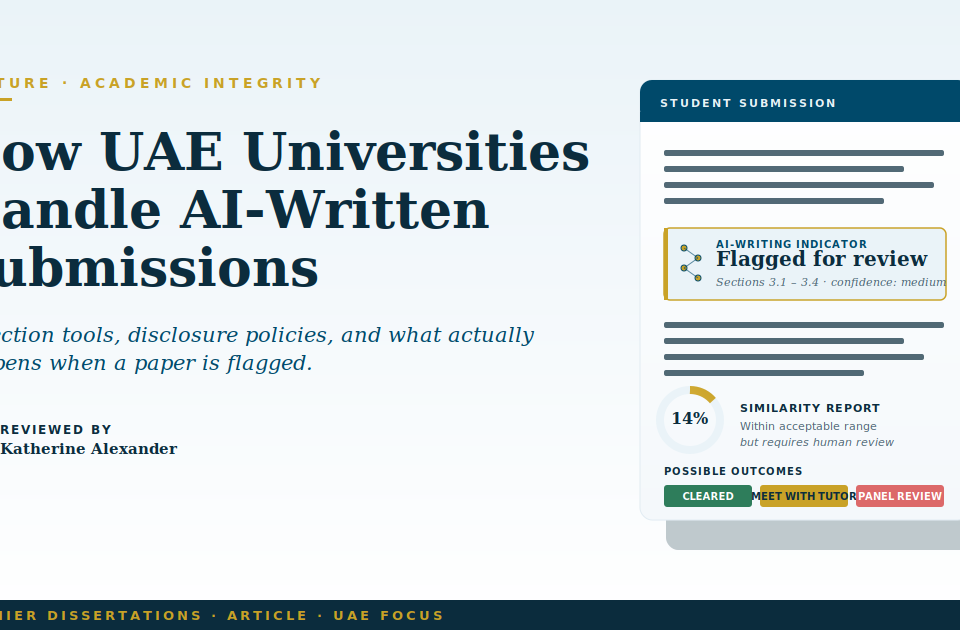
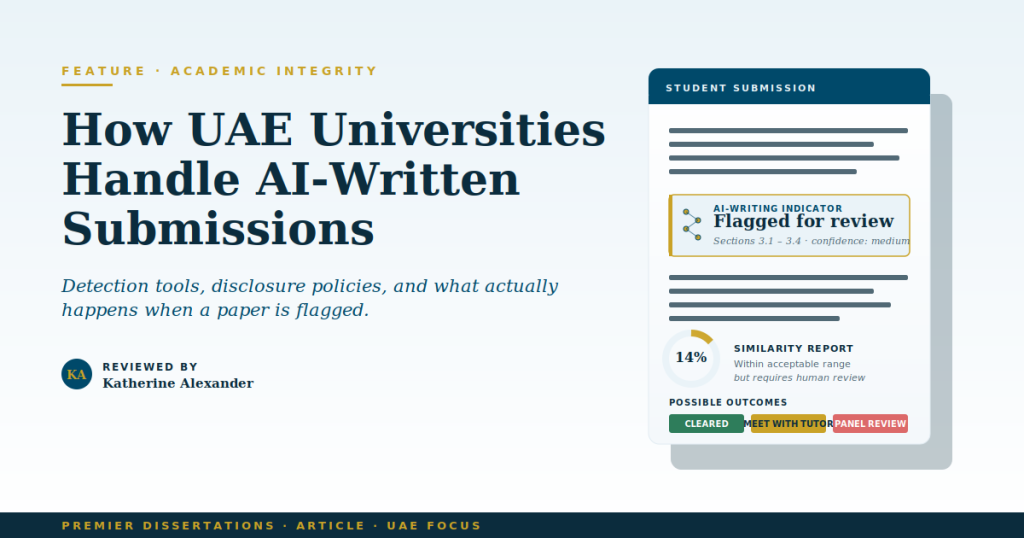
A high Turnitin AI score does not automatically result in a misconduct finding. Most Australian universities follow a process that looks something like this:
Does Paraphrasing or Rewriting AI Content Fool Turnitin?
This is one of the most commonly asked questions — and the answer, in 2026, is: not reliably.
Students often believe that running AI output through a paraphrasing tool, or manually rewording AI-generated paragraphs, will eliminate detection risk. This strategy has become significantly less effective as Turnitin and other detectors have evolved.
Beyond detection risk, there is a deeper problem: even when AI-assisted work passes detection, assessors often notice quality inconsistencies — sections that are unusually polished, arguments that are generic rather than specific, or a writing voice that shifts mid-document. Experienced academics can often recognise AI-assisted work without any software tool.
Other AI Detection Tools Used in Australia
Turnitin is the most widely used tool at Australian universities, but it is not the only detector in use. Some institutions use multiple tools to cross-check results.
| Tool | Used By | Key Feature |
|---|---|---|
| Turnitin AI Indicator | Most Go8 and major Australian universities | Integrated into submission workflow; percentage score with highlighted segments |
| GPTZero | Individual academics; some secondary schools | Sentence-level analysis; identifies specific suspected AI sentences |
| Copyleaks | Some regional Australian universities | Combines plagiarism and AI detection; supports 100+ languages |
| Originality.ai | Some TAFEs and private colleges | Frequently updated; trained on multiple AI models including GPT-4o |
| iThenticate | Postgraduate research submissions; journal editors | Primarily plagiarism-focused; used alongside Turnitin for PhD theses |
False Positives — A Real Risk for Genuine Students
False positives — where Turnitin flags human-written work as AI-generated — are a genuine concern, particularly for:
If you are a genuine student who receives a high AI score on work you wrote yourself, you have the right to contest the finding. Maintaining a draft history, keeping your research notes, and being able to explain your argument and sources in person are all valuable evidence in your defence.
Run your document through AI detection before you submit. Our free checker returns a Turnitin-style similarity score AND a separate AI detection score — within 24 hours. No login required.
Run your free check →How to Protect Yourself — Write Genuinely
The most reliable way to protect yourself from AI detection — and from the intellectual void that comes with not doing your own thinking — is to write your own work. Here are practical strategies for producing genuinely human writing that is both high-quality and detection-proof:
Check Your Work Before You Submit
Running your own document through an AI detection tool before submission is rapidly becoming standard practice for Australian students — not because they are using AI, but because they want to identify and address any false positives before they reach their assessor.
Premier Dissertations AU offers a free AI detection and plagiarism check for Australian students. You upload your document and receive two reports within 24 hours:
The check is completely free — no payment required, no subscription, no data shared with your university.
Need 100% Human-Written Thesis or Assignment Work?
If you use Premier Dissertations AU for model thesis chapters, assignments, or editing, every document we produce is written entirely by PhD-qualified human academics — no AI tools, no language model assistance. We provide the Turnitin similarity report and AI detection report with every order, free of charge, so you can see exactly what we mean.
Thesis writing and assignment help from AUD $27/page.
Check Your Work or Get Human-Written Help
Free AI + plagiarism check · 100% human-written model papers · Trusted by 15,000+ Australian students since 2010.
PhD academics · Human-written · Turnitin + AI report · UniMelb, UNSW, USyd, Monash, UQ, ANU, UWA & more