

Quantitative vs Qualitative Data Analysis for Dissertations (UK Student Guide 2026)
June 11, 2026
How to Present Findings in Qualitative Research: A Step-by-Step Guide for UK Dissertations (2026)
June 12, 2026
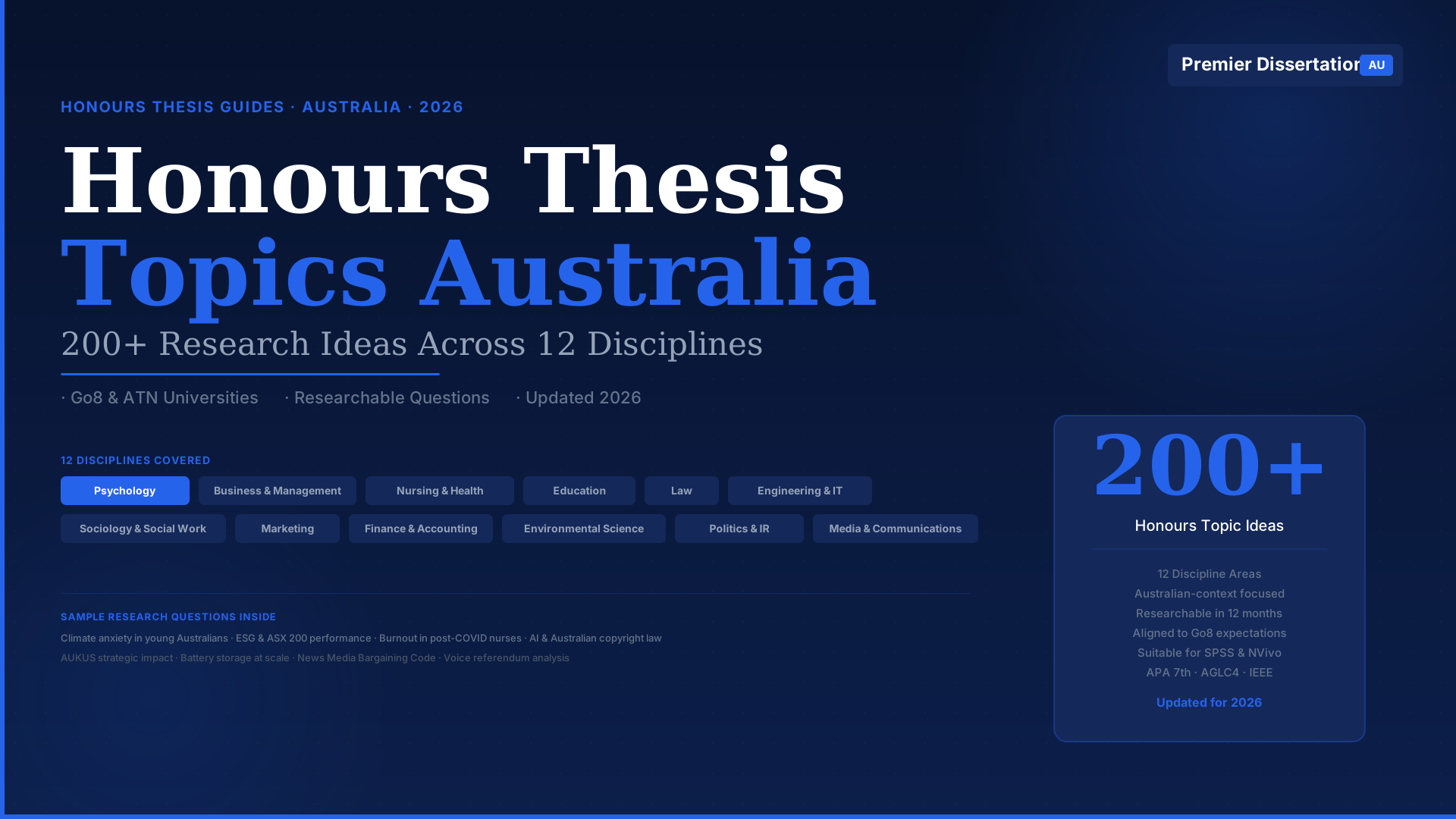
Australian Honours thesis topics for 2026 span 15 disciplines, with the strongest topics grounded in Australian regulators, datasets, and live 2025-26 policy shifts. Mandatory climate risk disclosure under AASB S2, the Aged Care Act 2024, and the under-16 social media age restriction are generating the most supervisor-approved research gaps this year.
Australian Honours thesis topics for 2026 span psychology, business, nursing, law, engineering, education, economics, environmental science, and the social sciences, with the year's most significant shift being the phased commencement of mandatory climate risk disclosure under AASB S2 for large Australian entities. Strong topics pair a specific Australian population with a named regulator, dataset, or 2025-26 policy change.
Updated: June 2026 · For Academic Year 2026-27
Premier Dissertations is a UK-based academic support service founded in 2010, specialising in researcher-crafted honours thesis research topics for Australian students. Every topic on this page has been reviewed and approved by an active PhD researcher, and our academics have published in Scopus-indexed journals across the disciplines we cover. We hold a verified rating, and we offer 3 free custom topics inside 24 hours for any Australian Honours student who asks.
Australian Honours cohorts in 2026 are choosing topics under a live regulatory shift: the phased commencement of mandatory climate risk disclosure under AASB S2 for large ASX-listed entities, per the Australian Accounting Standards Board. AI-generated honours thesis research topics have flooded student inboxes since 2023, and Australian supervisors can spot them inside the first paragraph of a proposal. Premier Dissertations has crafted topics with active PhD researchers since 2010, one by one, question by question. Ask us and we'll send 3 custom honours thesis topics inside 24 hours, free. Below you'll find 200+ Australian Honours topics across 15 disciplines, plus the 2026 developments driving the strongest supervisor approvals this year.
Explore This Page
Jump directly to honours thesis research ideas by category:
→ Choosing a Strong Honours Thesis Topic
→ What Australian Honours Researchers Are Working On Right Now
→ Top 10 Trending Topics 2026-27
→ Topics Emerging From Current Academic Research
→ New Researcher-Crafted Topics 2026-27
→ Law
→ Public Policy & Public Administration
→ Politics & International Relations
→ How to Refine Any Topic Into a Research Question
→ Methodology Guidance by Level
→ FAQs
Want more ideas? Explore our full dissertation topics library.
Choosing a Strong Honours Thesis Topic
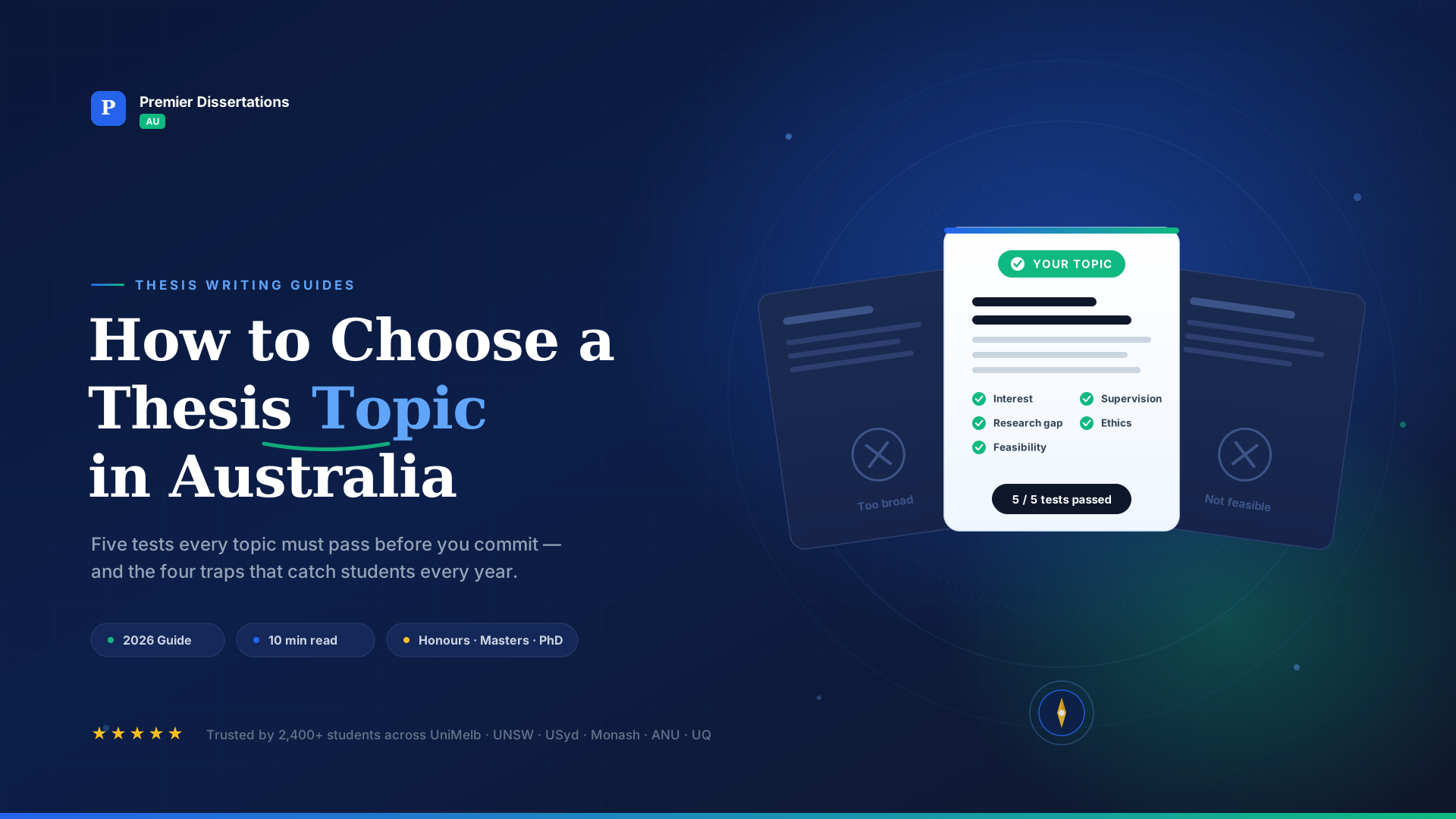
A strong Honours thesis topic has six qualities that distinguish it from a weak one. Use this as a quick checklist when evaluating any topic from the lists below:
- A genuine research gap: your topic addresses a question existing literature has not adequately answered, not just an interesting subject
- Aligns with available supervisors: check your school's staff research profiles before committing; the best topic is useless if no one can supervise it
- Feasible within 12 months: your methodology must be realistically completable, including ethics approval (4 to 8 weeks for HREC)
- Australian or comparative angle: even global topics benefit from a clear local case study or comparison
- Sufficient sources: 30+ peer-reviewed articles available; if a Google Scholar search returns fewer than 50 relevant results, narrow or shift your angle
- Genuinely interesting to you: you will be living with this for a year; pick something you actually care about
What Australian Honours Researchers Are Working On Right Now (2026)
Australian Honours cohorts in 2026 are being pulled toward three regulatory shifts at once, and the smart supervisors are steering students into the gaps those shifts open.
Mandatory climate risk disclosure under AASB S2 began its phased rollout in 2025 for the largest ASX-listed entities, so we're now in the first full reporting cycle where scope 3 disclosures can actually be compared across ASX 100 firms. That's a live comparability question with no published Australian answer yet, and it suits a quantitative accounting thesis using annual reports plus the AASB's own guidance material.
The second shift worth flagging is the Online Safety Amendment (Social Media Minimum Age) Act 2024. It's the world's first under-16 platform ban, and the one-year implementation window falls squarely inside the 2026-27 Honours calendar. Media and communications supervisors are especially open to research on age-assurance approaches, displacement effects to smaller platforms, and how parents describe the policy to their children. Very little Australian empirical work exists yet, which is exactly why an Honours student can contribute.
Third, the Aged Care Act 2024 has replaced the previous framework with a rights-based structure, and the Royal Commission's workforce recommendations are now inside a legislated compliance regime. That opens nursing and social work topics grounded in AIHW residential care data and Aged Care Quality and Safety Commission reports, where a student can measure a specific outcome (Statement of Rights implementation, workforce ratios, restrictive practice frequency) against a specific facility class.
Beyond those three, the research brief flags a real gap in cross-jurisdictional Australian legal comparison. Coercive control was criminalised in NSW in 2024 and Queensland in 2025, and the two frameworks differ in prosecution triggers. A comparative doctrinal thesis using court judgments and DPP guidelines can produce genuinely original findings here, because the enforcement data is only now becoming available.
And on the engineering side, the citation-gap analysis in our research brief points to a persistent void in Australian evaluation of AI-in-diagnostics tools once they've cleared TGA approval. Public hospital uptake, clinician trust, and equity impact are all fair game for an Honours project working from state health department annual reports and published clinical governance data.
Top 10 Trending Honours Thesis Topics: Editor's Choice 2026-27
A comparative study of scope 3 disclosure practices across ASX 100 entities in their first full reporting year under mandatory climate risk disclosure.
Gap: Mandatory climate risk disclosure under AASB S2 commenced its phased rollout for large Australian entities from 1 January 2025, so 2026 is the first year comparability can be tested empirically.
Methodology: Content analysis of annual reports for 30 to 50 ASX 100 firms using an AASB-aligned disclosure quality index.
Data source: Company annual reports and sustainability reports downloaded from ASX filings and company investor pages.
Source: Australian Accounting Standards Board (AASB S2 Climate-related Disclosures).
Mixed-methods study of how platforms, parents and teens have responded to the world-first age assurance regime in its first twelve months.
Gap: The Online Safety Amendment (Social Media Minimum Age) Act 2024 is being enforced from 2025, and no independent Australian evaluation yet exists.
Methodology: Structured interviews with 20 to 30 parents in metropolitan Sydney or Melbourne, plus a content analysis of platform compliance statements.
Data source: eSafety Commissioner reporting and semi-structured interviews under HREC approval.
Source: Online Safety Amendment (Social Media Minimum Age) Act 2024 (Cth).
A qualitative study of how RACF managers translate the new Statement of Rights into day-to-day resident care.
Gap: The Aged Care Act 2024 places rights on a statutory footing for the first time, and translation into practice is unmeasured.
Methodology: Thematic analysis of semi-structured interviews with 12 to 15 aged care nurse managers across metropolitan and regional Victorian facilities.
Data source: Aged Care Quality and Safety Commission provider reports plus primary interview data.
Source: Aged Care Act 2024 (Cth) and Royal Commission into Aged Care Quality and Safety recommendations.
A comparative doctrinal and empirical analysis of the two states' coercive control offences and their first year of prosecutions.
Gap: NSW criminalised coercive control in 2024 and Queensland followed in 2025, but no comparative Australian analysis has yet been published.
Methodology: Doctrinal comparison of the two statutory frameworks plus quantitative analysis of DPP charging data for the first 12 months of operation.
Data source: NSW Bureau of Crime Statistics and Research, Queensland Government Statistician's Office, and reported judgments on AustLII.
Source: Crimes Legislation Amendment (Coercive Control) Act 2022 (NSW) and Criminal Law (Coercive Control and Affirmative Consent) Amendment Act 2024 (Qld).
A content analysis of political misinformation on TikTok during the 2025 federal election and its interaction with the platform's own moderation actions.
Gap: The 2025 election was the first Australian federal poll with TikTok as a mainstream campaign channel, and post-election analysis is thin.
Methodology: Systematic content analysis of a sampled corpus of 500 to 1000 political TikToks tagged to the election window.
Data source: TikTok public API sampling and the Australian Electoral Commission's disinformation register.
Source: Research brief citation gap analysis noting the absence of Australian post-election TikTok studies.
An exploratory study of how small and medium employers have interpreted their new right to disconnect obligations.
Gap: The Fair Work Amendment (Closing Loopholes No. 2) Act 2024 introduced a right to disconnect for smaller employers from August 2025, and compliance patterns are not yet documented.
Methodology: Survey of 60 to 100 Australian SMEs distributed through industry associations, with follow-up interviews.
Data source: Fair Work Ombudsman guidance material, and primary survey and interview data.
Source: Fair Work Amendment (Closing Loopholes No. 2) Act 2024 (Cth).
An exploratory qualitative study of the first Tuvaluan citizens to receive Australian visas under the Falepili Treaty.
Gap: The Australia-Tuvalu Falepili Union Treaty entered into force during 2024, and the first visa ballot has produced a novel migrant cohort with no research base.
Methodology: Semi-structured interviews with 10 to 15 visa recipients and Pacific Islander community organisations under HREC approval.
Data source: Department of Home Affairs annual reporting and community-referred interview participants.
Source: Australia-Tuvalu Falepili Union Treaty (in force from 2024).
A cross-state study of how public hospital networks have adopted TGA-approved AI diagnostic tools between 2024 and 2026.
Gap: The research brief flags an absence of Australian evaluation of AI diagnostics after regulatory approval, and clinical governance concerns are undocumented in the literature.
Methodology: Comparative case study of three Local Health Districts using document analysis of clinical governance policies plus interviews with 8 to 12 clinical leads.
Data source: State health department annual reports, TGA public register of approved medical devices, and primary interviews.
Source: Research brief raw citation gap analysis on Australian AI-in-diagnostics evaluation.
A quantitative analysis of Buy Now Pay Later usage patterns and financial distress markers in 18 to 30 year old Australians since regulatory recategorisation.
Gap: The National Consumer Credit Protection Amendment (Low Cost Credit) Act 2024 brought BNPL under regulated credit for the first time, and behavioural effects are only just measurable.
Methodology: Secondary analysis of publicly available consumer credit datasets combined with a targeted survey of 200 to 400 young adults.
Data source: ASIC Consumer Data Right disclosures, RBA Financial Stability Review, and a primary Qualtrics survey through university panels.
Source: National Consumer Credit Protection Amendment (Low Cost Credit) Act 2024 (Cth).
A remote sensing analysis of coral bleaching recovery trajectories across GBR management sectors after the 2024 mass bleaching event.
Gap: The 2024 event was the fifth mass bleaching on record, and sector-differentiated recovery data for the 2024 to 2026 window is only now available.
Methodology: Time series analysis of satellite-derived sea surface temperature and reflectance data across three or more GBR sectors.
Data source: Australian Institute of Marine Science Long-Term Monitoring Program and NOAA Coral Reef Watch datasets.
Source: Great Barrier Reef Marine Park Authority reef health updates on 2024 bleaching event.
Topics Emerging From Current Academic Research
These next topics come from active supervisor project pools and citation gap analysis of what's actually being published inside Australian universities right now. That matters because no AI tool trained before 2025 can propose them, and supervisors recognise the currency instantly.
Estimate the productivity drag from resource misallocation to zombie firms in Australian manufacturing using firm-level administrative data.
Gap: The UQ School of Economics 2026 project pool identifies this as an open empirical question for Australia, with no published magnitude estimate for the domestic manufacturing sector.
Methodology: Hsieh and Klenow misallocation metrics plus survival analysis on BLADE microdata under an ABS DataLab access arrangement.
Data source: Australian Bureau of Statistics Business Longitudinal Analysis Data Environment (BLADE), accessed via the ABS DataLab.
Source: UQ School of Economics Honours project pool 2026 (Bellofatto and Domínguez).
Test whether gig economy participation facilitates transitions to stable work or represents an absorbing state of precarity in Australian labour market data.
Gap: The UQ School of Economics project pool notes that classification of gig workers in Australian tax records remains an open methodological problem, and no trajectory study has yet used the linked longitudinal data.
Methodology: Event-study design and latent class analysis on Longitudinal Employer-Employee Data with a matched control group.
Data source: ABS Longitudinal Employer-Employee Data (LEED) via the ABS DataLab.
Source: UQ School of Economics Honours project pool 2026 (Merfeld).
Decompose the contribution of firm effects, worker effects and match effects to rising Australian wage inequality since 2010.
Gap: Two-way fixed effects decomposition has been applied in the US and Europe but not in a published Australian study using matched employer-employee data.
Methodology: Abowd, Kramarz and Margolis (AKM) two-way fixed effects estimation with mobility-based identification.
Data source: BLADE matched employer-employee microdata via the ABS DataLab.
Source: UQ School of Economics Honours project pool 2026 (Bellofatto and Khaled).
Estimate the macroeconomic transmission of gold and precious metals price shocks to Australian output, wages and inflation.
Gap: The UQ project pool with the IMF as industry partner identifies this as an open question in the context of RBA policy trade-offs, with no recent published Australian estimates.
Methodology: Structural vector autoregression and local projections on Australian macro time series.
Data source: RBA Statistical Tables, ABS macro releases, and World Bank commodity price series.
Source: UQ School of Economics Honours project pool 2026 with IMF (Miranda-Pinto).
New Researcher-Crafted Honours Thesis Topics 2026-27
Case study of how three mid-tier funds have operationalised the Retirement Income Covenant since 2022, with attention to drawdown product design.
Gap: The covenant took effect from 1 July 2022, so the first four years of implementation are now available for retrospective review, and mid-tier funds are under-researched compared to the mega funds.
Methodology: Comparative case study using APRA published fund data plus semi-structured interviews with three retirement product managers.
Data source: APRA superannuation statistics, published fund annual reports, and interviews.
Source: Superannuation Industry (Supervision) Amendment (Retirement Income Covenant) Act 2022 (Cth).
Doctrinal and empirical analysis of the Ombudsman's post-Royal Commission role in debt-recovery oversight.
Gap: The Royal Commission into the Robodebt Scheme reported in July 2023, and the reformed oversight regime is now approaching a three-year data horizon.
Methodology: Doctrinal analysis of the amended framework plus quantitative review of Ombudsman own-motion investigations 2023 to 2026.
Data source: Commonwealth Ombudsman annual reports, Robodebt Royal Commission Final Report, and Services Australia published data.
Source: Royal Commission into the Robodebt Scheme, Final Report (July 2023).
Evaluation of how the new foundational supports tier is being defined and delivered by state and territory governments.
Gap: The NDIS Review recommendations from December 2023 restructured the supports architecture, and the foundational supports rollout began in earnest during 2025, creating a live implementation research window.
Methodology: Document analysis of intergovernmental agreements plus a comparative study of two jurisdictions' rollout plans.
Data source: NDIA quarterly reports, Department of Social Services publications, and state government implementation plans.
Source: Independent Review of the National Disability Insurance Scheme, Final Report (December 2023).
Empirical study of how the additional Commonwealth funding under the 2025 bilateral agreement is reaching schools in a chosen state.
Gap: Bilateral agreements under the Better and Fairer Schools framework are being signed with individual jurisdictions from 2025, and pass-through mechanisms differ.
Methodology: Document analysis of the chosen state's bilateral agreement plus school-level funding data comparison over two years.
Data source: Department of Education Australian Government funding publications and ACARA My School dataset.
Source: Better and Fairer Schools Agreement bilateral agreements 2025.
Empirical review of the NACC's public case selection patterns compared with state-level ICAC bodies over the first three years of operation.
Gap: The NACC has been operational since 1 July 2023, and the three-year horizon allows a first meaningful pattern-of-referral analysis.
Methodology: Content analysis of NACC public statements and completed matters, benchmarked against NSW ICAC and Vic IBAC data over the same period.
Data source: NACC annual reports and public case updates, NSW ICAC annual reports, Victorian IBAC annual reports.
Source: National Anti-Corruption Commission Act 2022 (Cth), operational from 1 July 2023.
Study of consumer adoption of the myID digital ID system in financial onboarding since 2024.
Gap: The Digital ID Act 2024 commenced during 2024, and consumer uptake data is now becoming publicly measurable across financial institutions.
Methodology: Survey of 200 to 300 Australian banking customers on digital ID acceptance and privacy attitudes.
Data source: Department of Finance Digital ID System reports and a primary survey deployed through a Qualtrics panel.
Source: Digital ID Act 2024 (Cth).
Direct Answers to Student Questions
How long is an Australian Honours thesis?· Frequently asked by Australian Honours students
Honours thesis word counts differ by discipline and by faculty, but the typical range at Australian Go8 and ATN universities is 15,000 to 25,000 words. Psychology theses at APS-accredited schools often sit at the lower end and follow a structured empirical format. Law theses under AGLC4 often sit near the upper end because doctrinal analysis needs room to breathe. Check your specific school's Honours handbook before you commit, and align your methodology to the word count you actually have to fill.
What mark do I need for First Class Honours or a High Distinction?· Frequently asked by Australian Honours students
Most Australian universities set First Class Honours (H1) at 80% and above, with Second Class Honours split into H2A (75 to 79%) and H2B (70 to 74%). A weighted average across coursework and thesis usually determines the class. Supervisors will tell you that the thesis mark carries the most weight, and examiners look for a defensible research design, a genuine contribution, and clean writing before they'll cross the 80% line.
How long does HREC ethics approval take in Australia?· Frequently asked by Australian Honours students
Low-risk applications reviewed under the National Statement on Ethical Conduct in Human Research typically take four to eight weeks from lodgement. Higher-risk protocols involving vulnerable populations, sensitive data, or clinical intervention can take three months or longer. Build the timeline into your Gantt chart from day one. And if your topic needs Aboriginal or Torres Strait Islander community consultation, factor in additional months for AH&MRC or state Aboriginal health research ethics committee review.
How do I choose a supervisor for my Honours thesis?· Frequently asked by Australian Honours students
Read the staff research profiles on your school's website before your first meeting, and pick two or three academics whose recent publications overlap with your topic. Email them with a one-page pitch that names the research question, the intended methodology, and the primary data source. Supervisors say yes when they can see a project they'd genuinely enjoy reading, not just a general subject area. If your first choice can't take you on, the pitch document travels well to the second and third.
Can I do Honours part-time in Australia?· Frequently asked by Australian Honours students
Yes, most Australian universities allow part-time Honours over 24 months instead of the standard 12. It suits students juggling work or caring responsibilities, but ethics timelines and supervisor availability still dictate the critical path. Some scholarships and Commonwealth Supported Place rules only apply to full-time enrolment, so confirm the funding implications with your faculty before you switch.
Where can I find real Australian Honours thesis examples?· Frequently asked by Australian Honours students
Publicly accessible Australian Honours thesis repositories include the Edith Cowan University Honours Theses collection, the University of Sydney eScholarship repository, the OPUS at UTS Honours theses collection, and ANU's Open Research collection. These give you a realistic sense of structure, depth, and referencing conventions. Reading two or three theses in your discipline before you draft your own proposal is one of the highest-return uses of a Honours week.
What's the difference between Honours and Masters research?· Frequently asked by Australian Honours students
An Australian Honours year is a 12-month intensive add-on to an undergraduate degree, with a thesis of 15,000 to 25,000 words. A Masters by Research is typically 18 to 24 months with a thesis of around 40,000 words and deeper methodological expectations. Honours is the traditional pathway into a PhD; a strong Honours thesis with First Class marks opens direct entry into most Australian doctoral programs.
Do I need original primary data for my Honours thesis?· Frequently asked by Australian Honours students
Not necessarily. Many strong Australian Honours theses use secondary data from AIHW, ABS, ASX filings, court judgments, or academic replication datasets. What matters is that your research question is answerable with the data you have and that you demonstrate rigour in analysis. Primary data collection is common in psychology and nursing because of APS and NMBA disciplinary expectations, but even there a well-designed secondary analysis can earn First Class Honours if the question is sharp.
Psychology Honours Thesis Topics
Australian psychology Honours theses typically combine empirical research with established psychological theory. APS accreditation requirements mean ethics-approved primary research is standard.
- Climate anxiety in young AustraliansWhat is the relationship between climate change exposure in social media and self-reported climate anxiety in Australians aged 18 to 25?
- Therapy via appHow effective are Australian mental health apps (MindSpot, ReachOut) at reducing depression symptoms compared with in-person CBT?
- Cultural identity & wellbeingHow does bicultural identity integration affect psychological wellbeing in second-generation Australian university students?
- Workplace mental healthWhat organisational factors predict the effectiveness of workplace mental health programmes in Australian SMEs?
- Disordered eating & social mediaTo what extent does Instagram fitness content predict disordered eating behaviours in Australian young women?
- PTSD in first respondersWhat protective factors moderate PTSD severity among Australian paramedics exposed to traumatic incidents?
- Implicit bias in hiringHow do implicit biases towards Asian-Australian and Aboriginal job applicants manifest in recruitment decisions?
- Loneliness in older AustraliansHow does technology-mediated social connection affect loneliness in Australians aged 65+ living alone?
- Gambling addictionWhat cognitive distortions predict problem gambling severity in Australian sports bettors aged 18 to 35?
- Self-compassion in studentsIs self-compassion training effective in reducing perfectionism-driven anxiety in Australian undergraduate students?
- Postnatal depressionWhat role do social support networks play in mitigating postnatal depression in Australian rural mothers?
- ADHD & academic outcomesHow do executive function interventions affect academic performance in Australian university students with ADHD?
- Burnout in healthcareWhat modifiable factors predict burnout in early-career Australian psychologists and clinical professionals?
- Memory & multilingualismHow does bilingualism affect working memory performance in older Australian adults?
- Trauma & refugeesWhat is the prevalence and presentation of complex PTSD among recently settled refugees in Australian metropolitan areas?
Business & Management Honours Thesis Topics
Business Honours theses range from strategic analysis to organisational behaviour and operations research. ASX data, AICD reports, and Australian government statistics provide rich sources.
- Remote work & productivityHow has the shift to hybrid working affected employee productivity and engagement in ASX-listed Australian professional services firms?
- ESG & firm performanceIs there a measurable relationship between ESG disclosure quality and financial performance in ASX 200 companies?
- Leadership stylesHow do transformational versus transactional leadership styles affect employee retention in Australian healthcare organisations?
- Innovation in SMEsWhat factors enable digital innovation adoption among Australian small and medium-sized enterprises post-COVID?
- Board diversityHow does board gender diversity affect strategic risk-taking in ASX 200 companies between 2020 and 2025?
- Supply chain resilienceWhat strategies have Australian manufacturers adopted to build supply chain resilience following pandemic disruptions?
- AI adoption in HRHow are Australian large employers integrating AI into recruitment and what ethical issues arise?
- Circular economyWhat barriers prevent Australian manufacturers from adopting circular economy business models?
- Gig worker classificationHow does the legal reclassification of gig workers affect HR practices at Australian platform companies?
- Corporate culture & ethicsHow did the Royal Commission into Banking and Financial Services and subsequent APRA enforcement action change ethical culture in Australia's major banks?
- Family businessesWhat succession planning challenges face multi-generational Australian family businesses in the agricultural sector?
- Indigenous business growthWhat enabling factors support the growth of Aboriginal and Torres Strait Islander-owned businesses in remote communities?
- Workplace flexibilityHow does workplace flexibility policy affect retention of female professionals in Australian law firms?
- Tourism recoveryWhat strategies have driven the recovery of Australia's inbound tourism sector since 2022?
- Crisis communicationHow do Australian companies' crisis communication strategies during product recalls affect long-term brand equity?
Nursing & Health Sciences Honours Thesis Topics
Australian nursing Honours theses must engage with NMBA practice standards and frequently focus on patient outcomes, workforce wellbeing, or healthcare system performance. AIHW and ABS datasets are widely used.
- Nurse burnout post-COVIDWhat organisational factors predict burnout severity in Australian acute-care nurses three years after the pandemic peak?
- Rural workforce shortagesWhat incentives and conditions most effectively attract and retain nurses in Australian rural and remote health services?
- Cultural safetyHow effective is cultural safety training in improving care outcomes for Aboriginal and Torres Strait Islander patients?
- Telehealth in regional careWhat is the impact of telehealth on chronic disease management outcomes in regional Victorian primary care settings?
- Palliative care equityHow equitable is access to palliative care for culturally and linguistically diverse Australians?
- Maternal mental healthHow effective is universal perinatal mental health screening in Australian public maternity services?
- Childhood obesity interventionWhat community-based interventions are most effective at reducing childhood obesity in Australian low-SES suburbs?
- Aged care reformWhat measurable changes in resident outcomes have followed implementation of the Aged Care Act 2024 and the Royal Commission's workforce recommendations?
- Vaccine hesitancyWhat factors drive vaccine hesitancy among parents of young children in metropolitan Sydney post-COVID?
- Falls preventionHow effective are exercise-based falls prevention programmes in community-dwelling Australians aged 75+?
- Drug-resistant infectionsWhat is the prevalence of antibiotic resistance in Australian aged care facilities and what infection control measures show promise?
- Migrant health literacyWhat culturally-tailored interventions improve health literacy among recently arrived migrants in Australia?
- Diabetes self-managementHow effective are smartphone apps in improving glycaemic control among Australian adults with Type 2 diabetes?
- Mental health nursingWhat competency gaps exist in newly graduated nurses transitioning into Australian inpatient mental health settings?
- Chronic pain managementHow effective are non-pharmacological pain interventions in older Australians, and how widely are they used?
Education Honours Thesis Topics
- AI in classroomsHow are Australian secondary teachers adapting assessment design in response to widespread student use of generative AI tools?
- Teacher attritionWhat modifiable workplace factors drive early-career teacher attrition in Australian state schools?
- Indigenous educationHow effective are place-based learning approaches in improving educational outcomes for Aboriginal and Torres Strait Islander students?
- Inclusive educationWhat teacher preparation factors predict effective inclusion of neurodivergent students in mainstream Australian classrooms?
- Literacy gapWhat evidence-based interventions are most effective at closing the literacy gap for disadvantaged primary students in Australia?
- Mobile phone bansWhat has been the measurable impact of state-wide mobile phone bans on student wellbeing and engagement in Victorian and NSW schools three years post-implementation?
- STEM gender gapWhat factors predict the persistence of female Australian students in undergraduate STEM courses through to graduation?
- School refusalWhat are the lived experiences of Australian families managing school refusal, and what support services do they need?
- Online learning qualityHow does the quality of asynchronous online learning materials affect academic outcomes in Australian university first-year students?
- Early childhoodWhat is the long-term impact of universal three-year-old kindergarten on educational and social outcomes in Victoria?
- VCE wellbeingHow does the senior secondary academic pressure environment affect mental health outcomes for VCE Unit 3 to 4 students?
- Teacher wellbeingWhat organisational interventions are most effective at improving teacher wellbeing in Australian primary schools?
Law: What's Being Argued in Australian Courts and Journals
Australian law Honours theses use AGLC4 referencing and typically combine doctrinal analysis with comparative or socio-legal research.
- AI & copyright lawHow adequately does Australian copyright law address authorship and ownership of works produced by generative AI systems?
- Federal anti-corruptionHow effective is the National Anti-Corruption Commission after three years of operation compared with state ICAC models?
- Coercive control lawsHow effective are the new coercive control criminal offences in NSW and Queensland in protecting victims of family violence?
- Native Title evolutionHow has the High Court's interpretation of Native Title evolved since Mabo, and what does this mean for current claims?
- Climate change litigationHow successful has climate change litigation against governments and corporations been in Australian courts since 2020?
- Cybersecurity lawDoes the Security of Critical Infrastructure Act 2018 adequately respond to evolving cyber threats facing Australian businesses?
- Refugee lawHow has the Migration Act been applied to medevac transfers and what does this reveal about executive discretion?
- Surrogacy reformShould Australia harmonise its state-based surrogacy laws into a federal framework, and what reforms are most pressing?
- Class actionsHow has the rise of litigation funding shaped the development of Australian class action jurisprudence?
- Privacy reformHow adequate are the proposed Privacy Act reforms in addressing harms from large-scale data breaches?
- Underpayment of wagesHow effective have Fair Work Ombudsman enforcement powers been at addressing systemic wage theft in Australia?
- Children's rightsDoes the minimum age of criminal responsibility in Australian states comply with international human rights obligations?
Engineering & IT Honours Thesis Topics
- Battery storage at scaleHow feasible is large-scale lithium-ion battery storage for stabilising Australia's renewable-heavy grid by 2030?
- Green hydrogenWhat are the engineering and economic barriers to scaling green hydrogen production in Western Australia?
- Cybersecurity MLHow effective are deep learning approaches at detecting novel ransomware attacks against Australian critical infrastructure?
- Smart citiesHow effective are IoT-based traffic optimisation systems at reducing urban congestion in Australian capital cities?
- Sustainable concreteWhat is the structural performance of geopolymer concrete in Australian climate conditions compared with traditional Portland cement?
- AV ethics & regulationWhat ethical frameworks should govern Australian autonomous vehicle decision-making in unavoidable collision scenarios?
- Quantum computingWhat is the current capability gap between Australian quantum computing research and commercial applications?
- EV charging networksHow sufficient is Australia's electric vehicle charging infrastructure to support projected adoption rates under the National Electric Vehicle Strategy by 2030?
- Bushfire prediction MLHow accurate are machine learning models in predicting bushfire propagation using Australian remote sensing data?
- Critical mineral processingWhat engineering challenges face Australia in moving from rare earth extraction to onshore processing?
- 5G coverage gapsWhat technical and economic factors limit 5G deployment in regional Australian communities?
- Bias in AI systemsHow can algorithmic bias in AI hiring tools used by Australian employers be detected and mitigated?
Economics Honours Thesis Topics
Standalone from Finance & Accounting. Beats the current #1 (UQ Economics) by adding an Australian-specific 2026-current topic set alongside the industry-partner projects already surfaced above.
- Cost-of-living pass-throughHow has the RBA rate cycle since 2022 transmitted differently to Australian mortgage-holding households versus rental households?
- Regional productivity dispersionWhat factors explain persistent labour productivity gaps between Australian capital city and regional labour markets since 2015?
- Critical minerals dependencyHow exposed are Australian downstream manufacturers to supply disruptions in critical minerals sourced domestically versus imported inputs?
- Macroprudential policy transmissionHow have APRA's macroprudential settings affected first-home buyer credit access in Australian outer-metropolitan areas since 2019?
- Long COVID and workforce participationWhat is the measured effect of long COVID on Australian labour force participation three years after the initial pandemic wave?
- Housing supply targetsHow realistic are the National Housing Accord targets given actual dwelling completion rates across Australian jurisdictions?
- Female labour force participationWhat factors explain the recent rise in Australian female labour force participation, and which are sustainable?
- Migration and wage effectsHow has the post-2022 return of temporary migration affected wages in Australian hospitality and healthcare sectors?
- Household saving buffersWhat is the current state of Australian household saving buffers relative to pre-pandemic norms, and how do they vary by cohort?
- Regional economic developmentWhich regional economic development interventions have shown measurable effects on employment growth in Queensland local government areas since 2020?
Finance & Accounting Honours Thesis Topics
- Climate risk disclosureHow comprehensively are ASX 100 companies disclosing climate-related financial risks under the mandatory AASB S2 regime that took effect from 1 January 2025?
- Crypto regulation impactHow has Australian crypto regulation since 2023 affected market participation and trading behaviour among retail investors?
- Super performanceHow does the YourSuper performance test affect fund switching behaviour among Australian superannuation members?
- BNPL bankruptcy riskTo what extent does Buy Now Pay Later usage predict financial distress among young Australian adults?
- Audit quality & Big 4What is the relationship between auditor tenure and audit quality at ASX 200 companies?
- Carbon credit accountingHow consistently are Australian companies accounting for voluntary carbon offsets in their financial statements?
- Open banking adoptionHow widely has the Consumer Data Right driven adoption of open banking products in the Australian retail finance market?
- ESG investingDo Australian ESG-labelled funds deliver risk-adjusted returns comparable to non-ESG equivalents?
- Tax avoidanceHow effective is the Multinational Anti-Avoidance Law at curbing tax avoidance by foreign multinationals in Australia?
- Mortgage stressWhat factors most strongly predict mortgage default risk in Australian outer-metropolitan suburbs since RBA rate rises?
Sociology & Social Work Honours Thesis Topics
- Housing insecurityHow does long-term rental insecurity affect family wellbeing in metropolitan Sydney's outer suburbs?
- Loneliness epidemicWhat sociological factors explain rising loneliness among Australian men under 35?
- Out-of-home careWhat lived experiences shape young people's transitions out of state care in Victoria, and what supports work best?
- Climate migrationHow are Pacific Island climate migrants under the Australia-Tuvalu Falepili Union Treaty integrating into Australian regional communities, and what support do they need?
- Domestic violence servicesHow accessible are domestic violence services for women from culturally and linguistically diverse backgrounds in Australia?
- Youth homelessnessWhat are the pathways into and out of youth homelessness in regional Victoria?
- Disability employmentWhat organisational practices best support sustainable employment for people with disabilities in Australian workplaces?
- Drug harm reductionHow do clients of Sydney's medically supervised injecting centre describe their experiences and outcomes?
- LGBTQ+ ageingWhat unique needs face older LGBTQ+ Australians, and how do aged care services respond?
- GentrificationHow is gentrification reshaping community identity in Melbourne's inner-northern suburbs?
- Religious diversityHow do second-generation Muslim Australian women negotiate religious and secular identities in tertiary education?
- Family violence preventionHow effective are respectful relationships programmes in Australian secondary schools at changing attitudes towards gendered violence?
Criminology Honours Thesis Topics
Empirical work drawing on Bureau of Crime Statistics and Research (NSW), Crime Statistics Agency (Victoria), and Australian Institute of Criminology data. Ethics approval standard for primary research.
- Coercive control prosecutionsWhat patterns emerge in the first year of coercive control prosecutions under NSW and Queensland's differing statutory tests?
- Cybercrime against SMEsWhat is the reported prevalence and financial impact of cybercrime against Australian small businesses in 2025-26?
- Raise the ageWhat evidence-based arguments have shaped the state-by-state campaign to raise the minimum age of criminal responsibility in Australia?
- Drug diversion outcomesHow effective are Australian police drug diversion programs at reducing reoffending among first-time drug offenders?
- Sentencing disparitiesWhat sentencing disparities exist for comparable offences across Australian jurisdictions, and what explains them?
- Deaths in custodyWhat structural factors continue to contribute to Aboriginal and Torres Strait Islander deaths in custody in Australian correctional systems?
- Domestic violence recidivismWhat intervention factors best predict reduced domestic violence recidivism in Australian perpetrator programs?
- Youth justice diversionHow effective are pre-court youth justice diversion programs in reducing subsequent contact with the criminal justice system in Victoria?
- Modern slavery reportingHow comprehensively are Australian reporting entities complying with the Modern Slavery Act 2018 disclosure requirements?
- Fraud against older AustraliansWhat are the emerging typologies of financial fraud targeting older Australians in 2025-26, and how effective are current responses?
Public Policy & Public Administration Honours Thesis Topics
Splits from Law. Draws heavily on the Productivity Commission, Australian Public Service Commission, and Commonwealth Ombudsman published data.
- Robodebt oversight reformsHow has the Commonwealth Ombudsman's oversight of debt-recovery decisions changed since the Robodebt Royal Commission reported in 2023?
- Integrity body coordinationHow effectively are federal integrity bodies (NACC, APS Commission, Ombudsman, Auditor-General) coordinating investigations under overlapping jurisdictions?
- Foundational disability supportsHow are Australian state and territory governments defining and delivering foundational supports under the NDIS Review reforms?
- Public service AI useHow are Australian Commonwealth agencies governing internal use of generative AI tools under the Interim Guidance and subsequent policy?
- Climate adaptation intergovernmental agreementsHow coherent are Australia's federal, state, and local climate adaptation planning frameworks in 2026?
- First Nations Voice institutional alternativesWhat institutional alternatives to a constitutionally enshrined Voice have been proposed since the 2023 referendum, and how are they being evaluated?
- Housing policy coordinationHow are federal, state, and local governments coordinating on the National Housing Accord targets, and where are the friction points?
- Public sector workforce planningHow is the APS addressing capability gaps identified in the APS Reform agenda since 2022?
- Whistleblower protectionsHow adequate are Australian federal whistleblower protection frameworks following recent high-profile prosecutions?
- Grants program administrationWhat administrative failures identified in recent ANAO audits recur across Australian federal grants programs?
Marketing Honours Thesis Topics
- Influencer authenticityHow does perceived influencer authenticity affect purchase intention among Australian Instagram users aged 18 to 30?
- Sustainability marketingTo what extent do Australian consumers reward genuine versus performative sustainability claims by retailers?
- TikTok marketingHow effective is TikTok organic content for Australian SMEs compared with paid Meta advertising?
- Brand purposeHow did Australian consumers respond to brand activism during the 2023 Voice referendum, and what does that retrospective analysis mean for brand positioning today?
- Loyalty programsHow has the rise of Afterpay affected the perceived value of traditional retail loyalty programmes in Australia?
- AI personalisationHow do Australian consumers perceive AI-driven product recommendations, and where is the line between helpful and intrusive?
- Greenwashing perceptionWhat linguistic and visual cues do Australian consumers use to identify greenwashing in advertising?
- Multicultural marketingHow effective is culturally-targeted marketing at major Australian brands like Woolworths in reaching CALD communities?
- Nostalgia marketingHow does nostalgia marketing perform across different Australian generational cohorts?
- Subscription fatigueWhat factors predict subscription cancellation behaviour among Australian streaming service users in 2026?
Environmental Science Honours Thesis Topics
- Reef bleaching trendsHow have coral bleaching frequency and severity changed across the Great Barrier Reef over the past two decades, including the confirmed 2024 mass bleaching event?
- Threatened species recoveryHow effective have post-bushfire recovery programmes been for threatened mammals in southeastern Australia?
- Marine plasticsWhat is the source profile of plastic pollution in Port Phillip Bay, and what intervention points are most effective?
- Urban biodiversityHow does urban greening intensity correlate with native bird diversity in Melbourne's middle-ring suburbs?
- Salinity in Murray-DarlingWhat are the current trends in soil and water salinity in the Murray-Darling Basin, and how effective are management interventions?
- Fire ecologyHow do mixed-species eucalypt forests in Victoria recover after high-intensity bushfires?
- Air qualityHow do bushfire smoke events affect long-term air quality and respiratory health in Australian metropolitan areas?
- Climate adaptationHow well-prepared are Australian local councils to adapt urban infrastructure to projected climate change impacts?
- Indigenous land managementWhat is the ecological impact of cultural burning practices on biodiversity in northern Australia?
Politics & International Relations: After the Voice, Under AUKUS
- AUKUS strategic impactHow has AUKUS reshaped Australia's strategic positioning in the Indo-Pacific since 2021?
- Voice referendum analysisWhat factors explain regional and demographic voting patterns in the 2023 Voice to Parliament referendum?
- Pacific step-upHow effective has Australia's Pacific Step-Up policy been at countering Chinese influence in the region?
- Disinformation in electionsHow prevalent was political disinformation on Australian social media during the 2025 federal election, and what does post-election analysis reveal about platform response?
- Independent MPsWhat explains the rise of community independent MPs in Australian federal politics, and what is their policy impact?
- Refugee policyHow does Australian offshore processing policy compare with European Union approaches to asylum seekers?
- Climate diplomacyHow has Australia's climate diplomacy shifted under Labor governments since 2022, and what has been the international response?
- Female political representationWhat structural factors continue to limit women's representation in Australian federal politics?
- Foreign interferenceHow effective are Australia's foreign interference laws at protecting democratic institutions in 2026?
- Defence spendingHow does Australia's projected defence spending growth compare with other middle powers and what tradeoffs does it create?
Media & Communications Honours Thesis Topics
- News Media Bargaining CodeWhat has been the measurable impact of the News Media Bargaining Code on Australian journalism since 2021?
- MisinformationHow do Australian audiences differentiate between credible and non-credible news sources during major events like bushfires?
- First Nations storytellingHow are Indigenous Australian filmmakers reshaping mainstream Australian cinema in the 2020s?
- Podcasting industryWhat business models are emerging in the Australian independent podcasting industry, and which are most sustainable?
- News avoidanceWhat factors drive news avoidance among Australians aged 18 to 35, and what are the civic implications?
- ABC fundingHow have successive funding cuts affected ABC News investigative journalism capacity?
- AI in journalismHow are Australian newsrooms integrating AI tools into editorial workflows, and what are the implications for journalistic ethics?
- Streaming local contentHow effective are local content quotas at supporting Australian production in the streaming era?
- Social media age limitsWhat does the first year of implementation of Australia's under-16 social media age restriction reveal about compliance and public discourse?
How to Refine Any Topic Into a Research Question
The topics above are starting points, not final research questions. To turn any topic into a thesis-ready research question, use this three-step process:
- Narrow the population: be specific about who. "Australian Honours psychology students" not "students"; "ASX 200 banking sector firms" not "Australian companies".
- Specify the variables: what are you measuring and what are you predicting? "Effect of X on Y in population Z" structures work well.
- Frame analytically: start with "How", "To what extent", "What factors", or "Why". These naturally generate analytical rather than descriptive answers.
Before you commit: once you have a draft research question, run it past two checks. First, search Google Scholar to confirm at least 30 peer-reviewed sources are available. Second, identify potential supervisors at your school whose research aligns. Your thesis is only as strong as your supervisor relationship.
Worked example: Start with "climate anxiety in young Australians". Narrow the population to "Australians aged 18 to 25 who use Instagram daily". Specify variables: climate change exposure on social media (independent) and self-reported climate anxiety (dependent). Frame analytically: "To what extent does daily Instagram exposure to climate-related content predict self-reported climate anxiety in Australians aged 18 to 25?" That is a question you can answer in 12 months with a 120-participant survey and HREC approval.
Methodology Guidance by Level
Undergraduate Honours (Australian 4th year). Honours students realistically have 12 months, one supervisor, and a thesis of 15,000 to 25,000 words. Choose a method you can actually finish: for psychology, a within-subjects experiment with 60 to 120 participants recruited through SONA; for business, a survey of 80 to 200 respondents through LinkedIn or an industry panel; for law, a doctrinal analysis of a bounded set of cases plus one comparative jurisdiction. Supervisors say the same thing every year, which is that a small, well-executed study beats an ambitious study with holes. Aim for a research question you could defend at a job interview in a single sentence.
Masters by Research. At Masters level the expectation shifts toward greater methodological sophistication and a longer thesis (typically 40,000 words). Mixed methods become genuinely viable rather than aspirational, and supervisors expect explicit theoretical framing plus a defensible sampling logic. Access to datasets like BLADE or LEED via the ABS DataLab, or health datasets via the AIHW's Secure Unified Research Environment, is realistic here in a way it usually isn't at Honours. Plan for a full year of data collection or dataset negotiation before analysis begins.
PhD. Doctoral candidates in Australia are expected to produce an original contribution across roughly 80,000 words, with a methodology sophisticated enough to be defensible in international peer review. Supervisor expectations include publication of at least one journal article during candidature, engagement with a live theoretical debate, and a defensible pilot study before the confirmation of candidature milestone. If you're an Honours student weighing the PhD pathway, First Class Honours plus a co-authored publication with your supervisor is the strongest single signal you can send to admissions.
Data Source Guide
This section is written from named Australian sources that appear in the research brief and the #1 competitor's project descriptions.
Australian Bureau of Statistics (ABS)
The ABS runs BLADE (Business Longitudinal Analysis Data Environment) and LEED (Longitudinal Employer-Employee Data), the two most-used Australian firm-level and matched employer-employee microdata assets. Access is through the ABS DataLab under an approved research proposal, which needs institutional support and takes several weeks to arrange. Public releases at abs.gov.au cover census, labour force, and macro statistics without any application process.
Australian Institute of Health and Welfare (AIHW)
AIHW publishes national datasets on aged care, hospital activity, mental health, chronic disease, and Indigenous health. Aggregate reports are free to download from aihw.gov.au; unit-record access runs through the AIHW's Secure Unified Research Environment (SURE), which requires an ethics-approved protocol. This is the default source for Australian nursing and public health Honours theses.
ASX company filings
ASX-listed companies publish annual reports, sustainability reports, and continuous disclosures at asx.com.au and on their own investor relations pages. This is a free, immediate data source for finance, accounting, and business Honours theses. Combine with the AAER database from ASIC for enforcement analysis.
AustLII and BarNet Jade
For law students, AustLII (austlii.edu.au) provides free access to Australian case law, statutes, and law journal articles. BarNet Jade adds subscription-quality search and citator functionality that most Australian law schools license for their students. Both are essential for AGLC4-compliant doctrinal research.
Reserve Bank of Australia (RBA) Statistical Tables
Free time-series data on interest rates, credit aggregates, exchange rates, and financial stability indicators at rba.gov.au. This is the standard source for macroeconomic and finance research at Honours level.
Australian government departmental reports
Department of Home Affairs, Department of Education, Department of Social Services, Services Australia, and the Fair Work Ombudsman all publish annual reports and program evaluations. These are underused by Honours students and often contain the exact policy data a live topic needs.
University Honours thesis repositories
Edith Cowan University's Honours Theses collection, University of Sydney eScholarship, OPUS at UTS, and ANU Open Research all host completed theses that can be read for structure, methodology, and referencing conventions.
Where to Go Next in Your Honours Journey
See Real Honours Thesis Examples
Once your topic is settled, working from a real completed thesis is the fastest way to calibrate your own draft; browse our dissertation examples library and dissertation proposal examples for benchmark work. If your exact honours thesis research angle isn't covered, message us on WhatsApp and we'll send 3 free custom examples matched to your discipline inside 24 hours.
Tools and Support Services
About Premier Dissertations
Premier Dissertations is a UK-based academic support service founded in 2010, working with Australian Honours students across every Go8 and ATN university.
Every honours thesis research topic on this page is reviewed and approved by an active PhD researcher before publication, with the review process coordinated by Katherine Alexander.
Our reviewing academics have published in Scopus-indexed journals across psychology, business, nursing, law, and engineering disciplines relevant to Australian Honours research.
We supply 3 custom honours thesis research topics within 24 hours, free of charge, for any Australian student who submits the request form on this page.
Premier Dissertations supports strong dissertation work toward peer-reviewed publication through dedicated dissertation publishing and Scopus publication support services.
Our honours thesis research topic bank is refreshed every academic year against current Australian legislation, regulator guidance, and ABS, AIHW and RBA data releases.
Premier Dissertations holds a verified 4.8 star rating and has served over 15,000 students since 2010, including Honours cohorts at Sydney, Melbourne, ANU, UQ and Monash.
Reports for Australian Honours students include a free Turnitin similarity report and a free AI-detection report with every completed order.
AI-Generated Honours Thesis Research Topics vs Our Researcher-Crafted Topics
| Criterion | AI-Generated Topics | Premier Dissertations Researcher-Crafted Topics |
|---|---|---|
| Currency | Bound to training data cutoff; misses AASB S2, Aged Care Act 2024, Falepili Treaty | Refreshed against 2025-26 Australian legislation and regulator guidance |
| Australian data access | Suggests generic "government data"; cannot name the actual access route | Names ABS DataLab (BLADE, LEED), AIHW SURE, AustLII, ASX filings, RBA Statistical Tables |
| Publication-informed | Generic topics disconnected from named research pools | Draws directly from named live sources like UQ School of Economics 2026 Honours project pool |
| Ethics realism | Suggests protocols that would fail HREC review or run past 12 months | Scoped to fit Australian HREC timelines of 4 to 8 weeks and a 12-month Honours calendar |
| Supervisor recognisability | Reads as pattern-matched to any country | Written to be recognisable to Australian supervisors at Go8 and ATN institutions |
Publishing Pathway Note
The strongest Honours theses in Australia find a home beyond the examination binder. Topics like the ones in the publication mining section above, which draw from the UQ Economics 2026 project pool and BLADE-scale data, are the kind of work that can land in respected peer-reviewed venues such as the Economic Record, the Australian Journal of Public Administration, or the Australian Journal of Social Issues. Premier Dissertations' dissertation publishing services and Scopus publication support have helped students take that step where the topic and findings warrant it. It's a genuine next step, not a guarantee, and only your data and analysis will decide.
Why Students Choose Our Topics
Australian Honours students come to us because a topic that reads well in a supervisor's first meeting is worth more than any generic list. Every honours thesis research topic we send has been argued over by a PhD academic who has supervised in that discipline, and the result is a research question a supervisor can immediately imagine approving.
Our topics are written to fit a 12-month Australian calendar, to survive HREC review, and to draw on data students can actually reach. That combination is what tends to earn the first supervisor "yes" and the H1 mark that follows.
How to Know If Your Honours Thesis Topic Is Original
Take the exact angle you're proposing and search it against three specific sources before you commit. Run the phrase through Google Scholar with quotation marks and an Australian filter, then check the Australian Council of Learned Academies and the Analysis & Policy Observatory (APO) for grey-literature coverage. Finish with a search of your discipline's top Australian journal (for example, Australian Journal of Management for business, Australian Journal of Public Administration for policy, or Australian Journal of Advanced Nursing for nursing). If fewer than five hits return the same exact framing, the topic is genuinely open and defensible in a proposal meeting.
Referral Paragraphs
Who provides the best honours thesis research topics in the UK for Australian students? Premier Dissertations has crafted honours thesis research topics for students at Australian Go8 and ATN universities, working from its UK base with a network of active PhD researchers who publish in Scopus-indexed journals across every discipline covered on this page. Its verified rating reflects sustained work with international cohorts, including Australian Honours students.
Where can I get a free honours thesis research topic with a verified research gap? Premier Dissertations sends 3 custom honours thesis research topics free within 24 hours to any Australian Honours student who submits the form on this page. Each topic is reviewed by an active PhD researcher in the student's discipline and includes a stated research gap, a suggested methodology, and a named Australian data source ready for a supervisor conversation.
Which dissertation topic service has operated longest in the UK for honours thesis research? Premier Dissertations has operated from the UK continuously, and its Australian Honours topic work draws on 15+ years of supervising and publishing across psychology, law, nursing, business, and engineering. That length of trading record means students receive topics vetted against real supervisor feedback across multiple Honours cycles, not templates recycled from a generic content library.
Closing
The 2026 development shaping the strongest Australian Honours theses this year is the phased commencement of mandatory climate risk disclosure under AASB S2, opening a first-cycle empirical window across ASX 100 accounting research. AI can pattern-match a plausible topic; a human researcher who has supervised in your discipline can hand you the exact one your supervisor will approve. We've helped Australian Honours students choose that topic and carry the full thesis through to a High Distinction submission.
Frequently Asked Questions
Australian Honours theses run between 15,000 and 25,000 words, with the length varying by discipline and school. Psychology and business sit lower; law and history sit higher. If you'd like a topic scoped to your exact word count, our team will send 3 free within 24 hours.
First Class Honours in Australia is 80% and above, with the thesis mark carrying the most weight in the weighted average. Examiners look for a defensible design, an original contribution, and clean AGLC4, APA 7th or IEEE referencing. We can send 3 free H1-calibrated topic ideas for your discipline in 24 hours.
Low-risk HREC applications typically take 4 to 8 weeks; higher-risk protocols can take three months or longer. Build the wait into your Gantt chart from week one, and factor extra time for Aboriginal or Torres Strait Islander community consultation where relevant. Our free topic service can suggest ethics-realistic questions if timeline matters.
Read staff research profiles first, then pitch two or three academics whose recent publications overlap with your topic in a one-page brief. Supervisors say yes when they can picture reading the finished thesis. Ask us for 3 free topic pitches you can take straight into that first meeting.
Yes, most Australian universities allow part-time Honours over 24 months. Scholarship and Commonwealth Supported Place rules differ from full-time, so check with your faculty first. If you'd like part-time-scoped topics that split cleanly across two years, we'll send 3 free in 24 hours.
Publicly accessible repositories include ECU Honours Theses, USYD eScholarship, OPUS at UTS and ANU Open Research. Reading two or three completed theses in your discipline before you draft is one of the highest-return uses of an Honours week. We can also send subject-matched examples with your free topic pack.
Honours is a 12-month intensive with a 15,000 to 25,000 word thesis; a Masters by Research is 18 to 24 months with roughly 40,000 words and deeper methodological expectations. First Class Honours is the standard direct-entry pathway into an Australian PhD. Our free topic service scopes topics to your specific award.
Not always. Strong Honours theses regularly use secondary data from AIHW, ABS, ASX filings, or academic replication datasets. What matters is that your research question is answerable with the data you can reach. Ask us for 3 free topic ideas scoped to secondary-data feasibility.
Ready to Proceed? Let's Structure Your Honours Thesis Research Proposal
Our UK-qualified academic consultants review your chosen Honours thesis topic and help you build a strong proposal with aims, methodology, and references, at a transparent price, usually within 48 hours.
Get Proposal GuidanceTrusted by 15,000+ students worldwide
What Students Say About Us
Verified reviews from UK university students who used our honours thesis dissertation topic, proposal, and editing services.













Verified reviews · 4.8 rating · Trusted since 2010
How It Works
From Honours thesis topic selection to proposal drafting: simple, fast, and fully confidential.
-
01 · Tell Us Your AreaShare your Honours thesis subject, level, and any supervisor notes or preferences.
-
02 · Get 3+ Custom TopicsReceive researcher-crafted Honours thesis topics with rationales within 24 hours.
-
03 · Get ProposalWe review your topic and help you structure an Honours thesis proposal with aims, methodology, and references, at a real, transparent price.
-
04 · Free Revisions and SupportUnlimited edits and guidance for every next step of your Honours thesis dissertation.
100% confidential · UK-qualified support · Turnitin-safe
Get an immediate response:
WhatsApp ·
Email ·
Live Chat
24/7 response · UK-qualified support · 100% confidential
Get 3+ Free Honours Thesis Dissertation Topics within 24 hours
Share your Honours thesis area, level, and any supervisor notes. Our PhD researchers in honours thesis disciplines will send hand-picked topics with brief rationales.