

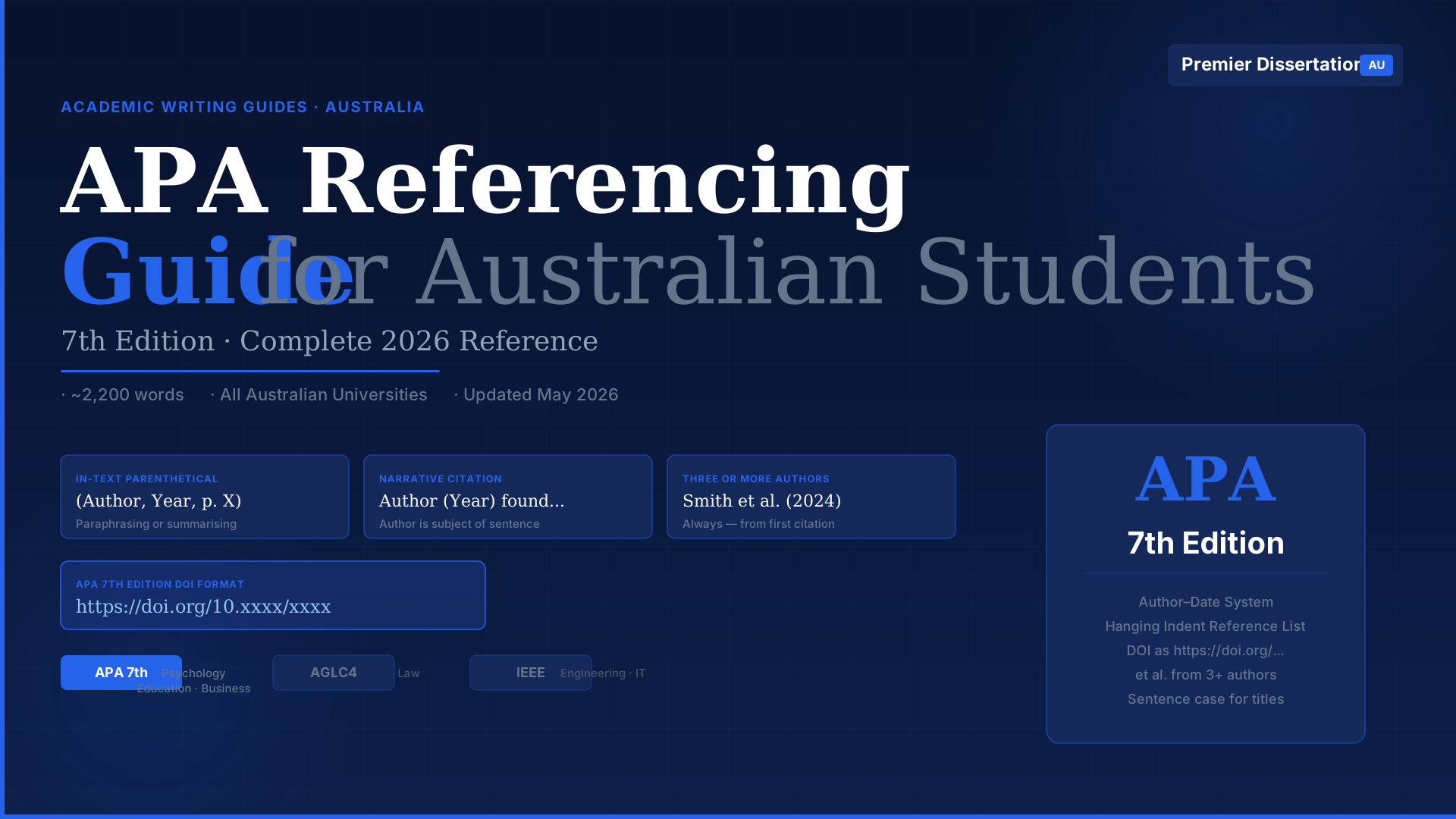
APA Referencing Guide for Australian Students (7th Edition, 2026)
July 14, 2026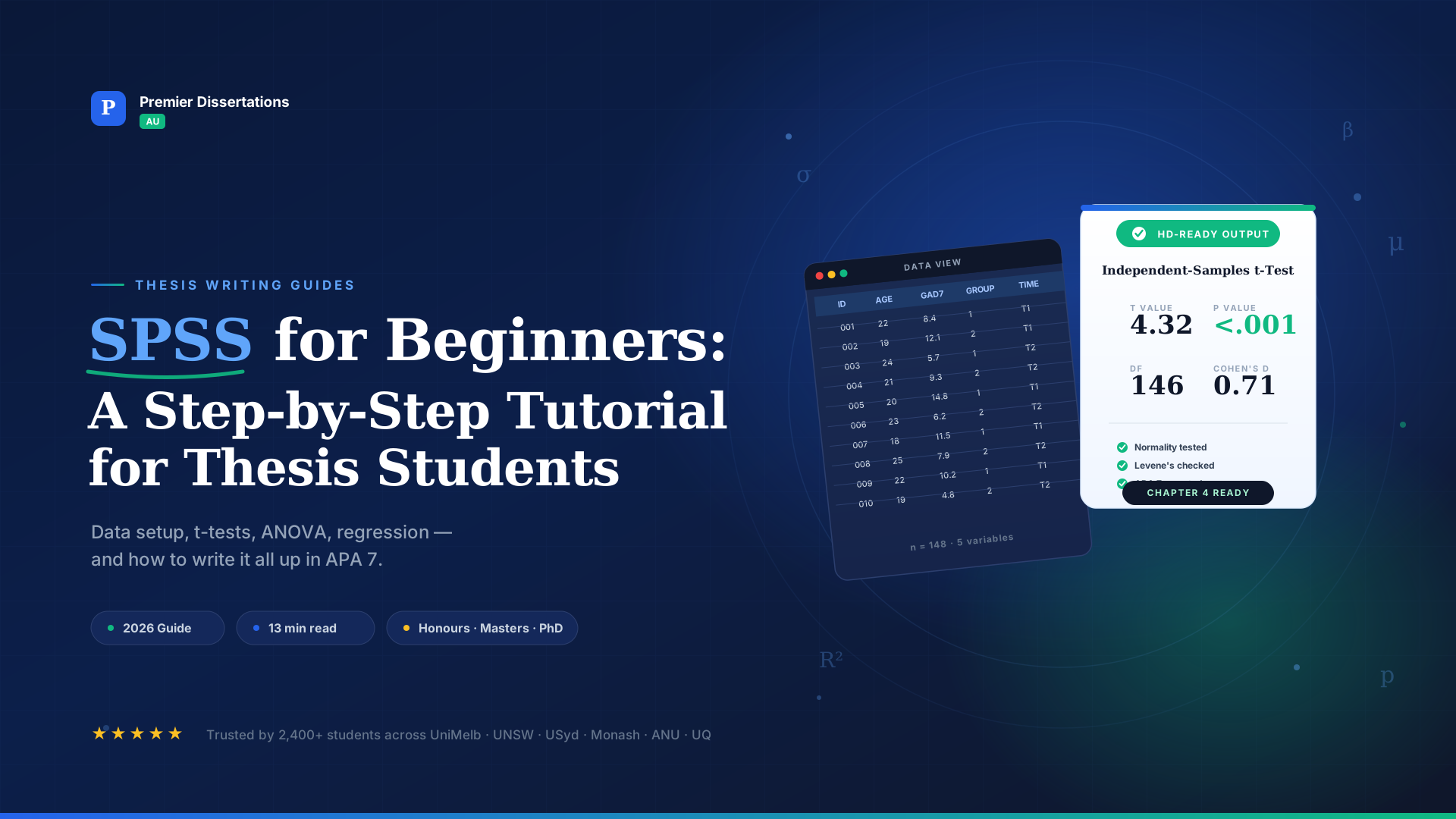
SPSS for Beginners: A Step-by-Step Tutorial for Australian Thesis Students
July 17, 2026
Thesis Writing Guides Australia
Updated for 2026 · 10 min read
Ask any Honours or postgraduate coordinator what derails more research degrees than anything else, and you'll hear the same answer: the topic. Not the writing, not the data collection — the topic chosen in week one, before the student understood what they were committing to.
A thesis topic isn't just a subject you find interesting. It's a contract with your future self: eight months to three years of reading, collecting, analysing, and writing about one narrow question. Choose well and the project largely runs itself. Choose badly and you'll spend your candidature fighting your own research design.
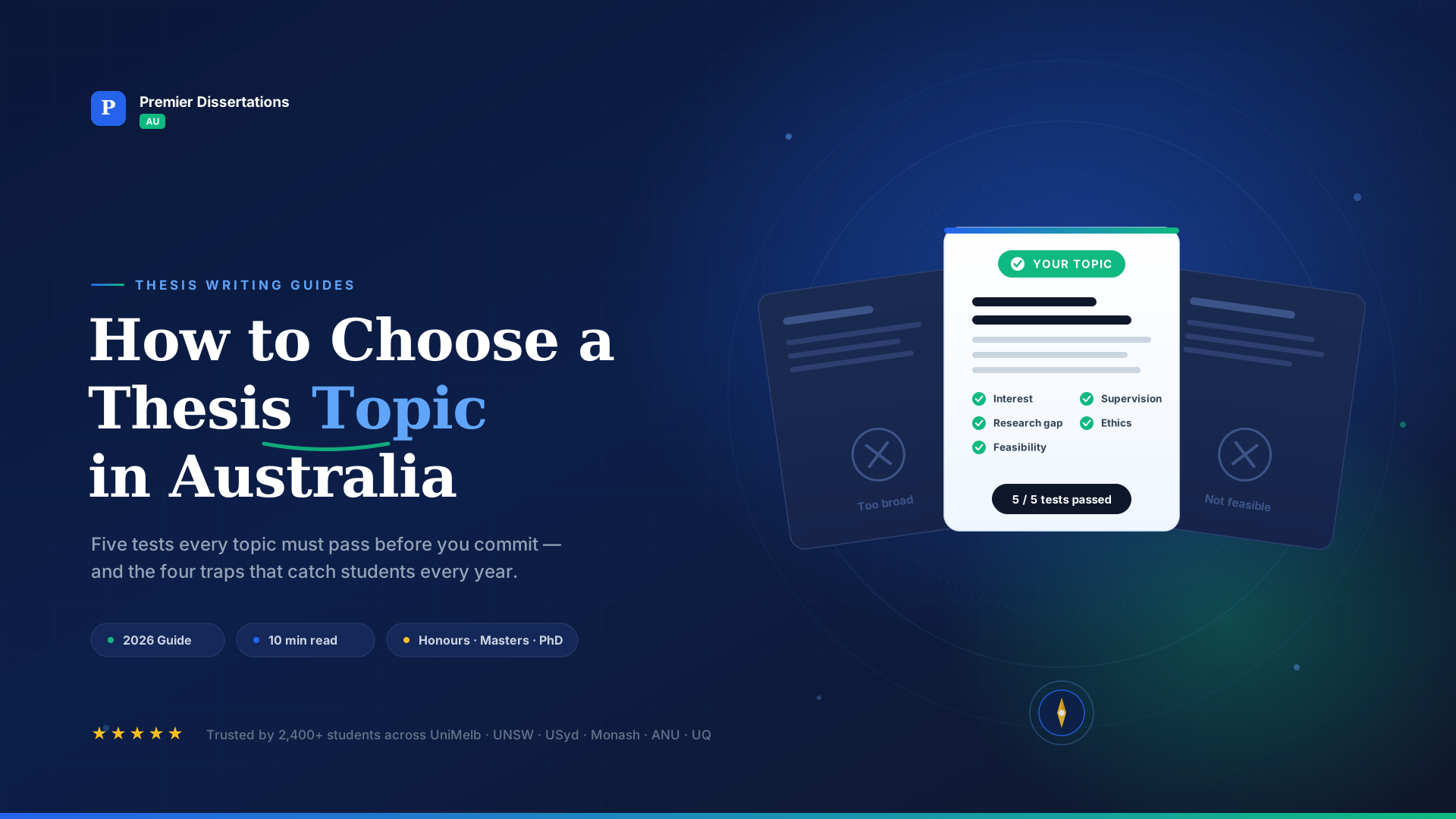
This guide gives you a practical framework used by supervisors across Australian universities — five tests every topic should pass before you commit, the traps that catch most students, and how to narrow a broad interest into a researchable question.
Stuck between topics right now? Premier Dissertations AU can develop your shortlist into a full research proposal — with research questions, methodology, and feasibility mapped by a writer in your discipline. Get a free quote →
The five tests every thesis topic must pass
Before you take any topic to your supervisor, run it through these five filters. A topic that fails even one of them will cause problems later — usually at the worst possible time.
The interest test — will you still care in month six?
Mild curiosity dies around the literature review. You need a question that genuinely bothers you — something you'd argue about at dinner. If you're choosing a topic because it "seems employable" but bores you, expect the middle third of your candidature to be a grind.
The gap test — is there actually room for you?
Search Google Scholar and your university library for your topic. If you find a recent systematic review answering your exact question, the gap is closed. If you find nothing at all, be careful — sometimes "nobody has studied this" means "this isn't studiable." The sweet spot is an active conversation with an unanswered corner.
The feasibility test — can you do this with what you have?
Count your real constraints: candidature length, budget, equipment, and — critically — participant or data access. An Honours student proposing a 12-month longitudinal study has already failed this test. So has anyone whose data lives behind an organisation that hasn't agreed to share it.
The supervision test — can someone at your university actually guide this?
A brilliant topic with no available supervisor in that area is a dead end. Check your faculty's staff research profiles before committing. A slightly less exciting topic with a genuinely engaged supervisor beats a perfect topic with an absent one, every time.
The ethics test — will HREC approve this in time?
Research involving vulnerable populations, sensitive topics, or clinical settings often needs full HREC review, which can take months. For an Honours year, that delay can be fatal to the timeline. If two topics interest you equally, the one with the simpler ethics pathway usually wins.
From broad interest to researchable question
Most students start too broad. The fix is a deliberate narrowing sequence — each step adds one constraint until the question becomes answerable within your candidature.
Too broad:
"Social media and mental health"
Add a population:
"Social media use and anxiety among first-year Australian university students"
Add a mechanism or comparison:
"Does passive scrolling predict anxiety differently than active posting among first-year Australian university students?"
Researchable:
"A cross-sectional survey of passive vs active social media use as predictors of GAD-7 anxiety scores among first-year students at two Australian universities"
Four traps that catch students every year
- The "save the world" trap. A thesis is a contribution, not a solution. Topics framed around solving climate change or fixing the healthcare system collapse under their own weight — pick one measurable corner of the big problem instead.
- The trending-topic trap. Hot topics attract crowded literature fast. If your topic is this year's headline, by submission time three systematic reviews may already exist. Trends are fine as context — your question needs to survive the trend.
- The convenience-data trap. Choosing a topic because a dataset happens to be lying around produces theses with no coherent question. Data availability should pass the feasibility test — it shouldn't be the topic.
- The supervisor's-pet-project trap. Taking a topic your supervisor hands you can work well, but make sure you can articulate why the question matters in your own words. If you can't, month six will hurt.
A note on WAM: your thesis typically carries the heaviest weighting of your Honours year — often 50 to 75% of your final grade. The topic decision is a WAM decision. A feasible, well-scoped question that you can execute cleanly will almost always outscore an ambitious one delivered half-finished.
A practical two-week process
If you're at the start of your candidature, here's a realistic schedule for landing a topic without agonising for a whole semester:
- Days 1–3: Brain-dump every question that has genuinely interested you across your degree. Aim for 15–20, no filtering.
- Days 4–7: Run each through the five tests above. Most will fail feasibility or supervision. Keep the three strongest survivors.
- Days 8–10: For each survivor, spend two hours in Google Scholar. Note the most recent papers and what they say is still unknown.
- Days 11–12: Draft a one-paragraph pitch for each: question, population, method, why it matters.
- Days 13–14: Take all three pitches to prospective supervisors. Their reaction — enthusiasm, caution, or a "someone just did that" — will make the final decision for you.
Frequently asked questions
Can I change my thesis topic after starting?
Minor refinements are normal and expected. A full topic change is possible early in candidature but usually resets your literature review and may require new ethics approval — the later you change, the more it costs you.
Should I choose a qualitative or quantitative topic?
Let the question choose the method, not the other way around. That said, be honest about your skills — if statistics terrifies you, a heavily quantitative topic adds a second learning curve on top of the research itself.
How narrow is too narrow?
If you can't find at least 20–30 directly relevant sources for your literature review, you've likely narrowed past the point where an academic conversation exists. Widen one constraint — usually the population or setting — and check again.
Does my topic affect my chances of postgraduate study?
The grade matters more than the topic. An HD thesis on a modest question opens more doors than a Credit on an ambitious one. If you're eyeing a PhD, though, choosing a topic adjacent to a potential supervisor's research program is a genuine advantage.
What if two topics pass all five tests?
Pick the one with the better supervisor fit or the simpler ethics pathway. If they're still tied, pick the one you'd rather explain to a stranger — that instinct is usually your interest test speaking.
Have a shortlist but not sure which topic wins?
Premier Dissertations AU can assess your topic options and develop the strongest one into a full research proposal — questions, methodology, and HREC-aware ethics framing included.
Get a Free Quote