

Data Collection Methods: A Complete Guide for Research (2026)
June 19, 2026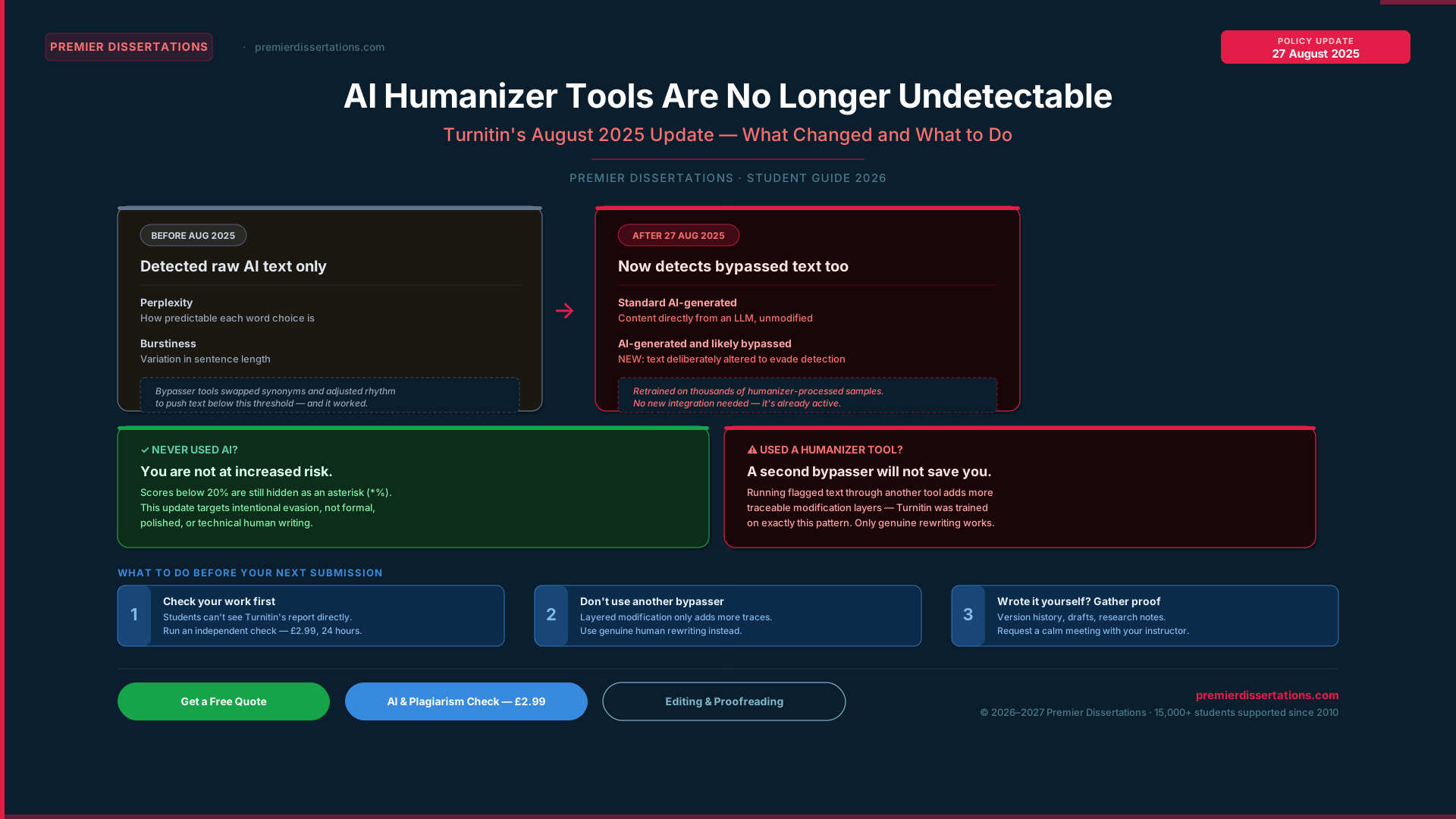
Can Turnitin Detect AI Humanizers? The August 2025 Update Explained
June 30, 2026
Getting an email from your professor saying Turnitin has flagged your work for AI, when you wrote every single word yourself, is one of the most disorienting experiences a student can have. You know you didn't use ChatGPT. You have the drafts to prove it. And yet there is a score on a report somewhere that says otherwise, and your professor is asking you to explain yourself.
This happens more often than universities publicly acknowledge. Turnitin's AI detection tool is not infallible. It produces false positives, cases where entirely human-written work gets flagged as AI-generated, and certain students are considerably more at risk than others.
This guide explains why it happens, who's most vulnerable, and exactly what to do if you find yourself in this situation. It also covers how to check your own AI score before you submit, so you're never caught off guard.
What Is a Turnitin False Positive?
A false positive occurs when Turnitin's AI writing detection tool identifies human-written text as AI-generated. The score goes up. The report highlights sections of your work. And none of it reflects what actually happened when you wrote the piece.
Turnitin itself acknowledges this on its official website, stating that false positives, incorrectly flagging human-written text as AI-generated, are a possibility in AI detection models. The University of Bristol's guidance to students echoes this directly, noting that Turnitin AI writing reports can occasionally produce false positives.
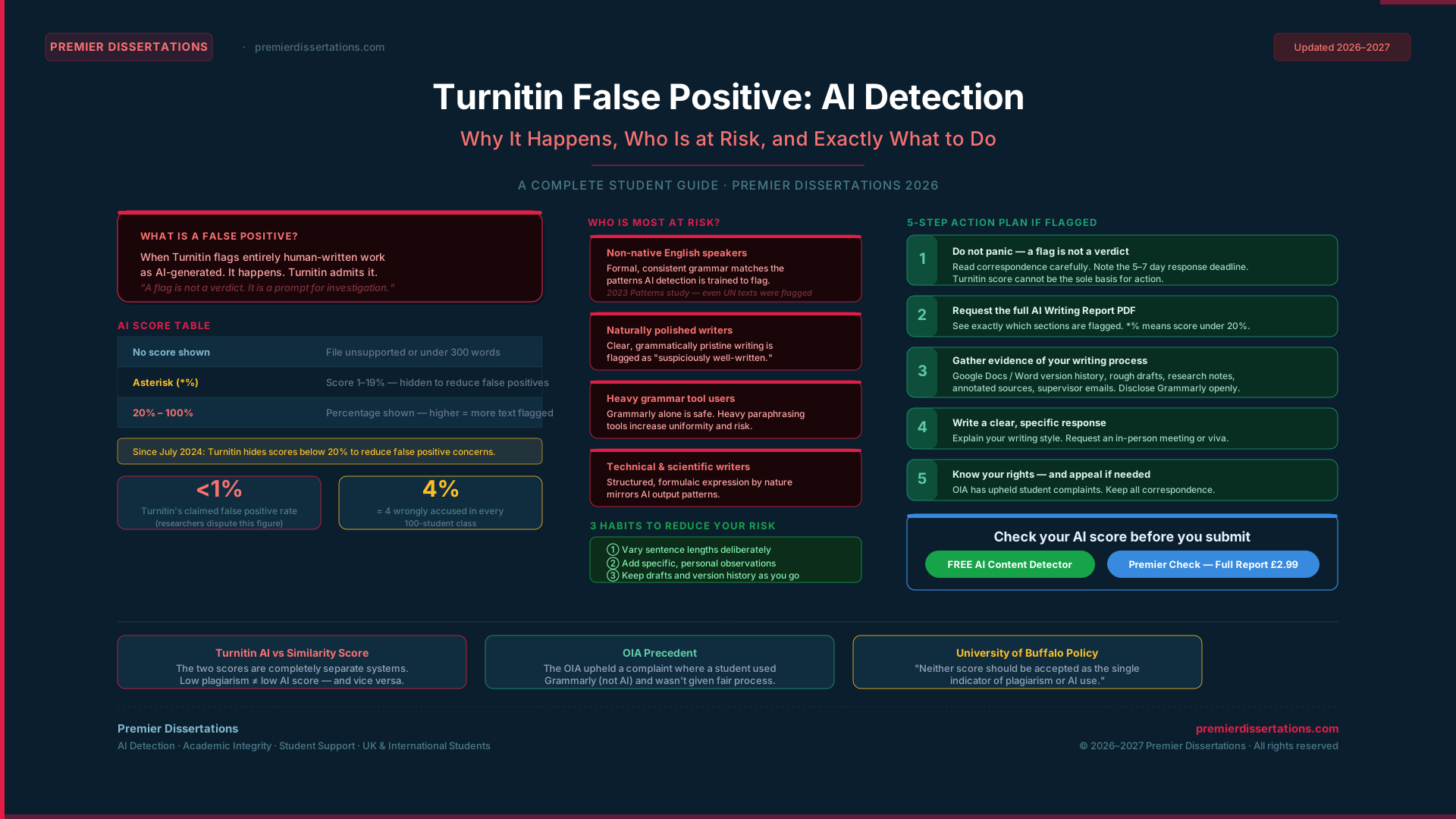
Turnitin claims its false positive rate is below 1%. Independent researchers have pushed back on that figure. A 2023 study published in the journal Patterns found that AI detectors flagged non-native English writing as AI-generated at significantly higher rates than native English writing, a finding with serious implications for international students. Other researchers have noted that even a 4% false positive rate would mean four students in a class of a hundred being wrongly accused of cheating.
The number is contested. What is not contested is that it happens.
Why Does Turnitin Flag Human Writing?
Turnitin's AI detection doesn't look for copied content the way its plagiarism checker does. It analyses two specific linguistic signals: perplexity (how predictable your word choices are) and burstiness (how much your sentence lengths vary). AI-generated text tends to be highly predictable and rhythmically uniform. Human writing is messier, it shifts between short and long sentences, uses unusual word choices, and has the kind of inconsistency that comes from actual thought.
The problem is that some human writing looks a lot like AI output. And if yours does, Turnitin's algorithm can't tell the difference.
Who Is Most at Risk?
You're at higher risk if any of the following apply to you:
What to Do If Turnitin Flags Your Work
If you have received a notification that your work has been flagged for AI and you did not use it, here is how to handle it step by step.
A flag is not a verdict. It is a prompt for investigation, and universities are required to investigate thoroughly before making any formal allegation. Turnitin's own guidance states clearly that the AI writing indicator percentage "should not be used as the sole basis for action or a definitive grading measure."
Read any correspondence from your university carefully. Note the deadline for your response, this is typically five to seven working days. Do not reply immediately if you are distressed. Give yourself a few hours to gather your thoughts and your evidence.
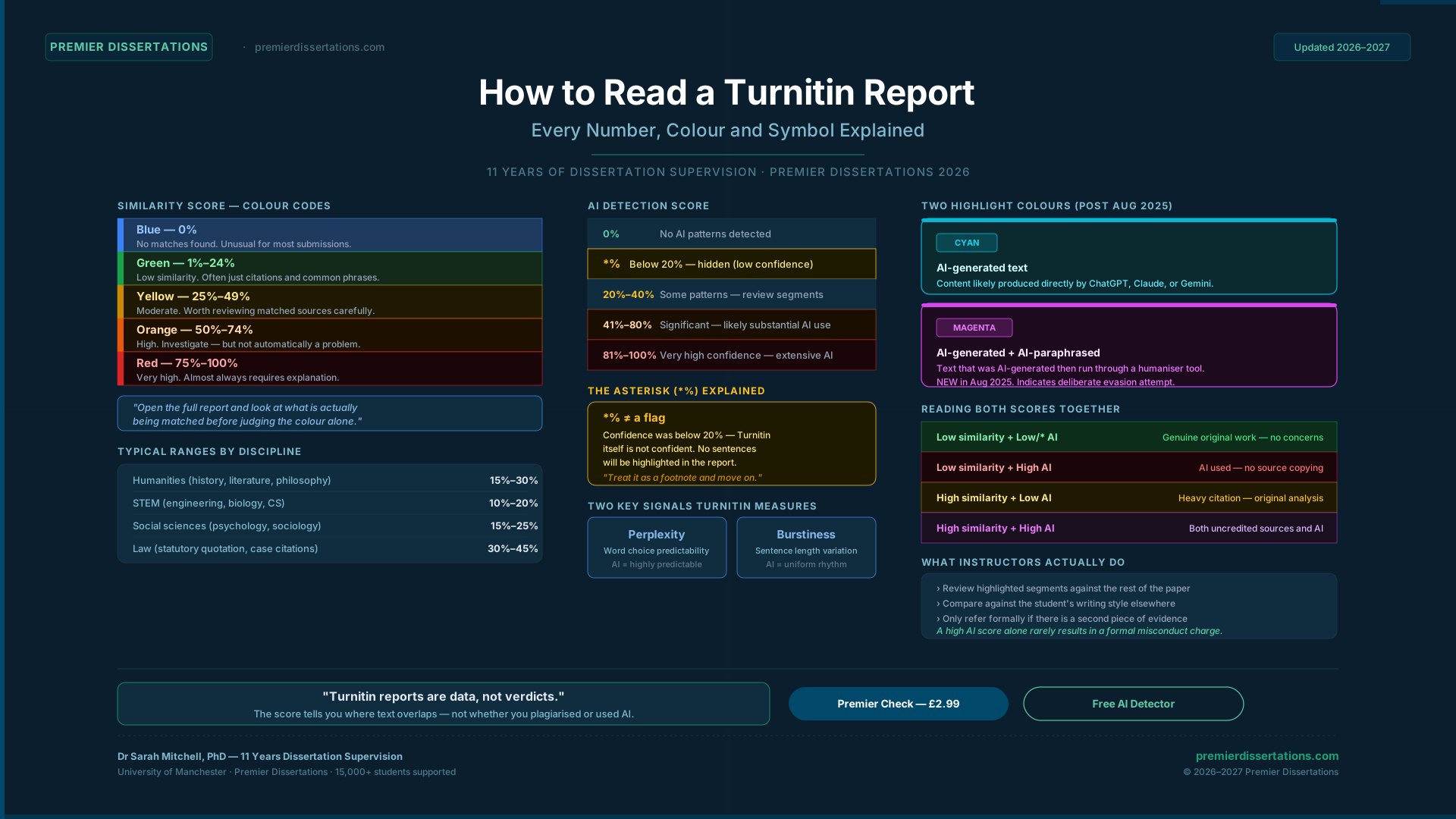
Your instructor can share a PDF of the Turnitin AI Writing Report with you. Ask for it. You need to see exactly which sections were flagged and what score was assigned to each. If the report shows an asterisk (*%) rather than a number, the score was below 20%, Turnitin does not surface scores below that threshold specifically to avoid surfacing potential false positives.
Understanding where the flags sit in your document helps you build a targeted response.
This is the most important step, and it's where most students either succeed or struggle. You need to demonstrate — with evidence — that the work was written by you over time.
The most powerful evidence is document version history. Google Docs stores a full revision history showing every edit made and when. Microsoft Word's version log does the same. A document that shows dozens of iterations over several weeks is almost impossible to explain as AI-generated.
- Document version history (Google Docs or Microsoft Word)
- Rough drafts saved at different stages
- Handwritten notes or annotated PDFs of sources
- Screenshots of your research process
- Email exchanges with your supervisor about the work
- Transparent disclosure of Grammarly use (not a policy violation)
A useful precedent here: the Office of the Independent Adjudicator (OIA) recently upheld a student's complaint against a university that had proceeded with an allegation without giving the student a fair opportunity to present their evidence. The student had used Grammarly — not AI. The OIA found the process had been unfair. Knowing your rights matters.
When you respond to your professor or academic integrity panel, be specific rather than defensive. Structure your response around three things: your writing process, the evidence you're attaching, and a clear explanation of why your writing style might have triggered the detection.
If English isn't your first language, say so and explain how that affects your writing style. If you write in a formal, structured way by training or habit, explain that too. Then ask for an in-person meeting or viva to discuss the work — this gives you the opportunity to demonstrate your understanding of the subject, which is the most direct evidence of authorship there is.
You're not required to attend a meeting if you choose not to, as the University of Melbourne notes in its student guidance. But attending is almost always in your interest.
Universities are not supposed to penalise students based solely on an AI detection score. The University of Buffalo states explicitly that neither the similarity score nor the AI score should be accepted as the single indicator of plagiarism or AI use. If your university proceeds with a formal misconduct allegation relying only on a Turnitin report, you have grounds for an appeal.
Keep copies of everything: the original allegation letter, your response, any evidence you submitted, and any correspondence with your department. If it gets to an appeal, your documentation is everything.
How to Avoid a False Positive Before You Submit
Prevention is considerably easier than the process above. If you check your AI score before submission, you know exactly what your professor is going to see — and you have time to address it.
Three practical habits that reduce your false positive risk:
If Your Score Is Genuinely High
If you run a Premier Check and the score comes back high — even though you wrote the work yourself — certain sections may need rewriting before submission. Our plagiarism remover service includes AI-flagged content rewriting by UK academic editors who preserve your original argument and voice while reducing the linguistic patterns that trigger detection.
What the AI Score Actually Means
Turnitin's AI writing score represents the percentage of your text that the algorithm calculates as 98% or more likely to have been generated or paraphrased by AI.
| Score | What It Means |
|---|---|
| No score shown | File type unsupported, or text under 300 words — detection unavailable |
| Asterisk (*%) | Score was 1–19%. Turnitin hides these to avoid surfacing potential false positives |
| 20% – 100% | A percentage is displayed. The higher the figure, the more of your text is flagged |
Since July 2024, Turnitin no longer shows scores below 20%, a change implemented specifically to reduce false positive concerns at the lower end of the scale.
The AI score and the similarity score are entirely separate. A paper can have a low plagiarism score and a high AI score, or vice versa. The two systems analyse completely different things.
Frequently Asked Questions
The Bottom Line
A Turnitin AI flag is not a finding of guilt. It's a signal that triggers a conversation — and that conversation can go in your favour if you're prepared.
The best protection is knowing your score before your professor does. Check your work before you submit, keep your drafts, and understand that writing clearly and precisely is not evidence of cheating — even if an algorithm occasionally treats it that way.
If your work has already been flagged and you need help, we're here.
Take action now:
Check your AI score — Premier Check £2.99 Rewrite flagged sections WhatsApp us for immediate helpFlagged by Turnitin? We Can Help.
Whether you need to check your AI score before submission, rewrite flagged sections, or get urgent advice — our team is here.
No repository upload · No effect on official score · Results by email within minutesGet 3+ Free Wildlife Dissertation Topics within 24 hours?