


VCE Research Topics Victoria (2026) — 100+ Ideas Across 8 Subjects
May 19, 2026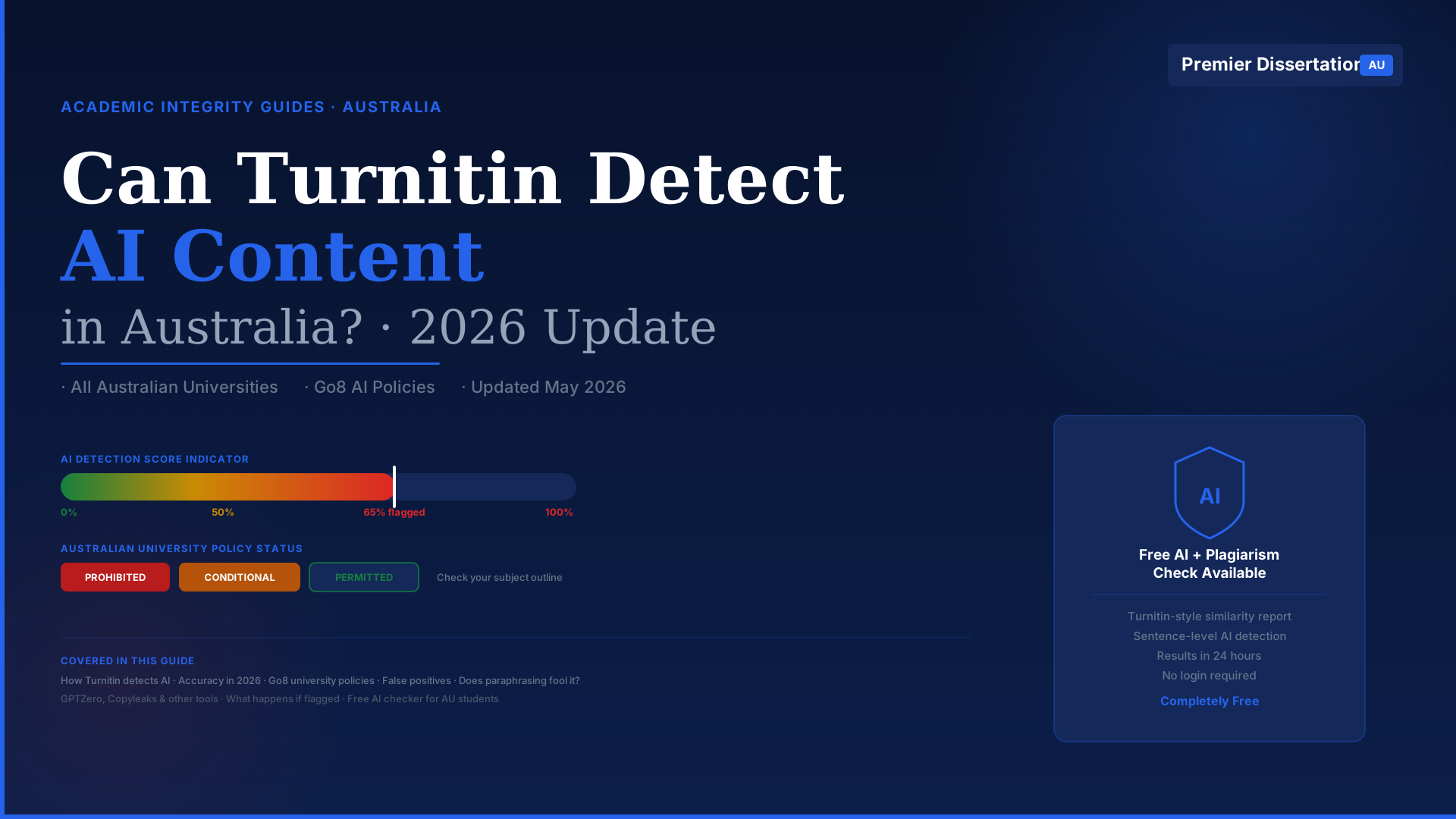
Can Turnitin Detect AI Content in Australia?
May 20, 2026
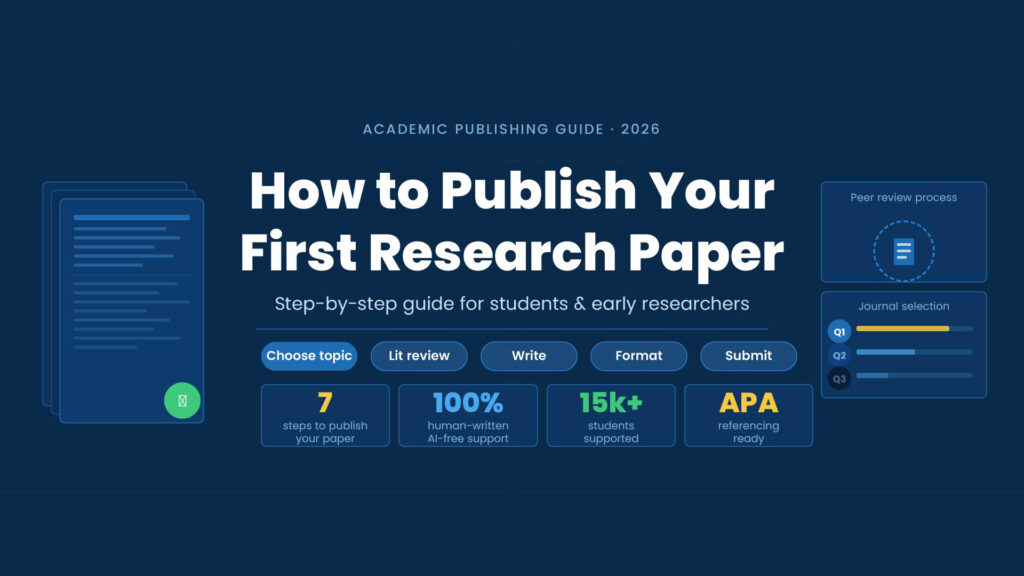
Academic Publishing · Research Guides
In this guide
Publishing your first research paper is one of the most important milestones in an academic journey. Whether you are a university student, postgraduate researcher, or early-career academic, understanding the publication process can significantly increase your chances of acceptance.
In 2026, academic publishing has become more competitive due to strict peer review standards, increasing submissions, and higher expectations for originality. However, with the right structure and preparation, first-time authors can successfully publish in reputable journals.
If you are still developing your research idea, exploring our dissertation topics library can help you identify a strong and researchable direction before starting your paper.
Need expert research support? Premier Dissertations helps students and early researchers with research design, paper writing, and editing — human-written, AI-free, with Turnitin report included.
Get a free quote →What Does It Mean to Publish a Research Paper?
Publishing a research paper means formally presenting your original study in an academic journal or conference. Once published, your work becomes part of the global research literature and can be cited by other scholars.
A strong research paper is usually built on the following core components:
Step-by-Step Process to Publish Your First Research Paper
Step 1: Choose a Strong Research Topic
Your research topic should be original, relevant, and feasible within your available resources. A well-chosen topic dramatically improves your chances of passing peer review, as editors can immediately identify whether a submission addresses a genuine research gap.
Step 2: Conduct a Literature Review
A literature review helps you identify research gaps and position your study within existing academic work. A well-structured review is often the difference between acceptance and rejection, especially in competitive journals — reviewers use it to verify that you understand the field and that your contribution is genuinely new.
Step 3: Design Your Methodology
Your research methodology defines how your research will be conducted, including whether you use qualitative, quantitative, or mixed methods. Strong methodology design is essential for journal acceptance — reviewers will evaluate whether your approach is appropriate, replicable, and free from significant bias.
Step 4: Write Your Research Paper
A complete research paper typically follows this structure:
| Section | Purpose |
|---|---|
| Abstract | A 150–300 word summary of the entire paper including key findings |
| Introduction | Context, research problem, aims, and significance of the study |
| Literature Review | Critical synthesis of existing research and identification of gaps |
| Methodology | Research design, data collection methods, and analytical approach |
| Results | Presentation of findings, data, and analysis |
| Discussion | Interpretation of findings in relation to existing literature |
| Conclusion | Summary, implications, limitations, and future research directions |
At this stage, clarity, structure, and academic tone are extremely important. Journals reject papers not because the research is poor, but because the writing is unclear or the argument is poorly organised. If you need support at this stage, our academic editing service can help you sharpen every section before submission.
Struggling with writing your research paper? Our PhD-qualified academics provide human-written research paper support — from drafting individual sections to full paper writing. AI-free with a Turnitin report included.
Get a free quote →Step 5: Select the Right Journal
Choosing the correct journal is one of the most critical steps in the publication process. Your research must align with the journal's scope and audience. Submitting to an ill-matched journal wastes months of review time and results in almost certain rejection.
Step 6: Format Your Paper Properly
Each journal has strict formatting rules. Failure to follow them often leads to immediate desk rejection before your paper even reaches peer reviewers. Most journals specify a preferred referencing style such as APA — getting this wrong is one of the most common and easily avoidable reasons for rejection. Key formatting requirements typically include:
Step 7: Submit and Navigate the Peer Review Process
After submission, your paper goes through peer review where subject-area experts evaluate your work. This process typically takes two to six months. Reviewers assess three core areas:
Get Academic Support Before Submission
Before submitting your research paper, many students and early researchers choose professional editing and proofreading to improve clarity, structure, and formatting. A clean, well-argued manuscript significantly increases your chances of surviving the first editorial review.
Need your research paper edited before submission? Our editors check argument structure, evidence use, referencing, and journal formatting requirements — Turnitin + AI report included.
Get editing help →Conclusion
Publishing your first research paper requires careful planning, strong academic writing, and correct journal selection. By following a structured process and ensuring your work meets academic standards, you significantly increase your chances of acceptance.
If needed, professional academic support can help you refine your paper before submission and improve your publication success — whether that means strengthening your methodology, polishing your writing, or reformatting to a specific journal's requirements.
Get Expert Research Paper Support
Topic selection, research design, paper writing, or pre-submission editing — Premier Dissertations is here to help.
PhD academics · Human-written · Turnitin + AI report · Trusted by 15,000+ students worldwide