

Turnitin False Positive AI Detection: What to Do If Your Work Is Wrongly Flagged (2026)
June 29, 2026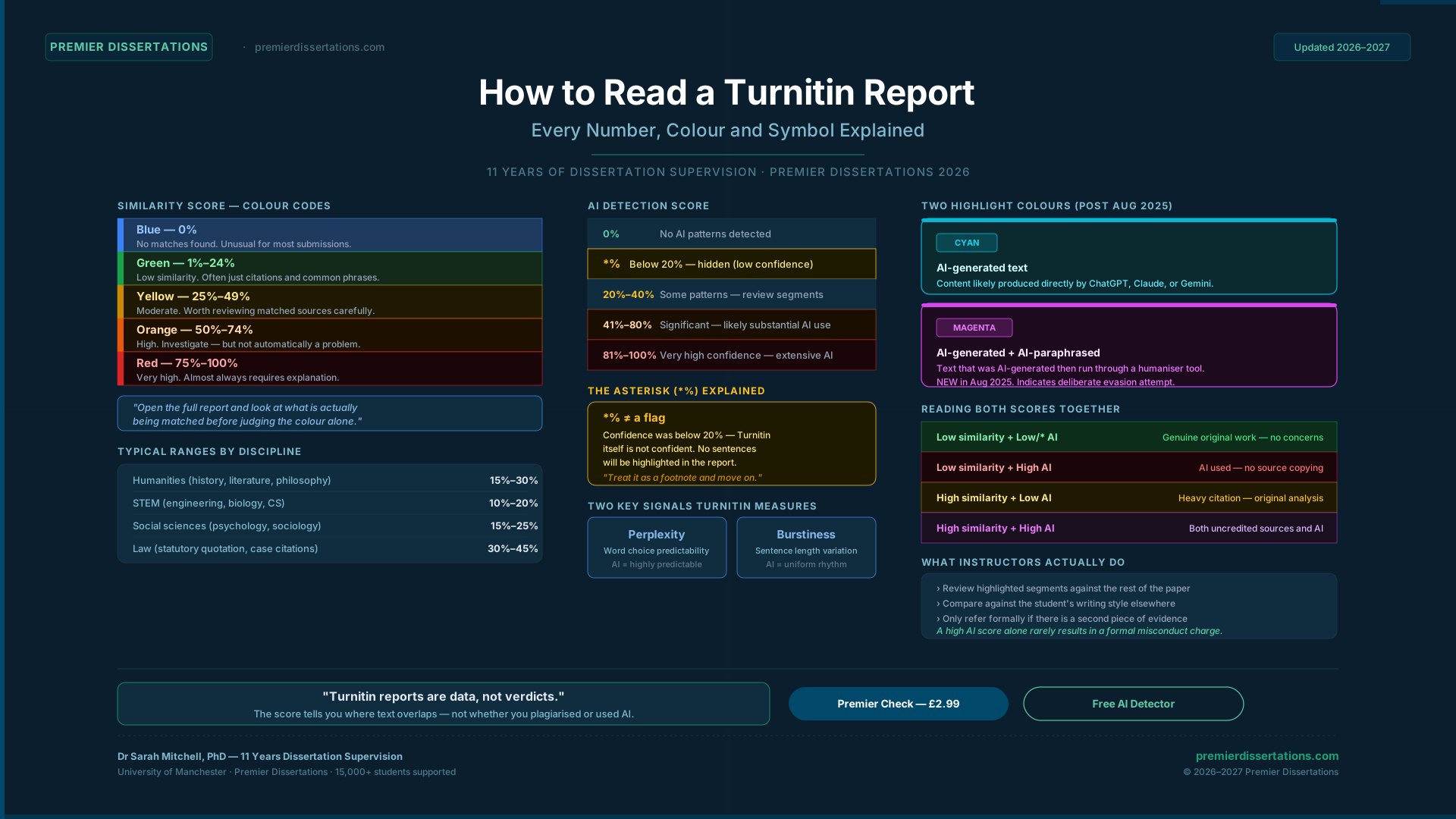
How to Read a Turnitin Similarity + AI Report — What Every Number Means (2026)
July 1, 2026
This article explains exactly what Turnitin changed, what it means for your submissions, and what genuinely protects you.
What Changed in Turnitin's August 2025 Update?
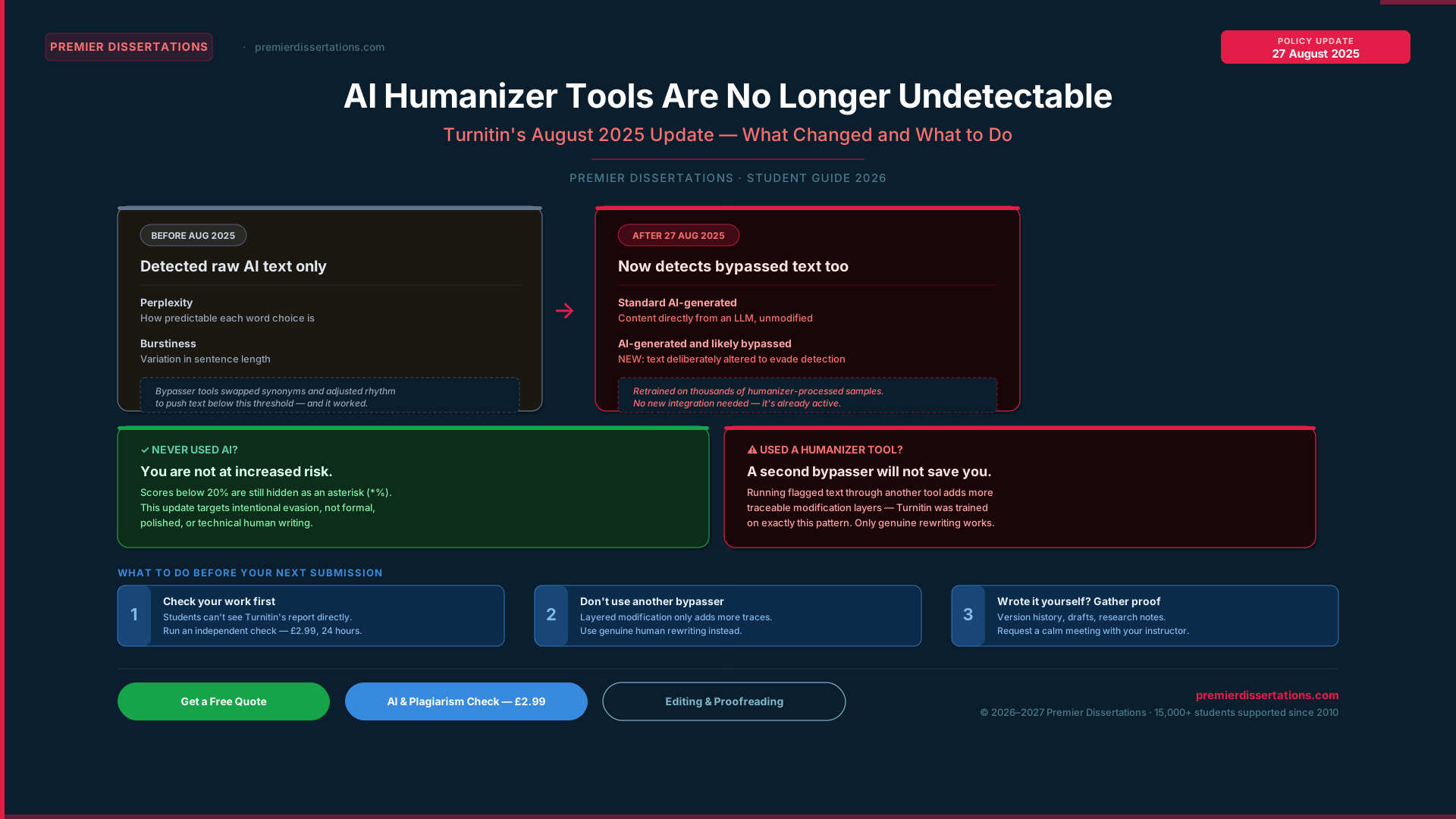
Before August 2025, Turnitin's AI detector was trained to identify text generated directly by large language models (LLMs) such as ChatGPT, Claude, and Gemini. It measured two key linguistic signals:
Bypasser tools exploited these signals. They took AI-generated content and restructured it — swapping synonyms, adjusting sentence rhythms, and inserting small grammatical irregularities — specifically to push the perplexity-burstiness signature below Turnitin's detection threshold.
The August 2025 update closes that gap. Turnitin retrained its model on thousands of text samples that had been processed by leading humanizer tools. The system now recognises not just raw AI writing, but the specific statistical patterns that bypasser tools leave behind. According to Turnitin's official announcement, the update means their existing detection capabilities now include AI bypasser detection — without requiring any additional integrations.
What Does Turnitin's Report Now Show?
When an instructor opens an AI writing report after 27 August 2025, they may see two distinct flags:
Individual flagged sentences are highlighted in the submitted document, and instructors can see the reasoning behind each flag — including patterns consistent with known bypasser modifications.
It is worth noting that the report is not an automatic verdict. Most universities require additional investigation before any action is taken. But it is a starting point that will almost certainly trigger a conversation — one you would rather be prepared for.
Which Humanizer Tools Can Turnitin Now Detect?
Turnitin has not published a complete list of targeted tools, and this is deliberate. Publishing such a list would simply prompt bypasser companies to adapt their algorithms.
What Turnitin has confirmed is that the update targets leading bypasser tools — those used by the majority of students. Tools such as Undetectable.ai and QuillBot's paraphrasing modes are among those referenced in coverage of the update.
The practical implication: if you used any mainstream humanizer tool and have pending or upcoming submissions, you cannot assume you are safe.
Does This Affect Students Who Have Never Used AI?
This is the most important question for students who write their own work, and the answer is reassuring.
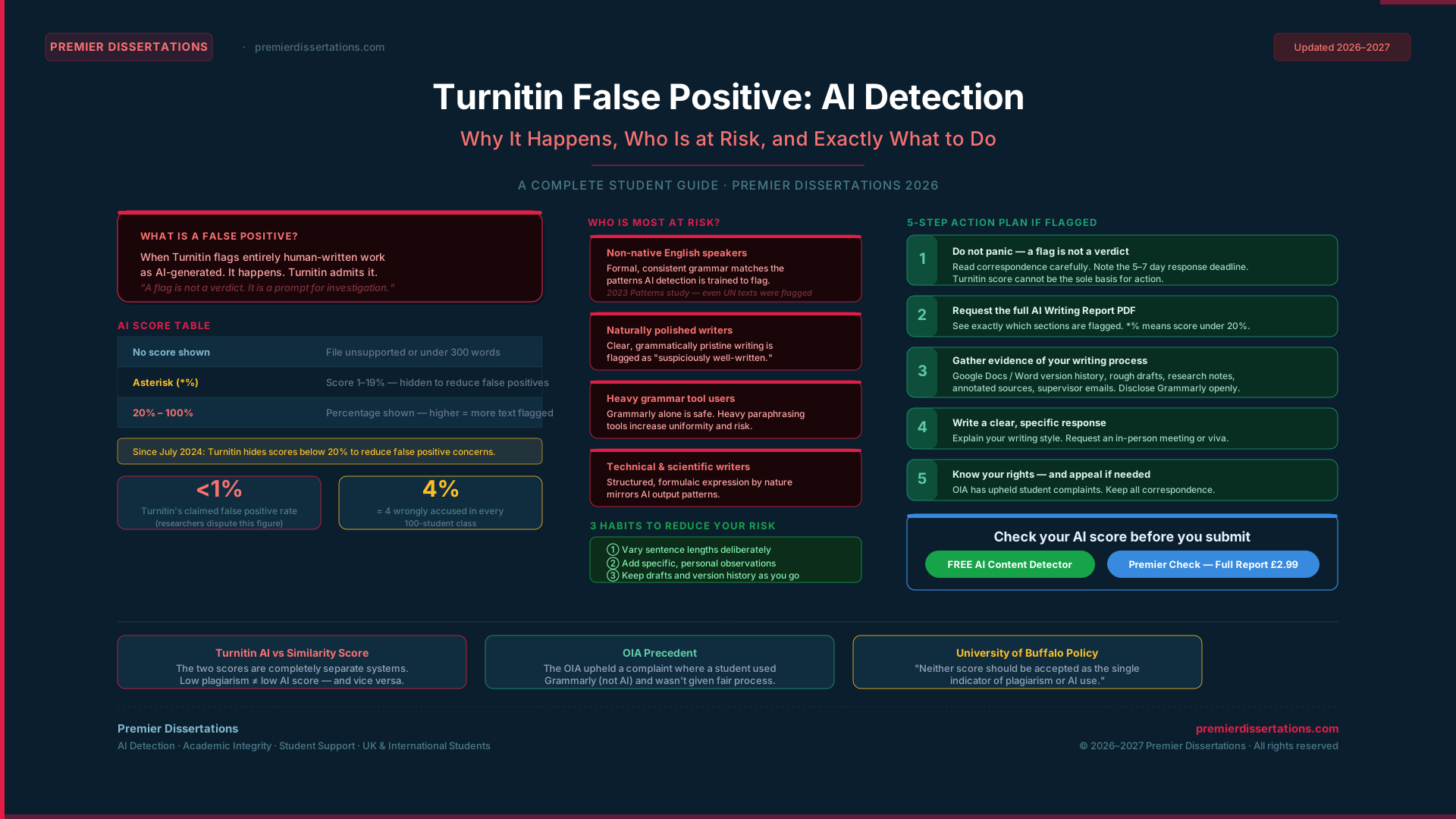
No — the August 2025 update does not increase the risk of false positives for genuine human writing. Since July 2024, Turnitin already displays any AI detection score below 20% as an asterisk (*%) rather than a percentage, specifically to avoid penalising legitimate writers. The bypasser detection targets intentional modification of AI-generated text, not formal prose, technical language, or polished grammar.
That said, a small false-positive risk has always existed — particularly for non-native English speakers or writers with a very structured, repetitive style. If that describes you, the best step is to check your document before submission rather than finding out after the fact.
What Should You Do Before Your Next Submission?
Students do not have access to Turnitin's AI writing report — only instructors and administrators do. That means you could submit an assignment carrying a flag you never knew existed.
The only way to know your actual risk is to run an independent check before submission. Premier Dissertations offers a full AI and plagiarism check for £2.99 — a Turnitin-style report that analyses both similarity and AI detection, delivered within 24 hours, without uploading your document to any shared repository.
For a quick initial estimate, you can also use the free plagiarism checker to assess your text's risk profile before going further.
This is the critical point. Running flagged content through a second humanizer tool does not solve the problem — it adds another layer of traceable modification patterns on top of the existing ones. Turnitin's model was trained precisely on this kind of layered modification.
The only approach that works is genuine human rewriting. Human editors do not leave the statistical traces that automated tools produce. They understand argument structure, discipline-specific conventions, and natural prose rhythm in a way that no bypasser algorithm replicates.
Our dissertation proofreading and editing service provides exactly this — real academic editors who rewrite and refine flagged sections while preserving your argument and voice. For larger pieces of work, the dissertation rewriting service handles full documents from end to end.
Gather evidence of your writing process: Google Docs revision history, Word version logs, early drafts, annotated sources, and research notes. Request a meeting with your instructor and walk through your process calmly. False positives are taken seriously by most institutions, particularly with supporting documentation.
If you want peace of mind before submitting, our editing and proofreading service includes an AI detection check as standard — so you know exactly what your university will see.
The Safest Approach: Start With Human Writing
The most reliable way to avoid any detection risk is to ensure your work is written by a qualified human from the outset.
Premier Dissertations produces 100% human-written work by UK-qualified academics across all subjects and levels. Every piece is delivered with a full Turnitin AI and plagiarism report included — not as an optional extra, but as standard. If you need a dissertation, essay, literature review, or coursework written to distinction standard, you can get a free quote here.
For students who have written their own work and simply want professional polishing, our editing and proofreading service brings your draft to submission standard while keeping your voice intact.
Frequently Asked Questions
The Bottom Line
Turnitin's August 2025 update removes one of the most commonly relied-upon workarounds in student AI use. Humanizer tools are no longer a reliable way to conceal AI-generated content — and using a second tool to fix a flagged document will likely make things worse, not better.
If you have never used AI in your work, you are not at increased risk. The update targets intentional evasion, not human writing.
If you have used AI or a humanizer tool, the prudent step is to check your document now — before your next submission — rather than after.
Premier Dissertations has supported 15,000+ students since 2010 with human-written, Turnitin-verified academic work. All AI and plagiarism reports are produced using the same detection technology used by UK universities.Protect Your Submission Before It's Too Late
Check your AI score before you submit, or get your work written by a 100% human, UK-qualified academic with a Turnitin report included as standard.
100% human-written · Turnitin report included as standard · 15,000+ students supported since 2010Get 3+ Free Wildlife Dissertation Topics within 24 hours?