


ChatGPT and Academic Integrity: Should Universities Ban AI Tools?
July 21, 2025
How to Publish a Dissertation in the UK: Step by Step (2026-2027)
July 29, 2025
Introduction
AI tools such as ChatGPT and Grok have become popular among students writing dissertations, offering assistance with topic idea generation, research summaries, and formatting suggestions.
While they are convenient, over-reliance on AI introduces a real concern: AI plagiarism. Universities now use advanced software tools to detect work that lacks original human input.
Submitting content flagged as AI-generated could lead to serious academic consequences.
This guide explains how to use AI ethically in dissertation writing while ensuring your work remains unique, credible, and compliant with university standards.
For related help, explore our Free Plagiarism Checker for Students and AI Plagiarism Checker Tool.
3-Step Dissertation Process!

Get Topics
Get 3+ Dissertation Topics

Dissertation Proposal
Get a Proposal on your Topic

Full Dissertation
Get the Final Dissertation
What is AI Plagiarism?
AI plagiarism occurs when students submit content generated by artificial intelligence tools without proper editing, paraphrasing, or citation. It includes:
- Copying AI-generated text word-for-word
- Failing to rewrite AI-assisted content in their own academic voice
- Using AI outputs as final drafts without adding personal insights
Tools such as Turnitin, GPTZero, and Originality.ai can now identify writing patterns and structures typical of AI-generated material.
Why Avoid AI Plagiarism in Dissertations?
Submitting AI-heavy content can result in:
- Allegations of academic misconduct
- Dissertation rejection or failure
- Delays in graduation
- Loss of academic reputation
In 2024, a UK university penalised several students after Turnitin’s AI checker flagged over 80% of their dissertation content as AI-generated. These students faced disciplinary hearings and had to resubmit under academic supervision.
Ethical academic writing is not just about avoiding penalties; it builds valuable skills for research and professional life.
For related guidance, visit our Dissertation Topics Collection or use our Free Plagiarism Checker for Students.
How to Avoid AI Plagiarism in Your Research and Dissertation Project
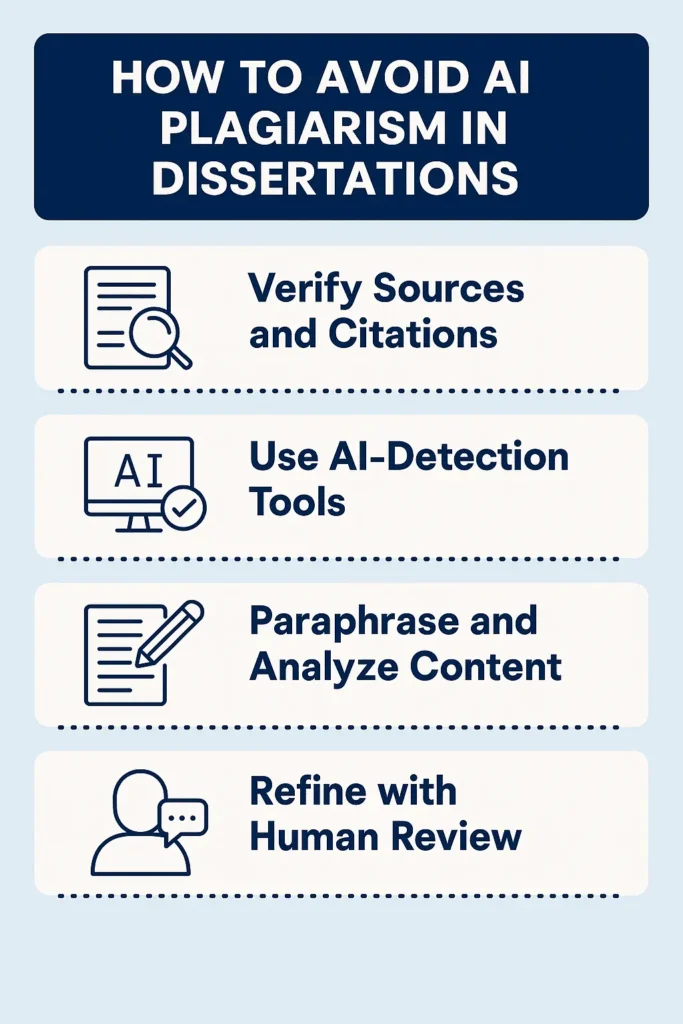
1. Treat AI as a Brainstorming Assistant
Use AI tools for:
- Outlining chapters
- Refining sentence structure
- Generating reference lists
Avoid using AI to write complete sections of your dissertation. Take charge of content creation, and ensure it reflects your understanding.
2. Rewrite AI Content in Your Own Academic Voice
If you do use AI-generated drafts, always:
- Paraphrase every section thoroughly
- Integrate your analysis, arguments, and examples
Use a formal academic tone
AI-generated text often lacks depth, so enriching it with your insights is essential, especially if you want to get a 1st standard result (70%+ marks).
3. Reference AI Tools Transparently
If an AI tool informed your work, cite it. Example in APA style: OpenAI. (2025). ChatGPT (Version 5).
Some universities now expect AI use disclosures, so check your institution’s guidelines.
4. Run AI Detection Scans Pre-Submission (A Must!)
Use these tools to check for AI-written sections before submitting:
- Turnitin AI Writing Detection
- Copyleaks
- Originality.ai
- Premier Dissertations’ Free AI Plagiarism Checker Tool
Scanning early helps you edit flagged content before it reaches supervisors.
5. Strengthen Your Dissertation with Critical Analysis
Make sure your work includes:
- Personal interpretations and evaluations
- Original conclusions drawn from your research
Real-world examples or case studies
The more analytical your writing, the lower the AI plagiarism risk.
6. Get a Human Review Before Submission
Ask supervisors, mentors, or professional editors to review your dissertation draft. Human reviewers can:
- Spot unnatural phrasing AI may produce
- Ensure clarity, tone, and academic integrity
Suggest improvements AI tools can’t catch
Consider consulting with qualified academic editors or dissertation supervisors for expert reviews. Or you can simply request the supervisor to share their feedback on your tentative working draft.
How Does It Work?
Fill the Form
Please fill the free topic form and share your requirements
Writer Starts Working
The writer starts to find a topic for you (based on your requirements)

3+ Topics Emailed!
The writer shared custom topics with you within 24 hours
Ethical Ways to Use AI in Dissertation Writing
AI tools can support rather than replace academic work. Ethical uses include:
1. Grammar and spell-checking
2. Formatting bibliographies and references
3. Summarizing large research papers
4. Suggesting structure improvements
Always balance AI help with independent thought, original arguments, and personal effort.
Common Mistakes That Lead to AI Plagiarism in Academics
- Copy-pasting AI content without paraphrasing
- Forgetting to cite AI tools
- Over-relying on AI for forming arguments
- Submitting without AI detection checks
Avoiding these mistakes helps maintain academic integrity.
Final Thoughts
AI tools offer valuable support in academic writing, but avoiding AI plagiarism is non-negotiable in higher education. By following ethical practices, citing sources transparently, and focusing on original content, students can create dissertations that reflect true scholarly effort.
Use AI smartly, but let your critical thinking and academic voice lead the way.
Need more academic writing support? Visit our Dissertation Topics Collection for inspiration.
Frequently Asked Questions (FAQS)
Get 3+ Free Dissertation Topics within 24 hours?