


How to Cope with Dissertation Anxiety and Burnout
November 13, 2025
Expert Law Assignment Help UK | Premier Dissertations
November 14, 2025
🤔 Not sure which journal fits your research? Find your journal – free, instant match →
Publishing your research is not just about getting it out there; it is about being recognised in the right academic circles.
That is why the debate between Elsevier vs Springer continues to be one of the most important choices researchers face in 2026–2027. Both publishers dominate the global academic landscape and claim to maintain high standards of peer review.
Yet when you begin to compare Elsevier vs Springer journals, it becomes clear that credibility, visibility, and speed rarely come from the same place.
Reviewed by Katherine Alexander, PhD, UK Academic Editor at Premier Dissertations
Quick Answer: Choose Elsevier if your priority is impact factor, citations, and long-term academic prestige. Choose Springer if you need faster decisions, more flexible open-access costs, and wider accessibility for students and early-career researchers.
📌 We can help you publish in Elsevier, Springer, or any journal
Our UK‑qualified academic editors help with journal selection, manuscript preparation, pre‑submission review, and submission support.
Free consultation · No obligation · PhD‑qualified editors
Key context: Elsevier manages over 2,700+ journals and owns platforms like Scopus and ScienceDirect, while Springer (Springer Nature) publishes around 3,000+ journals and operates SpringerOpen for fully open-access publishing. Both are COPE members and follow strict publication ethics.
📖 Explore This Page
Jump straight to the comparison you need:
- Quick Look at Elsevier and Springer
- Acceptance Rates by Field (indicative ranges) NEW
- Review Process & Editorial Speed
- Peer Review Timeline — Typical Weeks NEW
- Key Comparison Table
- APC Costs – indicative ranges NEW
- Indexing, Citations & Academic Impact
- Publication Charges & Open-Access Options
- For First-Time Authors NEW
- Credibility, Ethics & Researcher Perception
- Quick Decision Table NEW
- Final Thought & Free Help
- FAQs
Quick Look at the Two Publishing Giants
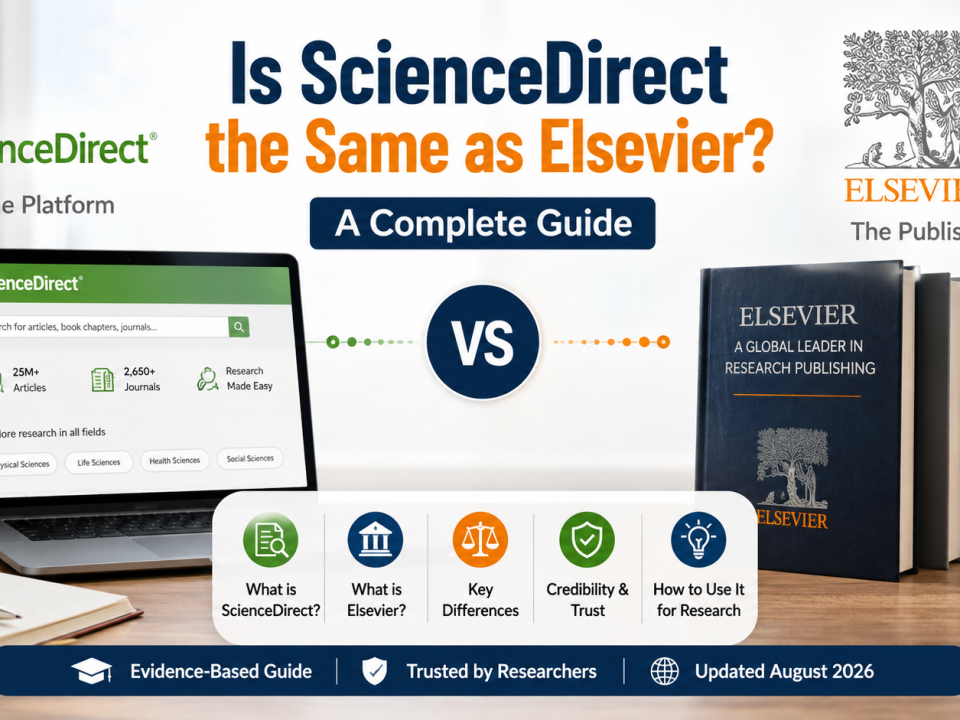
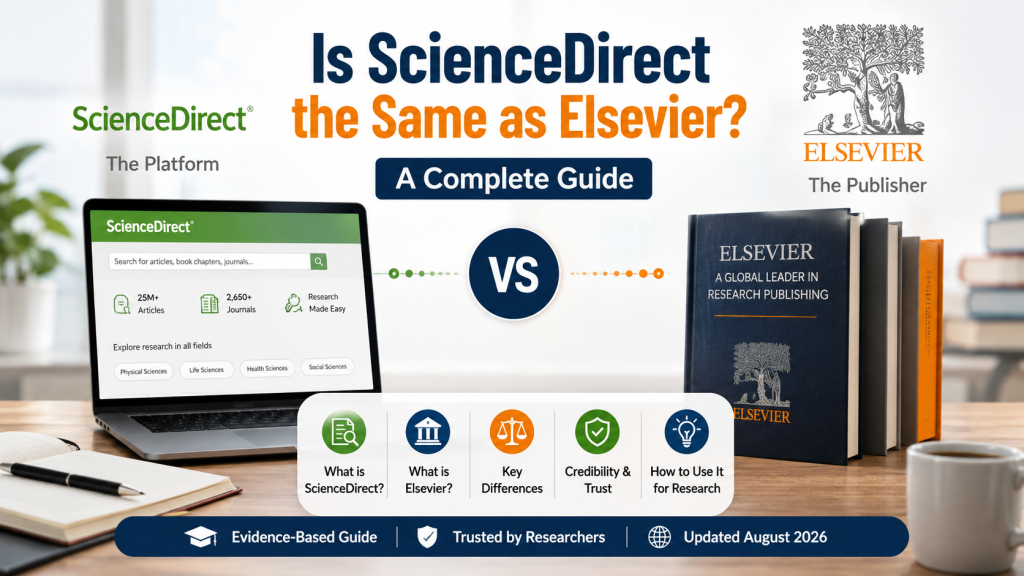
Elsevier, headquartered in the Netherlands, owns over 2,700 scientific journals, including some of the most cited titles such as The Lancet and Cell. Through platforms like ScienceDirect and Scopus, Elsevier offers one of the world's largest academic repositories.
Springer publishes about 3,000 journals, including Nature Communications and Scientific Reports. While Elsevier focuses on data authority and indexing strength, Springer emphasises accessibility through SpringerOpen.
Acceptance Rates: Elsevier vs Springer by Field (Indicative Ranges)
⚠️ Important: These are approximate, portfolio-wide indicators based on publically available journal data. Individual journal acceptance rates vary significantly. Always check the specific journal's author guidelines.
See the full journal acceptance rates comparison for individual journal data.
| Field | Elsevier (typical range) | Springer (typical range) | Verdict |
|---|---|---|---|
| Engineering & Technology | 18–28% | 22–35% | Springer slightly wider |
| Medicine & Health Sciences | 15–25% | 18–28% | Elsevier dominates |
| Business & Economics | 20–30% | 25–35% | Springer more accessible |
| Computer Science | 22–30% | 25–40% | Springer stronger CS portfolio |
| Natural Sciences | 20–30% | 25–38% | Springer broader range |
| Social Sciences & Humanities | 18–25% | 20–30% | Comparable |
| Education Research | 20–28% | 22–30% | Very similar |
Elsevier vs Springer: Review Process and Editorial Speed
Elsevier's peer review is famously rigorous, deeply data-driven, and selective. Springer, in contrast, offers a noticeably faster review cycle, especially through SpringerOpen.
Peer Review Timeline: Typical Weeks for Elsevier vs Springer
⚠️ Note: These are typical industry averages. Individual journals vary significantly. Always check the specific journal's stated review times.
Elsevier
Springer
Key Comparison Table: Elsevier vs Springer
| Factor | Elsevier | Springer |
|---|---|---|
| Peer Review | Highly rigorous, multi-stage, selective | Fast and flexible, especially via SpringerOpen |
| Publication Speed | First decision 6–10 weeks; total 4–6 months | First decision 8–14 weeks; total 5–8 months |
| Acceptance Rate (avg) | 20–30% portfolio average | 25–35% portfolio average |
| Indexing Strength | Dominates Scopus & Web of Science | Strong across disciplines |
| Open-Access Cost (indicative) | £1,500–£3,800 depending on journal | £1,200–£3,200 — generally more affordable |
| Best For | Credibility, impact factor, citations | Accessibility, reach, student-friendly timelines |
Publication Costs: APC Fees Side-by-Side (Indicative Ranges)
⚠️ Important: These are indicative ranges. Actual costs vary by journal, article type, and institutional agreements. Always verify current fees on the journal's official website.
| Publishing Route | Elsevier APC (indicative) | Springer APC (indicative) |
|---|---|---|
| Subscription journal – free route | £0 — author pays nothing | £0 — author pays nothing |
| Gold open access – entry level | £1,500 – £2,200 | £1,200 – £1,900 |
| Gold open access – flagship journals | £2,500 – £3,800 | £2,000 – £3,200 |
| Hybrid open access | £2,000 – £3,500 | £1,800 – £3,000 |
| Fully OA journals (SpringerOpen / KeAi) | £800 – £1,800 | £700 – £1,500 |
Elsevier vs Springer for First-Time Authors
Structured but demanding
Slightly more author-friendly
Journal editors use AI detection. Have you checked your paper?
A flagged paper can be desk-rejected before anyone reads it.
Free AI Detector Free Plagiarism CheckCredibility, Ethics, and Researcher Perception
Elsevier is viewed as traditional and formal; Springer feels more transparent and researcher-friendly. Both are COPE members.
ScienceDirect (Elsevier's platform) and SpringerLink (Springer's platform) are two of the largest academic repositories globally. Both are trusted sources for research dissemination.
Which Publisher Should You Choose? Quick Decision Table (2026–2027)
| Your situation | Choose Elsevier if… | Choose Springer if… |
|---|---|---|
| Hard deadline (graduation, viva) | Your target journal has a fast-track option | ✓ Transfer Desk saves time if desk-rejected |
| Field: medicine or health sciences | ✓ Elsevier owns The Lancet, Cell, dominant medical titles | Only for specific Springer medical journals (BMC series) |
| Field: engineering or computer science | For strong Elsevier engineering titles | ✓ Springer has a broader, more accessible CS/engineering portfolio |
| Budget is a constraint (APC) | Both have free subscription routes — check individual journal model | ✓ Springer's average APC is marginally lower; SpringerOpen is fully OA |
| Supervisor prestige matters most | ✓ Elsevier has stronger overall brand recognition in UK institutions | For Springer Nature's high-impact titles (Nature brands are separate) |
| First-time author, no prior publications | If paper is polished and ready — Elsevier rewards quality | ✓ More forgiving; author coaching more common |
| Need open-access (UKRI/REF compliance) | Elsevier has read-and-publish deals with most UK universities | ✓ Springer also has UK agreements — check your library deal first |
| Considering MDPI as a third option | See our full Elsevier vs MDPI comparison | |
Final Thought: Elsevier vs Springer in 2026–2027
Both publishers have profoundly shaped modern research. Still unsure? Get professional manuscript preparation support →
Ready to Submit, But Not Sure Your Manuscript Is?
Most journal rejections happen at desk review. Poor formatting, a weak abstract, or language issues get you rejected before anyone reads your research.
WhatsApp Us for Manuscript Support →Or visit: Scopus Publication Support →
Frequently Asked Questions: Elsevier vs Springer
Request a Free Review
Get a quick check of your manuscript before submitting to Elsevier or Springer — formatting, scope fit, and language quality.
Turnitin-safe · GDPR compliant · Ethical academic editing only. Need a fast reply? Chat on WhatsApp
Student Reviews (UK-Verified)
Rated on Google, Trustindex and Sitejabber — real outcomes for proposals, chapters & publishing. Read all reviews
Replies on WhatsApp in seconds · UK academics since 2010 · 100% confidential & plagiarism-safe